



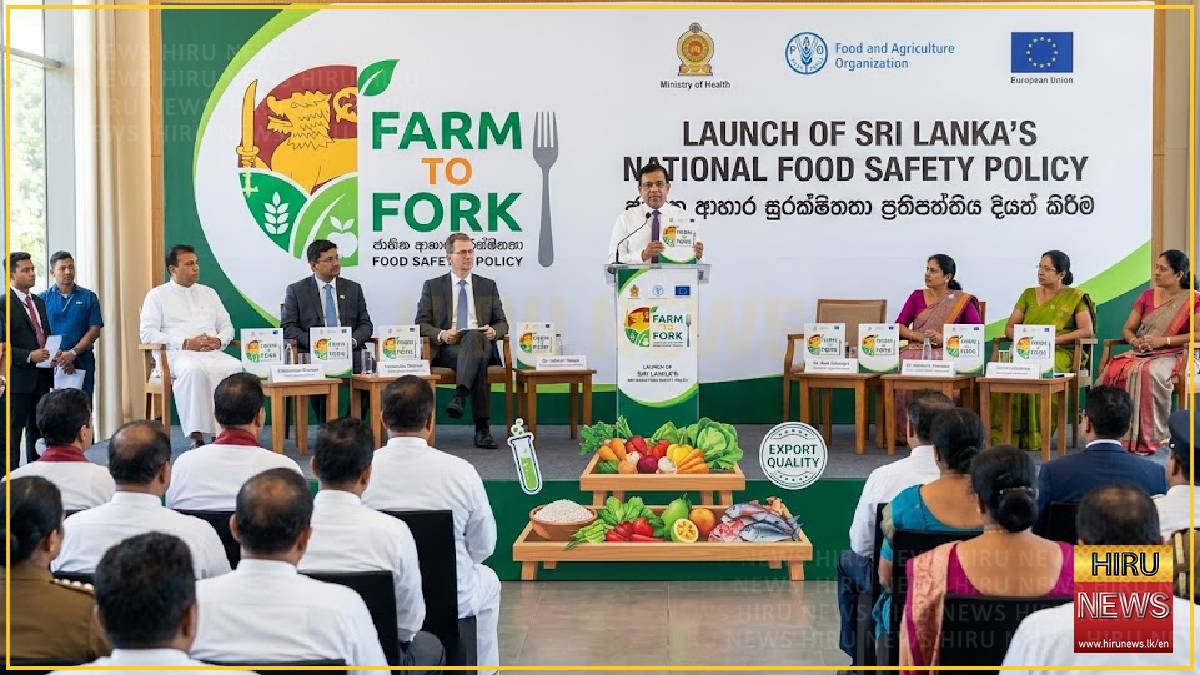


Sri Lanka has introduced its inaugural National Food Safety Policy, engineered alongside the Food and Agriculture Organization and the European Union to overhaul food governance and protect consumer wellness.
Spearheaded by the Ministry of Health, this comprehensive framework establishes a preventive, risk-adjusted strategy spanning the entire agricultural supply chain from initial cultivation to final retail.
While the island nation previously maintained foundational food safety laws, it lacked a unified overarching strategy to synchronize efforts across disparate institutions, a shortfall successfully remedied by the newly adopted guidelines.
The strategy targets modern vulnerabilities stemming from evolving production methods, complex distribution networks, and shifting international trade demands by fostering seamless multi-agency collaboration at national, provincial, and grassroots tiers.
Ministry of Health Secretary Dr Anil Jasinghe emphasized that the milestone initiative establishes a scientific foundation for enhanced public health and improved global competitiveness for domestic agrifood exports, acknowledging vital technical contributions from the European Union's BESPA project.
European Union Delegation Head of Cooperation Dr Johann Hesse noted that robust food safety controls remain indispensable for consumer protection, market resilience, and sustainable economic expansion.
The Food and Agriculture Organization's representative for Sri Lanka and the Maldives, Vimlendra Sharan, underscored that the roadmap integrates scientific oversight to safeguard public health while boosting economic output.
Execution of the policy will be reinforced by forthcoming amendments to the Food Act, following comprehensive stakeholder reviews facilitated by the Food and Agriculture Organization in July 2026.
Implementation efforts will be steered by six core strategic pillars encompassing institutional governance, supply chain controls, regulatory enhancements, surveillance upgrades, public education, and rigorous performance monitoring.
Ultimately, these concerted measures aim to curtail foodborne illnesses, minimize harvest losses, bolster tourism, and elevate the international standing of Sri Lanka's agricultural economy.
Latest News
ICC Women’s Champions Trophy heads to India

Commonwealth Lawyers Association President raises concerns over Supreme Court hearing on 22nd Amendment petitions
Final rites of popular model Chulapadmendra performed

Dhanosh Theekshana Weerasekara secures highest marks in Sinhala medium at Grade 5 Scholarship exam

Eldest son of former Colombo Mayor A. J. M. Muzammil arrested

George Clooney defends Mark Ruffalo over Paramount-Warner deal

King Charles, Macron to preview Bayeux Tapestry

Moscow vows to avoid airspace disruption

Authorities vow action over child abuse linked to exam results

Tom Cruise backs Paramount-Warner Bros. merger