



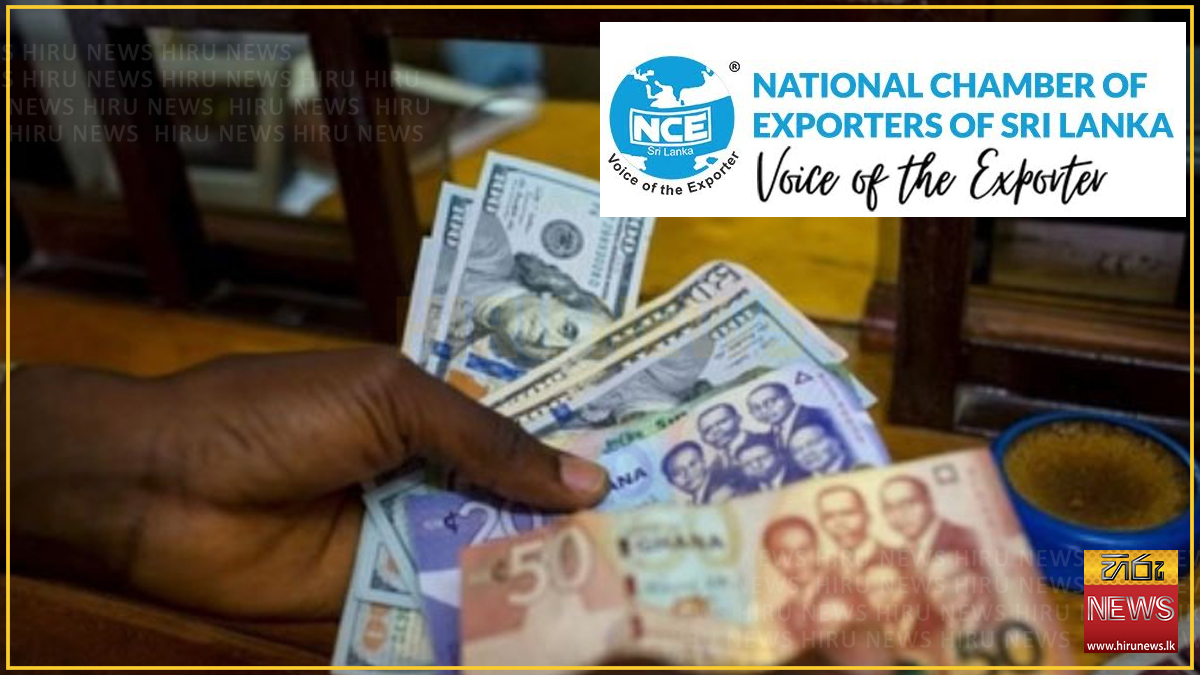


The Sri Lankan Rupee has rapidly weakened against the US Dollar, and the effect is visible across the board, as major foreign currencies, specifically the US Dollar, the British Pound, and the Euro, continue to strengthen against the Rupee.
The National Chamber of Exporters (NCE) notes that regardless of the short-term gains likely for the industry, continued depreciation could lead to a significant long-term negative impact.
The Rupee has been facing rapid and consistent downward pressure, currently reaching Rs. 333 from Rs. 315 a month ago, with the US Dollar spot indicative rate hovering around Rs. 321 to Rs. 325.
According to the Central Bank Governor, this is mainly driven by increased imports, especially petroleum, and slowing tourism revenue.
However, certain industries, such as exports and tourism, or those receiving foreign remittances, might see short-term gains as foreign income now converts to more rupees, though the larger issues outweigh these benefits.
Sri Lanka’s export earnings recorded a historically high level in 2025, with total merchandise exports reaching USD 13.5 billion during the year.
In Q4 2025, merchandise exports stood at USD 1,158 million in December, USD 1,058 million in November, and USD 1,149 million in October. Meanwhile, in Q1 2026, they reached USD 1,148 million in January, USD 1,057 million in February, and USD 1,254 million in March.
While the export sector is currently performing well, the potential impacts of Rupee depreciation carry long-term consequences, especially for exporters reliant on raw material and fuel imports.
The NCE notes that the most immediate consequence is that imports and foreign payments have become more expensive, and businesses that depend on imported raw materials are feeling that pressure directly, which is not expected to ease in the near term either.
Sri Lanka spent USD 11.8 billion on intermediate goods imports in 2025. In March 2026, expenditure reached USD 1,261.2 million, the highest monthly level since December 2021. Fuel accounted for exactly half at USD 630.1 million, up from USD 398.0 million in February.
Except fertiliser and mineral products, all categories recorded a sharp increase in March. Overall, alongside taxes and tariffs, these trends indicate mounting manufacturing input costs, which have significant implications for export sectors heavily dependent on imported inputs.
Moreover, while the current movement in the currency appears gradual, how the Rupee will fluctuate from here will be shaped significantly by global oil prices and international economic conditions. One potential solution proposed by the NCE is to rationalise energy costs, which members across sectors have identified as a measure that would help businesses manage the pressure.
The Industrial Mineral Sector has described the situation as a double-edged sword. Exporters who invoice in US Dollars do see their rupee-denominated revenue increase when converted back to local currency, which improves liquidity and helps cover domestic operational costs including labour, local utilities, and land leases.
Energy costs add further pressure. Mining and processing operations are energy-heavy, and as the Rupee weakens, the cost of imported fuel and electricity, tied to global oil prices and currency-adjusted tariffs, rises accordingly, narrowing the very margins that the depreciation was supposed to improve. Logistics face a similar problem, as freight and shipping costs are almost always dollar-denominated, which makes the transition from ex-factory to CIF more expensive and offsets the pricing advantage created by currency depreciation.
On market positioning, a lower Rupee does help Sri Lanka compete against low-cost producers in India, China, and Vietnam when it comes to raw or semi-processed minerals such as vein quartz or graphite. For value-added products like engineered quartz surfaces, however, international buyers prioritise quality and consistency over minor price differences, so the currency benefit is limited in that segment.
Investment is also affected, as long-term growth in the mineral sector requires upgrading to advanced processing technologies, and a volatile or depreciating currency creates uncertainty for foreign direct investment while making the financing of high-tech equipment from Europe or China prohibitively expensive in local terms.
Overall, the NCE highlights that there in no real term benefit of Rupee depreciation for exporters due to dependency on imported inputs. For those in high-value manufacturing, the immediate priority is stabilising the cost of production against currency volatility.
Hence, while exporters across sectors may receive short-term gains from exchange rate depreciation depending on the proportion of local value addition in the business and the degree of import dependency, the sector highlights that the long-term negative impact outweighs the benefits.
Latest News
Titan posts 41% growth

Trump says he asked FIFA chief to review red card foul

Russian drivers' patience is tested as fuel shortages drag on
Teen accused of deleting 46,000 anime accounts

French government survives no-confidence vote

650 Negombo Prison inmates transferred to other prisons

Netanyahu government’s challenge to Supreme Court reignites judicial row

Minister Wasantha resisted when Hiru questioned rice prices

UK sanctions Russians it says developed chemical weapons

UK's Burnham vows discipline on fiscal rules