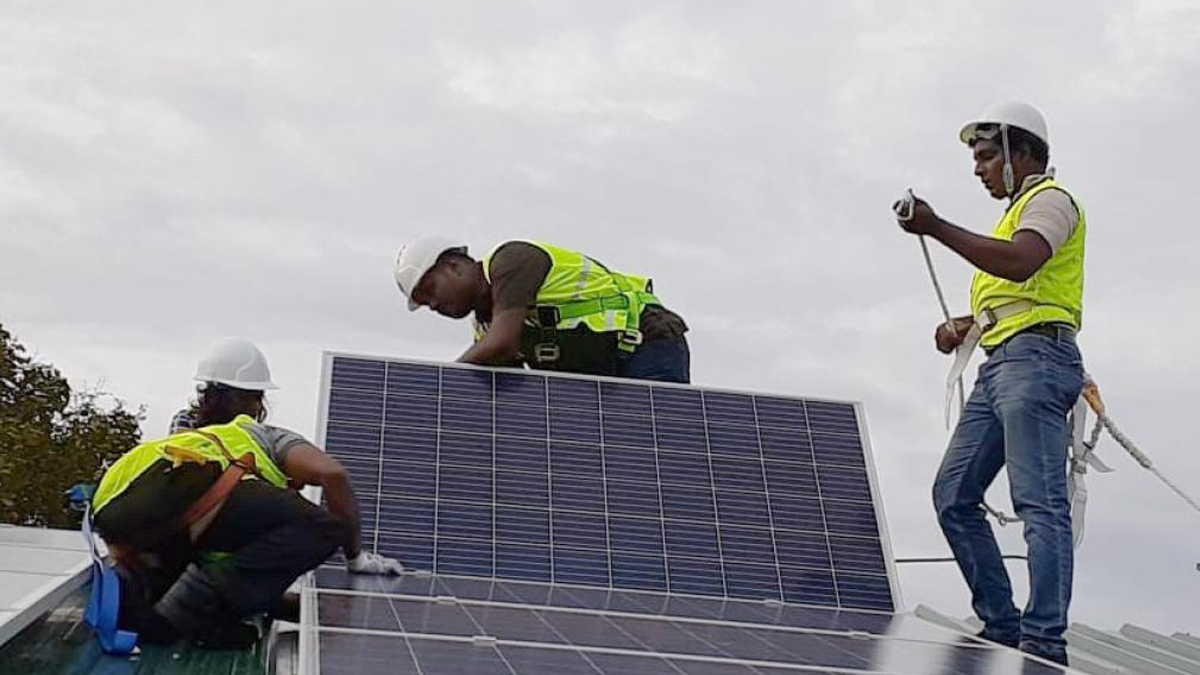


MANILA, PHILIPPINES (26 June 2026) The Asian Development Bank (ADB) has approved a $57.4 million financing package to help Sri Lanka expand access to affordable clean energy and reduce greenhouse gas emissions through rooftop solar aggregation and virtual net metering.
The financing consists of a $35 million concessional loan, grants of $16.9 million from the European Union and $5.5 million from the Japan Fund for the Joint Crediting Mechanism, and counterpart funding from implementing agencies, bringing total estimated project cost to $80.5 million.
The Rooftop Solar Aggregation and Virtual Net Metering Project will help two government-owned power utilities, Electricity Distribution Lanka (Private) Limited and Lanka Electricity Company (Private) Limited, to establish a scalable, utility-led model that pools electricity from large rooftop solar systems and virtually distributes credits to eligible consumers. This allows multiple users to share the benefits of solar energy without installing panels on their homes.
“This project will help Sri Lanka widen access to affordable renewable energy while strengthening grid readiness for a more resilient and inclusive power sector,” said ADB Country Director for Sri Lanka Shannon Cowlin. “It will support small businesses, advance grid modernization and digitalization, and create new opportunities for women and young people in the clean energy industry.”
The project is designed to help eligible micro, small, and medium enterprises, as well as community organizations—including those unable to install rooftop solar because of financial or space constraints—to reduce electricity costs through allocations under a social compensation mechanism.
Approximately 25 megawatt-peak of rooftop solar installations will be supported by the financing. It will also support a new aggregation and virtual net metering model, modernize and digitalize the distribution networks of the two utilities, and help build a grid ready for more distributed renewable energy. A training facility to support green skills development will be set up, women’s participation in the sector strengthened, and more capacity built on advanced low-carbon technologies.
Latest News
China to establish security ties with Cambodia
Iran deal grants access to nuclear inspectors
John Keells Group celebrates 10th cohort milestone of MDP
Revised A Level 2026 examination timetable released

CSE expands footprint with Gampaha Branch
Australia considers tougher enforcement of social media ban for teens

SJB suspends Horana electorate organiser's membership and positions

The Pink Auto Shop wins ‘Most Famous Detailing Shop of the Year’ at BWIO Awards

Oil heads for weekly loss as Hormuz tanker traffic rebounds

Asia's crude buying spree is running out of steam