



Share Post


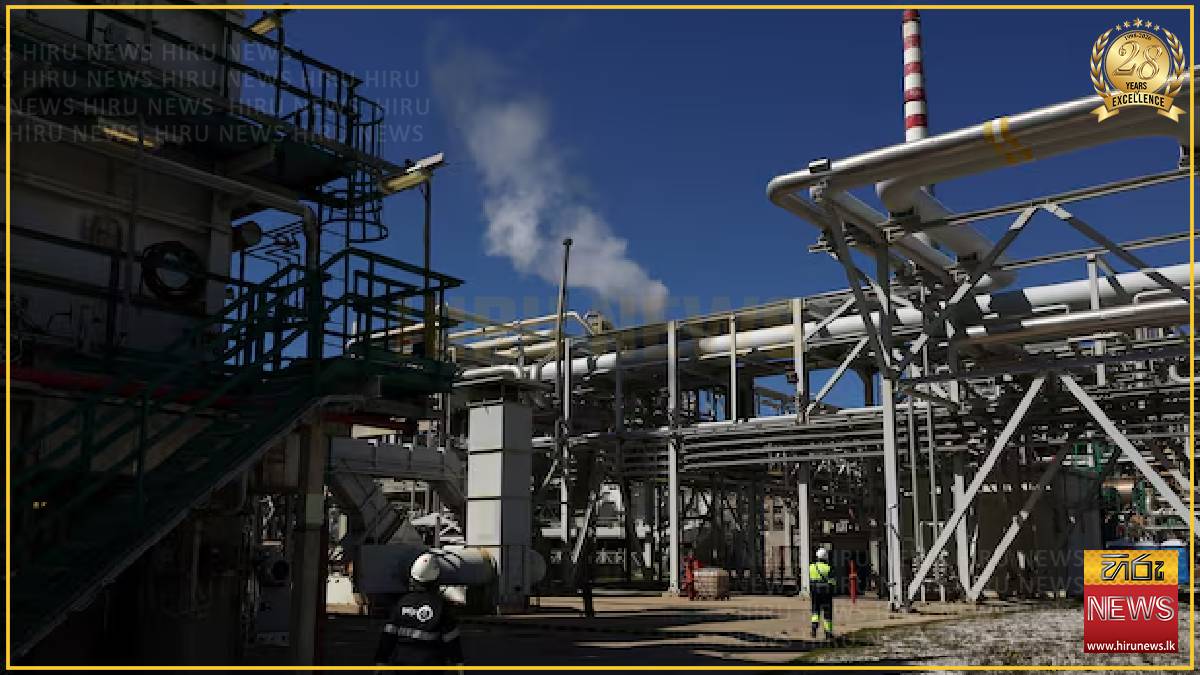
Portugal's government said on Thursday it had approved a 33% windfall tax on extraordinary profits earned in 2026 by oil and refining companies benefiting from an energy price surge triggered by the Iran war.
The finance ministry said in a statement that the windfall tax would be levied on the portion of companies' 2026 profits that exceeds by more than 20% the average profits recorded in 2024 and 2025.
It said that, while households and businesses have faced sharply rising costs amid soaring fossil fuel prices, oil and refining companies had generated extraordinary profits "resulting solely from external market conditions."
"It is therefore fair and necessary to create a solidarity mechanism by taxing part of these exceptional profits to help finance measures to offset the impact of higher fuel prices on households and the most vulnerable businesses," it said.
The measure will also support investments aimed at reducing dependence on fossil fuels and contribute to a more sustainable and resilient economy, it said.
Its introduction revives a tax similar to the one Portugal imposed during the 2022 energy crisis triggered by Russia's invasion of Ukraine.
The levy will hit all oil companies operating in Portugal, including Galp Energia, which posted a 45% surge in second-quarter adjusted net profit to €540 million on Monday as the Iran war lifted crude prices and refining margins, prompting the company to raise its 2026 dividend by 10%.
The measure will now be submitted to parliament for final approval, where it is expected to secure support from all opposition parties.
-Reuters
The finance ministry said in a statement that the windfall tax would be levied on the portion of companies' 2026 profits that exceeds by more than 20% the average profits recorded in 2024 and 2025.
It said that, while households and businesses have faced sharply rising costs amid soaring fossil fuel prices, oil and refining companies had generated extraordinary profits "resulting solely from external market conditions."
"It is therefore fair and necessary to create a solidarity mechanism by taxing part of these exceptional profits to help finance measures to offset the impact of higher fuel prices on households and the most vulnerable businesses," it said.
The measure will also support investments aimed at reducing dependence on fossil fuels and contribute to a more sustainable and resilient economy, it said.
Its introduction revives a tax similar to the one Portugal imposed during the 2022 energy crisis triggered by Russia's invasion of Ukraine.
The levy will hit all oil companies operating in Portugal, including Galp Energia, which posted a 45% surge in second-quarter adjusted net profit to €540 million on Monday as the Iran war lifted crude prices and refining margins, prompting the company to raise its 2026 dividend by 10%.
The measure will now be submitted to parliament for final approval, where it is expected to secure support from all opposition parties.
-Reuters
Latest News
Shooting on Kandawala Road in Ratmalana
Local
01 August 2026

Justice Minister says coordination underway to resolve Mahara Prison situation
Local
01 August 2026

Colombo Port Health Office inaugurated
Local
01 August 2026

Unrest at Mahara Prison
Local
01 August 2026

Blue Lanka Tours wins sustainability award for community impact
Local
01 August 2026

Rupee depreciates 7.8%, tourism earnings dip 10% in July
Local
01 August 2026
Commercial Bank, world’s first bank to secure UNFPA CRJB Champion status
Local
01 August 2026

Adani coal project pays no tax despite $1bn revenue
Local
01 August 2026
Bessent ‘to-do’ list shows proposal for US to buy $5bn-$10bn of Japanese yen
Local
01 August 2026

Milei alleges foreign plot behind anti-Argentina criticism
Local
01 August 2026