


Share Post


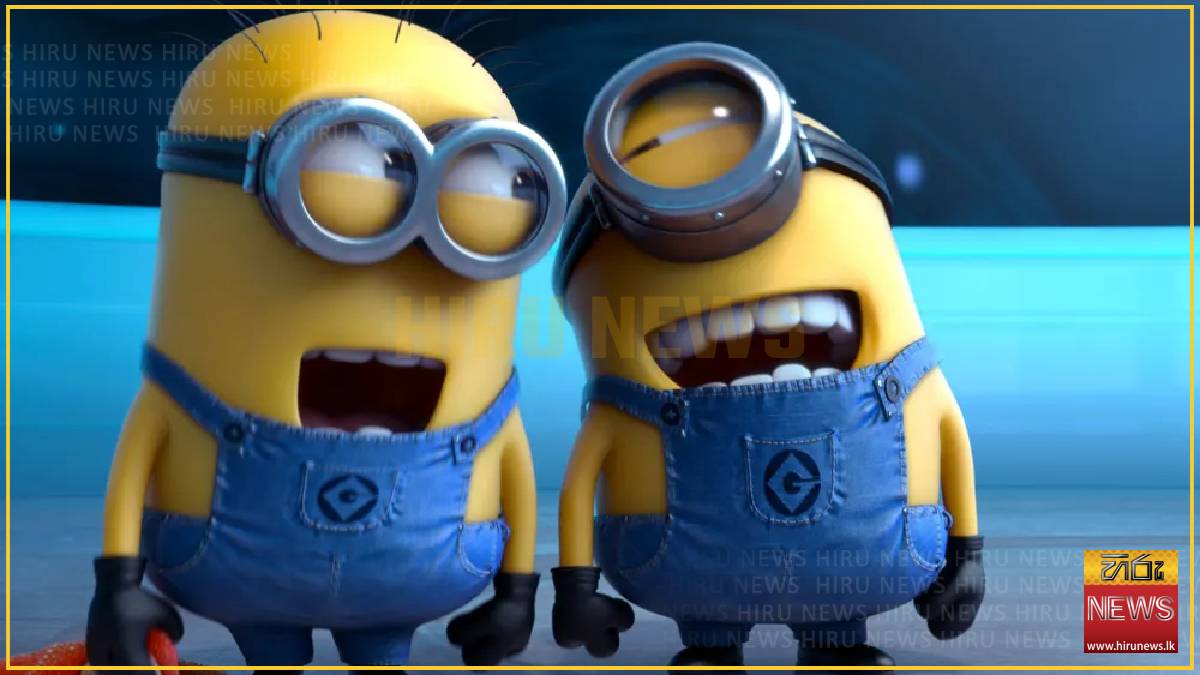
Despite having voiced almost every single Minion since the yellow creatures’ grand cinematic entrance in 2010’s “Despicable Me,” Pierre Coffin admits that — much to the disappointment of many people he meets — their high-pitched gibberish is not something he’s able to perform on cue.
“If you asked me to do the Minions voice right now, I just couldn’t do it,” he tells Variety with the resigned sigh of someone who is requested to say “Bello!” and “Banana!” rather a lot.
There’s a very simple reason for this. The Minions voices are indeed Coffin’s own, but pitched up by six semitones. And it’s something he has to record in slow motion.
It all dates back to “Despicable Me,” which he directed (as he did “Despicable Me 2,” “Despicable Me 3” and the first “Minions” spin-off movie, before taking a directing break for “Minions: The Rise of Gru” and “Despicable Me 4” and returning for “Minions and Monsters,” released by Universal today).
So Coffin’s story goes, he was never originally down to voice the diminutive, three-fingered supervillain henchmen. However, when they were in development on the first film he was struck by a line in Cinco Paul and Ken Daurio’s script in which it said “Gru arrives on stage and the Minions clamour his name.”
Crucially, this indicated that the Minions were not, in fact, mute (at the time it was the only line which had them speaking). Coffin turned to producer and Illumination head Chris Meledandri, who he claims said, “Well, I’ll ask someone whose job it is to find sounds for characters and will get back to you.” But what eventually came back was “very computer-y and very strange sounding.”
Years earlier, when Coffin was making his way in the film world (“Despicable Me” would mark his directorial feature debut), he was also working in commercials and says he would often “temp in” his own voice simply for the sake of timing. “I would pitch it up, down and just do all the characters, and then eventually they would be recorded by real comedians or real actors.”
So, while he waited for a professional voice actor to step in to give the Minions whatever dulcet tones were required, that’s what he did with “Despicable Me”. Of course, there was no script for them or any indication of how they sounded, so he just ad-libbed.
“I didn’t really know what to say, so I just said gibberish, but with a couple of words popping up here and there — I think I said ‘pancake’ and ‘panna cotta’ … p words sounded funny,” he explains. And this recording he then pitched up by six semitones using a computer plugin and sent to Meledandri. On hearing Coffin’s fast-paced falsetto nonsense, the studio chief had one answer: “Well, can’t you just do them?”
And lo, the Minions had their voice.
Of course, at the time, there was no indication that “Despicable Me” would launch a multi-billion-dollar blockbuster franchise and that Coffin was inadvertently signing himself up to voice the increasingly-beloved yellow face of multiple sequels and spin-offs. And he never realised he’d soon start crafting an entire almost-language out of it.
That came with “Despicable Me 2,” after Coffin noticed that in the Italian version of the first movie the local distributor had somehow decided to translate the Minion’s gibberish. “I was like no, don’t do that — there’s a magic, I think, that you’re not understanding them but yet somehow understanding them.”
So for the sequel, he starting liberally sprinkling the squeaky nonsense with real words and phrases from or inspired by languages. There was Italian (including “tulaliloo ti amo,” meaning “I love you”), French (“et pis c’est tout” for “That’s all”), and plenty of Spanish (“para tú,” meaning “for you”).
Minionese — as the language subsequently came to be called — has been developing since, with Coffin adding elements from the likes of Japanese, Filipino, Korean, Hindi, German and Indonesian with each new outing. After seven films and several shorts, there are now, he estimates, “about a dozen” languages represented, something he acknowledges makes it much like cinema’s own comically nonsensical Esperanto.
There have been benefits to this. Adding a fair amount of Spanish early on was “in hindsight, quite smart” because of the popularity of the language, he says (Chinese, sadly, has been too difficult for Coffin to master — the only word he could manage was “shyeh-sheyh”(thank you), which he put in at the end of “Minion & Monsters”).
“I’ve also found that, in having recognizable words, people are not falling asleep during the gibberish,” he notes.
But the words carefully chosen have very little to do with their meaning and much more about their melody and rhythm as they’re added to sentences. As Coffin says, “It’s less about the words than the music,” and all about conveying what the Minions are trying to express, whether it be a question or an insult.
And the development of Minionese is often simply driven by whatever makes its creator laugh.
“It comes from me bumping into someone and them saying a funny word or having a funny name, which I think ‘oh, that would be nice for a Minion,’ or going to a restaurant and seeing some weird Asian or Indian dishes and going ‘oh my god, this is great,” he says. Minionese linguists will note that many international dishes have found their way into the increasingly random lexicon alongside pancake and panna cotta, including nasi goreng, tikka masala and carbonara.
Some words are more random than others. In Coffin’s short film “Mooned,” a group of Minions are stranded on the moon with “Despicable Me” villain Vector, whose failures to launch himself back to Earth prompts one to disparagingly bellow “Rosamund Pike!” in his direction.
“When I made that short, I’d just seen a movie with Rosamund Pike the day before and thought, oh, that’s a cool name.”
In wielding such language-creating power, Coffin admits to accidentally throwing in various bits of gibberish that occasionally people have taken to mean something offensive. “Mostly it’s people hearing things that I’m not even saying, but I redo them,” he says. There are also words that work better in some territories over others. In most countries, the Minions refer to their evil masters as “Big Boss,” but Coffin was told that this wasn’t understood in Latin American, so re-recorded it as “Gran Jefe.”
By the time of “Despicable Me 2,” Coffin had also figured out that he needed to record his Minions lines (which he interesting says are all written in English before being “put into Minionese”) in slow-motion.
The second movie saw the Minions sing they’re own renditions of songs including “I Swear” and “Y.M.C.A.,” but Coffin found that when he pitched his voice up six semitones, he was no longer in key and the quality suffered. So since then he’s been using special software that allows him to record in slow-motion and then put it back into real-time, both accelerated and in the correct pitch. And this is something he now does for everything in Minion.
It’s a long, arduous process, and he says the reason why he stepped back from directing the second Minions spin-off and “Despicable Me 4.” “There was a toll to be paid by directing and doing the voices — my brain was frying. So I told Chris, I can’t work on those things anymore. I can’t direct and do the voices.” So he chose the voices.
But Meledandri lured him back for “Minions & Monsters” with the simple idea of having a Minion making a movie, allowing him to take the story back to the early days of Hollywood.
But there’s never been a question of Coffin allowing anyone else to lend their larynx to the Minions and give his own vocal chords a break from the “Bellos!” or “Bananas!”. Comically, for a made-up language that is more than nine-tenths gibberish, it’s simply because — as the gatekeeper and world’s foremost expert of Minionese — he just doesn’t think it would sound right.
“The reason why I feel reluctant to pass it on to someone else is that sometimes in marketing they’ll make a mishmash of all my sentences and words, and it’s weird to me — when I hear it it feels like, no, that doesn’t fit there, you’ve got the language wrong,” he says. “I don’t know why, but it feels incorrect. And when I see the animation that they glued on, that doesn’t fit either. So I guess there’s something magical between the words I’m saying and the animation that goes with those words. And somehow if you change one of the two, it just doesn’t work.”
-Variety
“If you asked me to do the Minions voice right now, I just couldn’t do it,” he tells Variety with the resigned sigh of someone who is requested to say “Bello!” and “Banana!” rather a lot.
There’s a very simple reason for this. The Minions voices are indeed Coffin’s own, but pitched up by six semitones. And it’s something he has to record in slow motion.
It all dates back to “Despicable Me,” which he directed (as he did “Despicable Me 2,” “Despicable Me 3” and the first “Minions” spin-off movie, before taking a directing break for “Minions: The Rise of Gru” and “Despicable Me 4” and returning for “Minions and Monsters,” released by Universal today).
So Coffin’s story goes, he was never originally down to voice the diminutive, three-fingered supervillain henchmen. However, when they were in development on the first film he was struck by a line in Cinco Paul and Ken Daurio’s script in which it said “Gru arrives on stage and the Minions clamour his name.”
Crucially, this indicated that the Minions were not, in fact, mute (at the time it was the only line which had them speaking). Coffin turned to producer and Illumination head Chris Meledandri, who he claims said, “Well, I’ll ask someone whose job it is to find sounds for characters and will get back to you.” But what eventually came back was “very computer-y and very strange sounding.”
Years earlier, when Coffin was making his way in the film world (“Despicable Me” would mark his directorial feature debut), he was also working in commercials and says he would often “temp in” his own voice simply for the sake of timing. “I would pitch it up, down and just do all the characters, and then eventually they would be recorded by real comedians or real actors.”
So, while he waited for a professional voice actor to step in to give the Minions whatever dulcet tones were required, that’s what he did with “Despicable Me”. Of course, there was no script for them or any indication of how they sounded, so he just ad-libbed.
“I didn’t really know what to say, so I just said gibberish, but with a couple of words popping up here and there — I think I said ‘pancake’ and ‘panna cotta’ … p words sounded funny,” he explains. And this recording he then pitched up by six semitones using a computer plugin and sent to Meledandri. On hearing Coffin’s fast-paced falsetto nonsense, the studio chief had one answer: “Well, can’t you just do them?”
And lo, the Minions had their voice.
Of course, at the time, there was no indication that “Despicable Me” would launch a multi-billion-dollar blockbuster franchise and that Coffin was inadvertently signing himself up to voice the increasingly-beloved yellow face of multiple sequels and spin-offs. And he never realised he’d soon start crafting an entire almost-language out of it.
That came with “Despicable Me 2,” after Coffin noticed that in the Italian version of the first movie the local distributor had somehow decided to translate the Minion’s gibberish. “I was like no, don’t do that — there’s a magic, I think, that you’re not understanding them but yet somehow understanding them.”
So for the sequel, he starting liberally sprinkling the squeaky nonsense with real words and phrases from or inspired by languages. There was Italian (including “tulaliloo ti amo,” meaning “I love you”), French (“et pis c’est tout” for “That’s all”), and plenty of Spanish (“para tú,” meaning “for you”).
Minionese — as the language subsequently came to be called — has been developing since, with Coffin adding elements from the likes of Japanese, Filipino, Korean, Hindi, German and Indonesian with each new outing. After seven films and several shorts, there are now, he estimates, “about a dozen” languages represented, something he acknowledges makes it much like cinema’s own comically nonsensical Esperanto.
There have been benefits to this. Adding a fair amount of Spanish early on was “in hindsight, quite smart” because of the popularity of the language, he says (Chinese, sadly, has been too difficult for Coffin to master — the only word he could manage was “shyeh-sheyh”(thank you), which he put in at the end of “Minion & Monsters”).
“I’ve also found that, in having recognizable words, people are not falling asleep during the gibberish,” he notes.
But the words carefully chosen have very little to do with their meaning and much more about their melody and rhythm as they’re added to sentences. As Coffin says, “It’s less about the words than the music,” and all about conveying what the Minions are trying to express, whether it be a question or an insult.
And the development of Minionese is often simply driven by whatever makes its creator laugh.
“It comes from me bumping into someone and them saying a funny word or having a funny name, which I think ‘oh, that would be nice for a Minion,’ or going to a restaurant and seeing some weird Asian or Indian dishes and going ‘oh my god, this is great,” he says. Minionese linguists will note that many international dishes have found their way into the increasingly random lexicon alongside pancake and panna cotta, including nasi goreng, tikka masala and carbonara.
Some words are more random than others. In Coffin’s short film “Mooned,” a group of Minions are stranded on the moon with “Despicable Me” villain Vector, whose failures to launch himself back to Earth prompts one to disparagingly bellow “Rosamund Pike!” in his direction.
“When I made that short, I’d just seen a movie with Rosamund Pike the day before and thought, oh, that’s a cool name.”
In wielding such language-creating power, Coffin admits to accidentally throwing in various bits of gibberish that occasionally people have taken to mean something offensive. “Mostly it’s people hearing things that I’m not even saying, but I redo them,” he says. There are also words that work better in some territories over others. In most countries, the Minions refer to their evil masters as “Big Boss,” but Coffin was told that this wasn’t understood in Latin American, so re-recorded it as “Gran Jefe.”
By the time of “Despicable Me 2,” Coffin had also figured out that he needed to record his Minions lines (which he interesting says are all written in English before being “put into Minionese”) in slow-motion.
The second movie saw the Minions sing they’re own renditions of songs including “I Swear” and “Y.M.C.A.,” but Coffin found that when he pitched his voice up six semitones, he was no longer in key and the quality suffered. So since then he’s been using special software that allows him to record in slow-motion and then put it back into real-time, both accelerated and in the correct pitch. And this is something he now does for everything in Minion.
It’s a long, arduous process, and he says the reason why he stepped back from directing the second Minions spin-off and “Despicable Me 4.” “There was a toll to be paid by directing and doing the voices — my brain was frying. So I told Chris, I can’t work on those things anymore. I can’t direct and do the voices.” So he chose the voices.
But Meledandri lured him back for “Minions & Monsters” with the simple idea of having a Minion making a movie, allowing him to take the story back to the early days of Hollywood.
But there’s never been a question of Coffin allowing anyone else to lend their larynx to the Minions and give his own vocal chords a break from the “Bellos!” or “Bananas!”. Comically, for a made-up language that is more than nine-tenths gibberish, it’s simply because — as the gatekeeper and world’s foremost expert of Minionese — he just doesn’t think it would sound right.
“The reason why I feel reluctant to pass it on to someone else is that sometimes in marketing they’ll make a mishmash of all my sentences and words, and it’s weird to me — when I hear it it feels like, no, that doesn’t fit there, you’ve got the language wrong,” he says. “I don’t know why, but it feels incorrect. And when I see the animation that they glued on, that doesn’t fit either. So I guess there’s something magical between the words I’m saying and the animation that goes with those words. And somehow if you change one of the two, it just doesn’t work.”
-Variety
Latest News
Vance says negotiations with Iran going ‘extremely well’
Local
01 July 2026
CENTCOM leads security meeting with reps from 12 countries in Bahrain
Local
01 July 2026
Crew member missing after US naval helicopter conducts emergency landing in Arabian Sea
Local
01 July 2026

Omani, Dutch FMs discuss Strait of Hormuz
Local
01 July 2026

Iran concludes meetings with Qatari, Pakistani officials
Local
01 July 2026

Is Israel killing the US-Iran MoU by staying in Lebanon?
Local
01 July 2026

Iran’s Pezeshkian insists supreme leader did not bar negotiations
Local
01 July 2026

Paramount+ develops limited series on the murder of JonBenét Ramsey
Local
01 July 2026
Kathy Griffin claims she was ‘banned’ from ‘The Tonight Show’
Local
01 July 2026
Netflix orders Harlan Coben’s ‘Myron Bolitar’ series as ‘I Will Find You’ becomes a hit
Local
01 July 2026