



Share Post


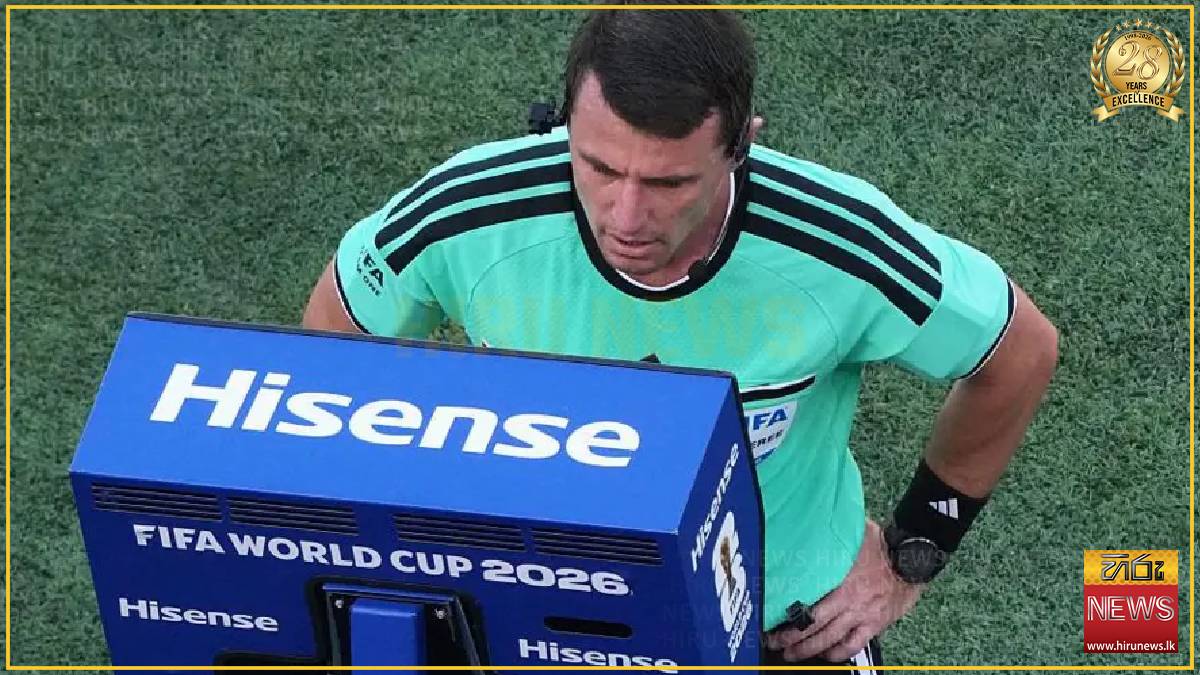
Video assistant referees should only be used to change "blatantly incorrect" decisions and clear missed incidents, say European refereeing officials.
Chief refereeing officers from all 55 European national football associations met last week with Uefa refereeing officials and a representative from the International Football Association Board (Ifab) to address recent changes to the game's laws.
Attendees said "lengthy, microscoping reviews" indicate VAR has gone beyond its original scope.
When VAR was added to the laws of the game in 2018 by football's rulemakers Ifab, its "philosophy" was "minimum interference - maximum benefit", with the intention of reducing "unfairness caused by clear and obvious errors or serious missed incidents" relating to goals, penalties, direct red cards and mistaken identity.
Uefa said that at its recent meeting that refereeing bosses agreed a return to those original aims is needed.
"It was reiterated that, in accordance with protocol, VAR must only intervene in situations of 'clear and obvious' error, ie. when a referee decision is blatantly incorrect or when the referee has missed a clear incident," Uefa said in a statement.
"VAR is not meant to re-referee the game, it is an essential support to the referees, who must remain at the centre of all decision-making.
"Lengthy, microscoping reviews are often a symptom revealing that the decision on the field was not clearly and obviously incorrect, and should therefore be limited."
Officials acknowledged recent clarification from Ifab around the correct interpretation of the "mistaken identity" rule introduced before this summer's World Cup, which says that if a player is booked or sent off but the foul was committed by the opposition team the decision can be changed.
Switzerland's Breel Embolo was the first player to be sent off as a result of the new law following a controversial second yellow card for simulation against Argentina. Leandro Parades originally received a yellow card for his challenge before VAR intervened.
Ifab clarified that VAR can only review cautions to "identify the player who committed the offence that was penalised, not to review or alter the offence".
There was also "unanimous support" for recent rule changes designed to reduce unnecessary delays, including time limits on goal-kicks, throw-ins and substitutions, and new regulations around on-field injuries and goalkeeper tactical timeouts.
-BBC
Chief refereeing officers from all 55 European national football associations met last week with Uefa refereeing officials and a representative from the International Football Association Board (Ifab) to address recent changes to the game's laws.
Attendees said "lengthy, microscoping reviews" indicate VAR has gone beyond its original scope.
When VAR was added to the laws of the game in 2018 by football's rulemakers Ifab, its "philosophy" was "minimum interference - maximum benefit", with the intention of reducing "unfairness caused by clear and obvious errors or serious missed incidents" relating to goals, penalties, direct red cards and mistaken identity.
Uefa said that at its recent meeting that refereeing bosses agreed a return to those original aims is needed.
"It was reiterated that, in accordance with protocol, VAR must only intervene in situations of 'clear and obvious' error, ie. when a referee decision is blatantly incorrect or when the referee has missed a clear incident," Uefa said in a statement.
"VAR is not meant to re-referee the game, it is an essential support to the referees, who must remain at the centre of all decision-making.
"Lengthy, microscoping reviews are often a symptom revealing that the decision on the field was not clearly and obviously incorrect, and should therefore be limited."
Officials acknowledged recent clarification from Ifab around the correct interpretation of the "mistaken identity" rule introduced before this summer's World Cup, which says that if a player is booked or sent off but the foul was committed by the opposition team the decision can be changed.
Switzerland's Breel Embolo was the first player to be sent off as a result of the new law following a controversial second yellow card for simulation against Argentina. Leandro Parades originally received a yellow card for his challenge before VAR intervened.
Ifab clarified that VAR can only review cautions to "identify the player who committed the offence that was penalised, not to review or alter the offence".
There was also "unanimous support" for recent rule changes designed to reduce unnecessary delays, including time limits on goal-kicks, throw-ins and substitutions, and new regulations around on-field injuries and goalkeeper tactical timeouts.
-BBC
Latest News
Brazilian Supreme Court justice authorises investigation into president's son
Local
31 July 2026

Swiss National Bank posts big Q2 profit thanks to share price rally
Local
31 July 2026

Indonesia arrests Malaysian pilot for allegedly smuggling 26 kg MDMA, customs office says
Local
31 July 2026

Cuba takes steps to implement economic overhaul amid US pressure campaign
Local
31 July 2026

3 arrested for setting container on fire following Negombo fatal crash
Local
31 July 2026

Trump threatens to pull attorney general nominee amid GOP revolt
Local
31 July 2026

Chinese President stresses political guidance, innovation in military modernisation
Local
31 July 2026

Customs warns air passengers against transporting parcels for third parties
Local
31 July 2026

Bank of Japan keeps rates steady
Local
31 July 2026

Most Australian teens still on social media three months after under-16 ban began, study finds
Local
31 July 2026