


Share Post


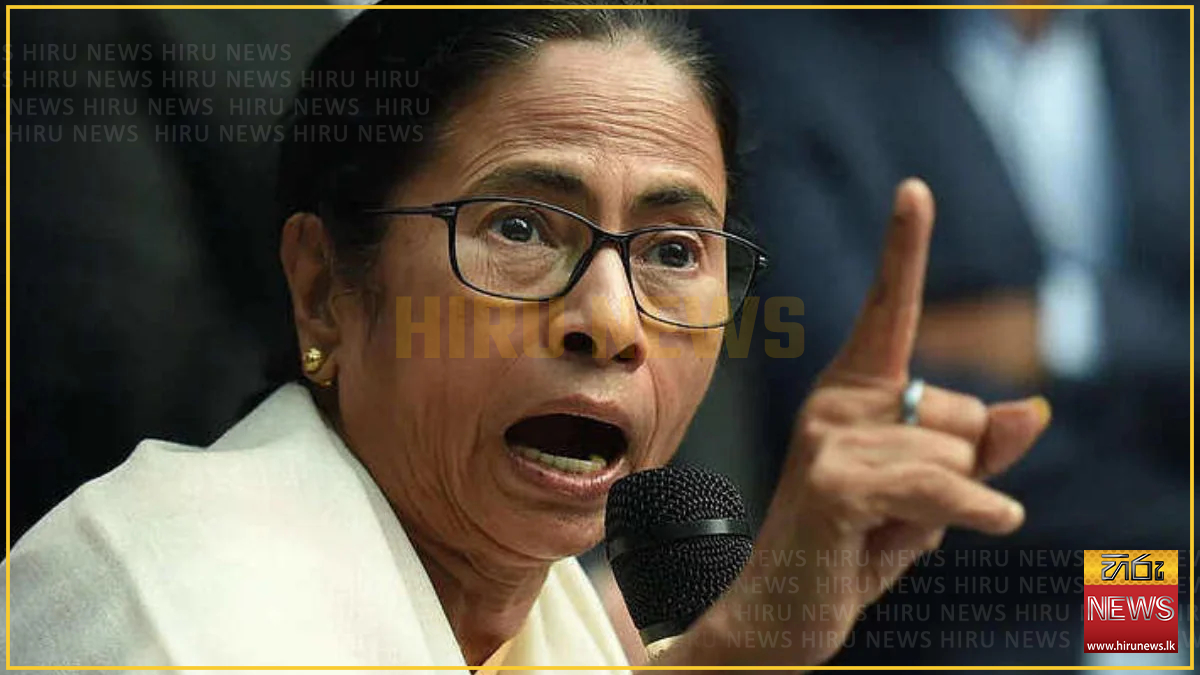
Mamata Banerjee resignation news: A day after the Trinamool Congress (TMC) lost to the BJP in West Bengal elections, party chief Mamata Banerjee declared she would not resign as Chief Minister, as the elections had not been “fair”.
“We have not been defeated. I will not resign. Question does not arise of me visiting Raj Bhawan,” Banerjee said in a press conference, flanked by party members Derek O’Brien and Abhishek Banerjee.
By convention, after an Assembly election, the outgoing CM goes to Raj Bhawan to tender their resignation to the Governor.
Banerjee alleged Prime Minister Narendra Modi and Home Minister Amit Shah were “directly interfering” in the West Bengal elections, and Chief Election Commissioner Gyanesh Kumar was the “villain of this election”. She also said the TMC would set up a fact-finding mission and the next steps would be decided after discussion within the party.
But what happens if after an Assembly election, the sitting CM refuses to resign? Here’s what the Constitution says.
“During the pleasure of the Governor”
Article 164 of the Constitution says that, “The Chief Minister shall be appointed by the Governor and the other Ministers shall be appointed by the Governor on the advice of the Chief Minister, and the Ministers shall hold office during the pleasure of the Governor.”
Thus, technically, the Governor of a state can dismiss the Chief Minister, although various safeguards are in place for this to not become an arbitrary exercise. A line of Supreme Court rulings have interpreted that power of the Governor primarily flows from the “aid and advice” of the Council of Ministers.
Also, if the Governor asks one CM to step down and wants to invite another candidate for the post while the Assembly’s tenure is still on, there has to be a floor test, where each side tries to prove their majority (who has the support of more than half the sitting MLAs) in the House. As a last resort, President’s Rule (Article 356) can be imposed if no stable government can be formed.
In this case, if Mamata refuses to resign, the Governor can ask for her resignation. Also, the tenure of the Assembly itself is set to expire.
The tenure of a state Assembly
Article 172 of the Constitution says that, “Every Legislative Assembly of every State, unless sooner dissolved, shall continue for five years from the date appointed for its first meeting and no longer and the expiration of the said period of five years shall operate as a dissolution of the Assembly.”
According to the Election Commission, the tenure of current Bengal Assembly began on May 8, 2021, and expires on May 7. After that, the Governor will have to set in motion the process of constituting a new Assembly, which means the new MLAs will have to take oath and a new government will have to be elected.
What is the seat tally in Bengal after the election
In a landmark victory, the BJP has secured 207 seats, while the TMC got 80 seats. Chief Minister Mamata Banerjee lost from the Bhabanipur seat. The Congress has won two seats, TMC rebel Humayun Kabir’s Aam Janata Unnayan Party won two seats, and the CPI(M) and All India Secular Front won one each.
-Indian Express
“We have not been defeated. I will not resign. Question does not arise of me visiting Raj Bhawan,” Banerjee said in a press conference, flanked by party members Derek O’Brien and Abhishek Banerjee.
By convention, after an Assembly election, the outgoing CM goes to Raj Bhawan to tender their resignation to the Governor.
Banerjee alleged Prime Minister Narendra Modi and Home Minister Amit Shah were “directly interfering” in the West Bengal elections, and Chief Election Commissioner Gyanesh Kumar was the “villain of this election”. She also said the TMC would set up a fact-finding mission and the next steps would be decided after discussion within the party.
But what happens if after an Assembly election, the sitting CM refuses to resign? Here’s what the Constitution says.
“During the pleasure of the Governor”
Article 164 of the Constitution says that, “The Chief Minister shall be appointed by the Governor and the other Ministers shall be appointed by the Governor on the advice of the Chief Minister, and the Ministers shall hold office during the pleasure of the Governor.”
Thus, technically, the Governor of a state can dismiss the Chief Minister, although various safeguards are in place for this to not become an arbitrary exercise. A line of Supreme Court rulings have interpreted that power of the Governor primarily flows from the “aid and advice” of the Council of Ministers.
Also, if the Governor asks one CM to step down and wants to invite another candidate for the post while the Assembly’s tenure is still on, there has to be a floor test, where each side tries to prove their majority (who has the support of more than half the sitting MLAs) in the House. As a last resort, President’s Rule (Article 356) can be imposed if no stable government can be formed.
In this case, if Mamata refuses to resign, the Governor can ask for her resignation. Also, the tenure of the Assembly itself is set to expire.
The tenure of a state Assembly
Article 172 of the Constitution says that, “Every Legislative Assembly of every State, unless sooner dissolved, shall continue for five years from the date appointed for its first meeting and no longer and the expiration of the said period of five years shall operate as a dissolution of the Assembly.”
According to the Election Commission, the tenure of current Bengal Assembly began on May 8, 2021, and expires on May 7. After that, the Governor will have to set in motion the process of constituting a new Assembly, which means the new MLAs will have to take oath and a new government will have to be elected.
What is the seat tally in Bengal after the election
In a landmark victory, the BJP has secured 207 seats, while the TMC got 80 seats. Chief Minister Mamata Banerjee lost from the Bhabanipur seat. The Congress has won two seats, TMC rebel Humayun Kabir’s Aam Janata Unnayan Party won two seats, and the CPI(M) and All India Secular Front won one each.
-Indian Express
Latest News
Vienna police brace for Eurovision protest risks
Local
05 May 2026

Iranian peace prize winner at risk in jail
Local
05 May 2026

Banerjee rejects resignation calls after BJP win
Local
05 May 2026
TVK edges DMK by just one vote
Local
05 May 2026
Ceasefire remains fragile as US warns Iran
Local
05 May 2026

City of Dreams presents Chef Suresh Pillai’s exclusive takeover at Indiya
Local
05 May 2026

“Geopolitical tensions weigh on Colombo Bourse performance”
Local
05 May 2026

Human-to-human transmission suspected on board hantavirus cruise ship, WHO says
Local
05 May 2026

MP Ramanathan Archuna calls to hand Jaffna to Tamil Nadu
Local
05 May 2026
Romanian government collapses after no-confidence vote
Local
05 May 2026