



Share Post


Generations of shogi players have long accepted that moving first in the board game offers an advantage.
But shogi-playing artificial intelligence programmes have shown that gaining that initial edge can lead to sheer dominance.
In the round-robin final league of the 36th World Computer Shogi Championship, the premier tournament for shogi-playing AI programs, first-move AI players had a winning rate of 83.9 percent.
Concerns were raised at the May 3-5 tournament held in Kawasaki that AI could eventually devise a first-move playing strategy that would be impossible to defeat.
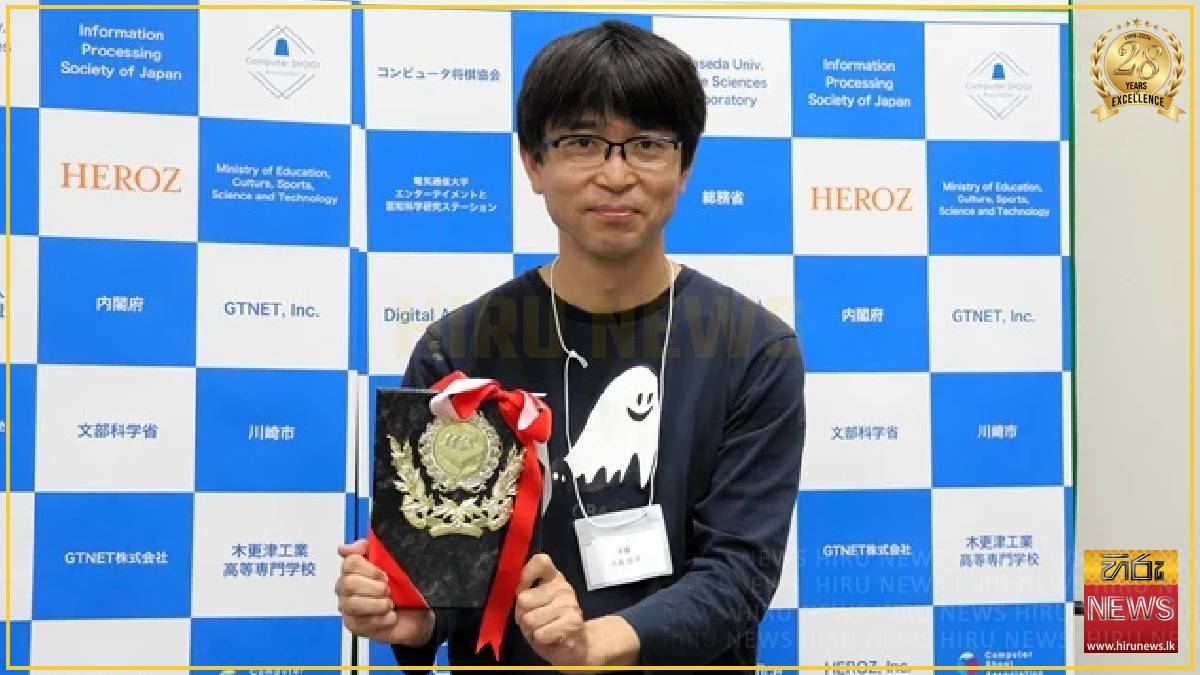
“Hisui,” a first-time entrant, emerged from a crowded field of 55 AI programs, to claim the championship.
After the first and second qualifying rounds, eight programs advanced to the round-robin final league.
Hisui and “Ryfamate” finished the league level on five wins apiece, with draws counting as half a win. But Hisui prevailed by the narrowest of margins on a tiebreaker: the combined win totals of the opponents it had defeated.
Hisui was developed by Yuhei Omori, 44, an AI engineer at Heroz Inc., the company known for the online shogi app “Shogi Wars.”
“I never expected to win, so I’m thrilled,” he said.
Shogi, often described as the Japanese form of chess, is a two-player strategy board game in which each side seeks to capture the opponent’s king.
But unlike in chess, shogi players can return captured pieces to the board as their own, a rule that gives the game its distinctive complexity and tactical volatility.
-The Asahi Shimbun
But shogi-playing artificial intelligence programmes have shown that gaining that initial edge can lead to sheer dominance.
In the round-robin final league of the 36th World Computer Shogi Championship, the premier tournament for shogi-playing AI programs, first-move AI players had a winning rate of 83.9 percent.
Concerns were raised at the May 3-5 tournament held in Kawasaki that AI could eventually devise a first-move playing strategy that would be impossible to defeat.
“Hisui,” a first-time entrant, emerged from a crowded field of 55 AI programs, to claim the championship.
After the first and second qualifying rounds, eight programs advanced to the round-robin final league.
Hisui and “Ryfamate” finished the league level on five wins apiece, with draws counting as half a win. But Hisui prevailed by the narrowest of margins on a tiebreaker: the combined win totals of the opponents it had defeated.
Hisui was developed by Yuhei Omori, 44, an AI engineer at Heroz Inc., the company known for the online shogi app “Shogi Wars.”
“I never expected to win, so I’m thrilled,” he said.
Shogi, often described as the Japanese form of chess, is a two-player strategy board game in which each side seeks to capture the opponent’s king.
But unlike in chess, shogi players can return captured pieces to the board as their own, a rule that gives the game its distinctive complexity and tactical volatility.
-The Asahi Shimbun
Latest News
Ukraine denies Russian capture of key eastern city Kostiantynivka
Local
04 July 2026

Sri Lankan delegation attends funeral of Iran's Ayatollah Ali Khamenei
Local
04 July 2026

Outgoing UK PM says successor cannot spend less time on foreign affairs
Local
04 July 2026

Airbus CEO 'not necessarily optimistic' on European defence cooperation
Local
04 July 2026

‘Cheap Casio’ watches rebound in popularity in Europe, Japan
Local
04 July 2026

Farmers demand immediate opening of government paddy stores
Local
04 July 2026

AI programmes dashing hopes of second-move shogi players
Local
04 July 2026
Pakistan syndicate allegedly smuggled human placentas, say police
Local
04 July 2026

Insurgents attack multiple towns in Mali
Local
04 July 2026

Djokovic fights off Rinderknech to claim more history
Local
04 July 2026