



Share Post


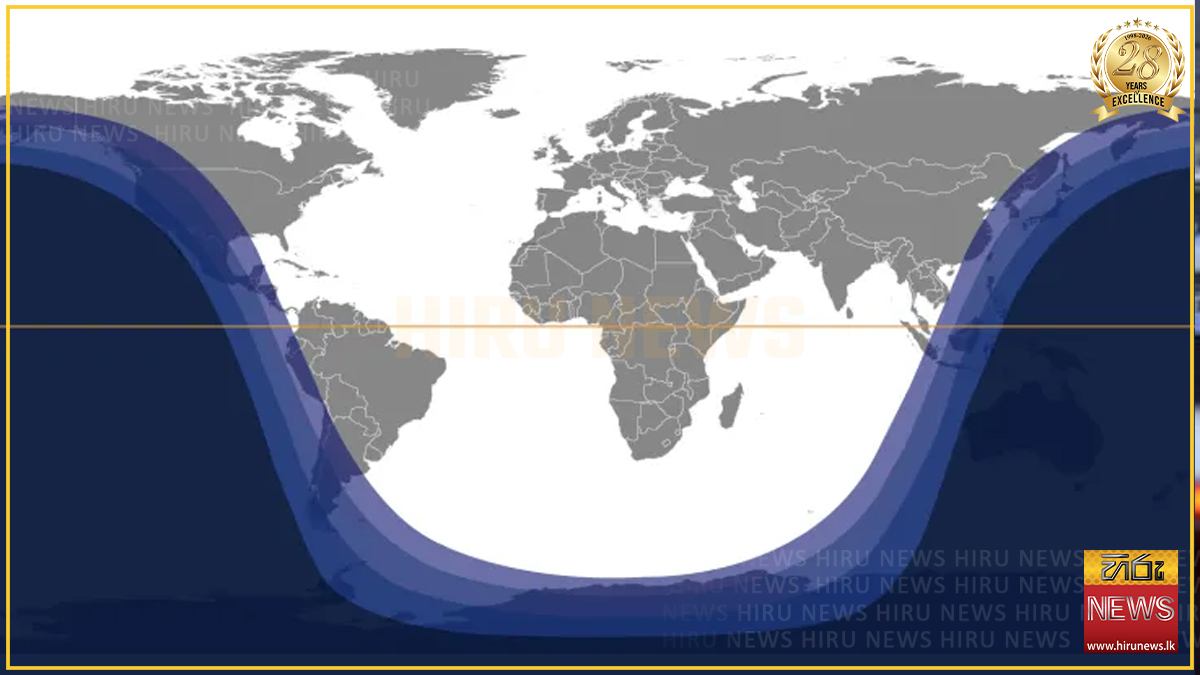
Because of Earth’s tilt and the timing of the Northern Hemisphere’s summer, about 99 percent of the world’s population – some 8.2 billion people – will experience daylight or twilight simultaneously on July 8, at about 11:10 GMT.
For a brief period lasting only about a minute, Earth’s most populated areas will all be under the Sun, with only a small fraction experiencing nighttime.
Daylight will stretch across North America, South America, Europe, Africa and most of Asia, where nearly all of the world’s population lives.
In darkness will be Australia, New Zealand, parts of Southeast Asia and Antarctica, along with the surrounding oceans.
This is not a one-day-only phenomenon. For about 60 days each year, from roughly May 18 to July 17, there is a brief moment each day during which nearly all of humanity experiences either daylight or twilight.
The phenomenon became widely associated with July 8 following a social media post in 2022 claiming it was the only day this occurred, which went viral. A subsequent fact check by Time and Date found that while July 8 is one of the dates when the overlap is greatest, similar conditions occur every day for about two months around the Northern Hemisphere summer.
At the moment when sunlight reaches almost everyone on Earth, about 6.9 billion people (83 percent) will be in full daylight.
Another 581 million (7 percent) will experience “civil twilight”, when the sky remains bright enough for most outdoor activities without artificial lighting.
A further 498 million people (6 percent) will be in nautical twilight, when the horizon is still visible but the sky is much darker, while 249 million (3 percent) will be in astronomical twilight, with only a faint glow left before complete darkness.
Just 83 million people (1 percent) will experience full night, when the Sun is more than 18 degrees below the horizon and the sky is completely dark.
June solstice is the Northern Hemisphere’s longest day, and marks the beginning of summer.
After the June solstice, the Sun begins moving south. This slightly reduces daylight in sparsely populated far northern regions, but extends it further into densely populated areas such as Indonesia and the Philippines.
That small shift brings about 10 million more people into daylight or twilight than on the solstice itself.
- AlJazeera
For a brief period lasting only about a minute, Earth’s most populated areas will all be under the Sun, with only a small fraction experiencing nighttime.
Daylight will stretch across North America, South America, Europe, Africa and most of Asia, where nearly all of the world’s population lives.
In darkness will be Australia, New Zealand, parts of Southeast Asia and Antarctica, along with the surrounding oceans.
This is not a one-day-only phenomenon. For about 60 days each year, from roughly May 18 to July 17, there is a brief moment each day during which nearly all of humanity experiences either daylight or twilight.
The phenomenon became widely associated with July 8 following a social media post in 2022 claiming it was the only day this occurred, which went viral. A subsequent fact check by Time and Date found that while July 8 is one of the dates when the overlap is greatest, similar conditions occur every day for about two months around the Northern Hemisphere summer.
At the moment when sunlight reaches almost everyone on Earth, about 6.9 billion people (83 percent) will be in full daylight.
Another 581 million (7 percent) will experience “civil twilight”, when the sky remains bright enough for most outdoor activities without artificial lighting.
A further 498 million people (6 percent) will be in nautical twilight, when the horizon is still visible but the sky is much darker, while 249 million (3 percent) will be in astronomical twilight, with only a faint glow left before complete darkness.
Just 83 million people (1 percent) will experience full night, when the Sun is more than 18 degrees below the horizon and the sky is completely dark.
June solstice is the Northern Hemisphere’s longest day, and marks the beginning of summer.
After the June solstice, the Sun begins moving south. This slightly reduces daylight in sparsely populated far northern regions, but extends it further into densely populated areas such as Indonesia and the Philippines.
That small shift brings about 10 million more people into daylight or twilight than on the solstice itself.
- AlJazeera
Latest News
Trump on Iran: US will probably hit them again tonight
Local
08 July 2026

UN reminds state of duty to protect inmates
Local
08 July 2026

Negombo Prison tragedy is not an isolated incident - Bar Association
Local
08 July 2026

Final rites for Welikada prison Chief Jailor tomorrow
Local
08 July 2026

99% of people on Earth will get sunlight at the same time this Wednesday
Local
08 July 2026
Kandy Esala procession to commence on August 13
Local
08 July 2026

Heat Index to reach advisory levels tomorrow
Local
08 July 2026
2027 budget to address long-standing drinking water issues
Local
08 July 2026

Bail granted to Land Registrar accused of aiding organised crime
Local
08 July 2026

Sajith accuses government of betraying farmers after polls
Local
08 July 2026