Share Post


Throughout its war with the US, Iran’s counteroffensive has largely been directed at the oil-rich Arab countries that border the Persian Gulf.
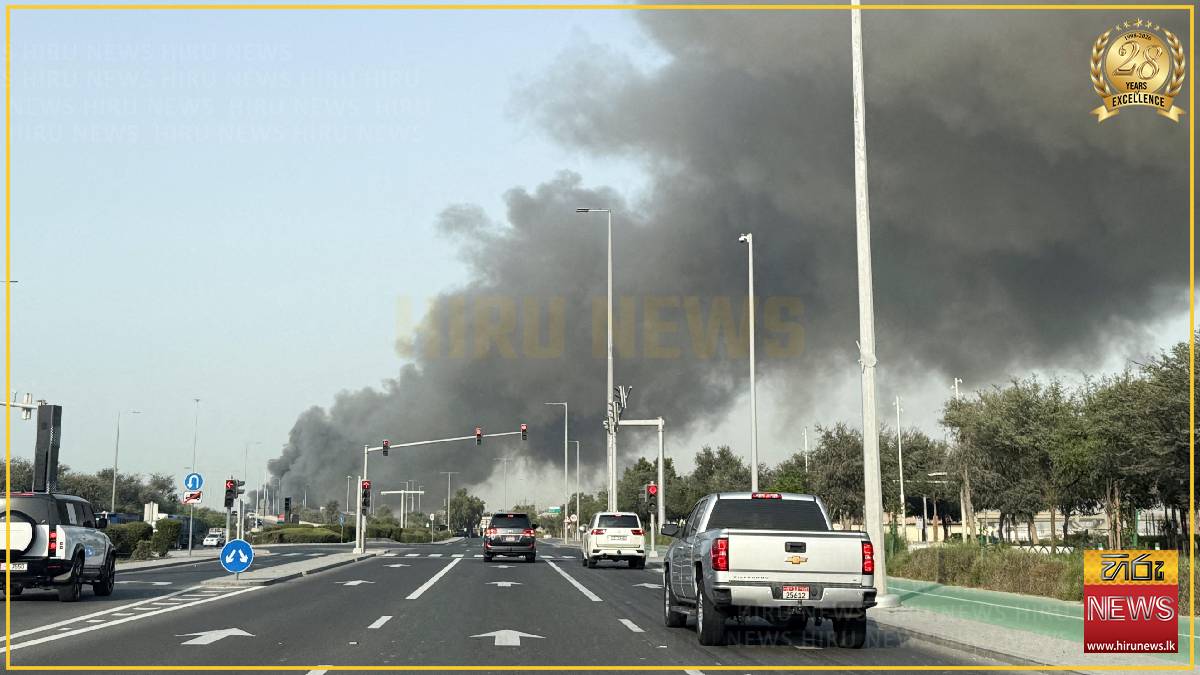
Iran has repeatedly targeted US assets and energy infrastructure in all six states that make up the Gulf Cooperation Council: Bahrain, Kuwait, Qatar, Oman, Saudi Arabia and the United Arab Emirates.
It’s come at great cost: the price tag for the oil refineries, power plants and other energy facilities damaged in the war could hit $58 billion, according to an April estimate from Rystad Energy, which doesn’t take into account the latest bout of fighting. This week, a key power and desalination plant in Kuwait was struck twice in two days.
More broadly, Iran’s attacks have also punctured confidence and security in the Gulf, disrupting tourism and air travel in a key global transport node, and prompting some expats to flee.
But while Gulf leaders have strongly condemned Iran’s attacks on their territory, they’ve stopped short of a military response.
That’s because, despite the mounting costs of the war, “further escalation with Iran would impose costs that these governments are unwilling to bear,” Hesham Sallam, senior research scholar at Stanford University’s Center on Democracy, Development and the Rule of Law told CNN.
“Gulf states have built much of their domestic and international legitimacy around ambitious visions of growth, investment, tourism, infrastructure development, and deeper integration into global markets,” Sallam said. “An intensified conflict with Iran could jeopardize the modernizing projects in which they have invested so heavily, both politically and financially.”
The Gulf states know that if they intervene, they will only prolong the war, said Ian Parmeter, Middle East expert and former Australian ambassador to Lebanon.
Unlike the US, which is thousands of miles away from Iran, the Gulf states “are very much aware that whatever happens in their future, they’re going to have Iran as a neighbor,” Parmeter told CNN.
“They’re going to have to live with Iran.”
-CNN
Iran has repeatedly targeted US assets and energy infrastructure in all six states that make up the Gulf Cooperation Council: Bahrain, Kuwait, Qatar, Oman, Saudi Arabia and the United Arab Emirates.
It’s come at great cost: the price tag for the oil refineries, power plants and other energy facilities damaged in the war could hit $58 billion, according to an April estimate from Rystad Energy, which doesn’t take into account the latest bout of fighting. This week, a key power and desalination plant in Kuwait was struck twice in two days.
More broadly, Iran’s attacks have also punctured confidence and security in the Gulf, disrupting tourism and air travel in a key global transport node, and prompting some expats to flee.
But while Gulf leaders have strongly condemned Iran’s attacks on their territory, they’ve stopped short of a military response.
That’s because, despite the mounting costs of the war, “further escalation with Iran would impose costs that these governments are unwilling to bear,” Hesham Sallam, senior research scholar at Stanford University’s Center on Democracy, Development and the Rule of Law told CNN.
“Gulf states have built much of their domestic and international legitimacy around ambitious visions of growth, investment, tourism, infrastructure development, and deeper integration into global markets,” Sallam said. “An intensified conflict with Iran could jeopardize the modernizing projects in which they have invested so heavily, both politically and financially.”
The Gulf states know that if they intervene, they will only prolong the war, said Ian Parmeter, Middle East expert and former Australian ambassador to Lebanon.
Unlike the US, which is thousands of miles away from Iran, the Gulf states “are very much aware that whatever happens in their future, they’re going to have Iran as a neighbor,” Parmeter told CNN.
“They’re going to have to live with Iran.”
-CNN
Latest News
England's Bethell to miss The Hundred with knee injury
Local
21 July 2026

Row escalates in Ukraine over army chief's future
Local
21 July 2026

Saudi crude tankers turn back as Houthis open new front in US-Iran war
Local
21 July 2026
Spain seeks to extend smoking ban to terraces, include vapes
Local
21 July 2026

Arrest ordered for Delhi Capital's player in rape case
Local
21 July 2026

Novo sues Lilly, claiming misleading ads in weight-loss drug battle
Local
21 July 2026

Rahul Gandhi, Priyanka Gandhi detained by Delhi police
Local
21 July 2026
Netherlands to ban Israeli settler products
Local
21 July 2026
New UK finance minister calms market but investors see more tax and debt ahead
Local
21 July 2026

AI stocks gather more strength, even as Brent oil’s price tops $90
Local
21 July 2026