


Share Post


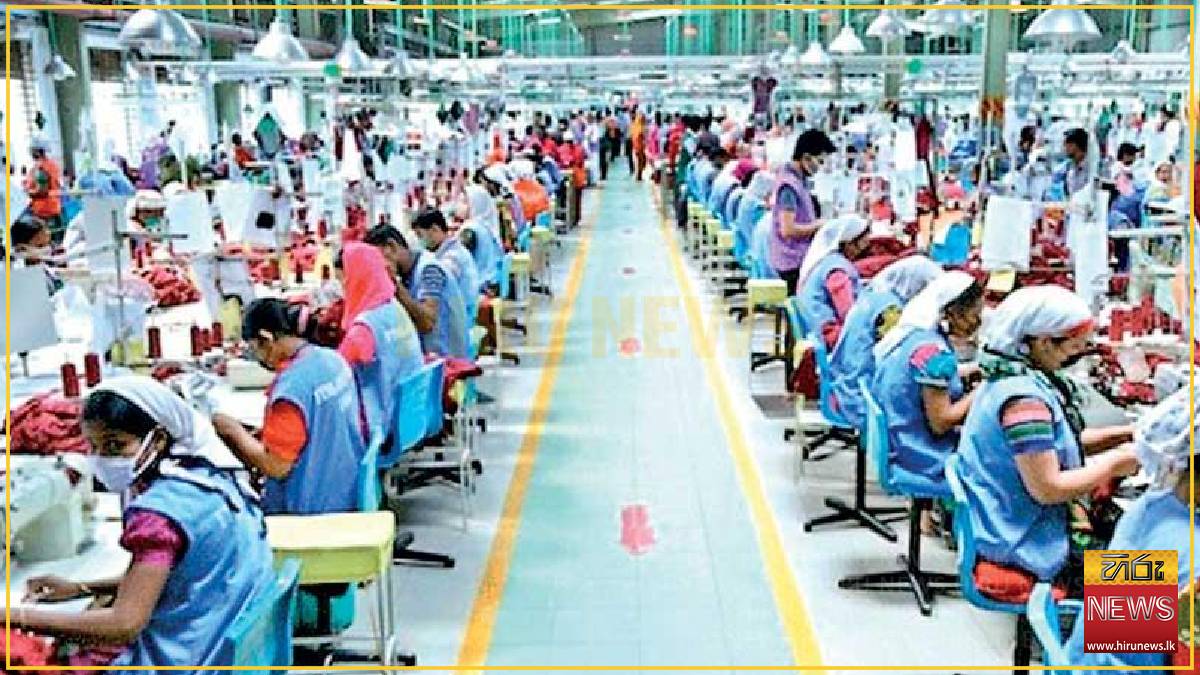
Sri Lanka’s apparel industry has urged the Government to take immediate action to address concerns raised by the United States regarding the country’s stance on imports linked to forced labour, warning that failure to do so could result in a higher additional tariff of 12.5% on exports to the US.
Speaking to *The Sunday Morning Business*, Joint Apparel Association Forum Sri Lanka (JAAFSL) Secretary General Yohan Lawrence said the industry had already engaged with the Government in an effort to secure Sri Lanka’s inclusion among countries eligible for a lower 10% additional tariff rate.
According to Lawrence, the US has divided countries into two categories: those that have taken steps to restrict forced labour imports and those that have not. Sri Lanka currently falls into the latter group, as it neither has specific legislation in place nor has it formally committed to the US Trade Representative (USTR) to implement such measures.
He stressed that even a 2.5 percentage-point tariff difference could significantly impact the competitiveness of Sri Lankan exports. “The additional 2.5% is substantial, and there is also the risk that tariffs could increase further in the future,” he said.
Lawrence noted that a public consultation process is currently underway and that the apparel sector would continue engaging policymakers on measures needed to satisfy USTR requirements.
He explained that Sri Lankan apparel exports to the US are already subject to Most Favoured Nation (MFN) tariffs ranging from 6% to 37%, in addition to a temporary 10% tariff that is due to expire in July after its 150-day validity period. Once that expires, exporters will face either a new 10% or 12.5% additional tariff, depending on the country’s compliance status.
If Sri Lanka remains outside the preferred category, its exports will be subject to MFN rates plus 12.5%, while competing manufacturing hubs such as Pakistan, Cambodia, Bangladesh, and Indonesia would continue to benefit from MFN rates plus 10%.
Lawrence warned that international buyers would likely seek price reductions to offset the higher duties, placing further pressure on already thin profit margins for Sri Lankan exporters. He also cautioned that there was no assurance the tariff gap would remain limited to 2.5%.
The USTR announced on 2 June that countries with forced labour import bans, reciprocal commitments, or partial restrictions on such imports would qualify for the lower 10% additional tariff. All other countries, including Sri Lanka, would face a 12.5% rate.
According to a Reuters review of the USTR proposal, 14 economies currently meet the criteria for the lower tariff rate, including Canada, the European Union, Mexico, Pakistan, Bangladesh, Cambodia, Indonesia, Malaysia, Taiwan, the United Kingdom, Argentina, Ecuador, El Salvador, and Guatemala.
Speaking to *The Sunday Morning Business*, Joint Apparel Association Forum Sri Lanka (JAAFSL) Secretary General Yohan Lawrence said the industry had already engaged with the Government in an effort to secure Sri Lanka’s inclusion among countries eligible for a lower 10% additional tariff rate.
According to Lawrence, the US has divided countries into two categories: those that have taken steps to restrict forced labour imports and those that have not. Sri Lanka currently falls into the latter group, as it neither has specific legislation in place nor has it formally committed to the US Trade Representative (USTR) to implement such measures.
He stressed that even a 2.5 percentage-point tariff difference could significantly impact the competitiveness of Sri Lankan exports. “The additional 2.5% is substantial, and there is also the risk that tariffs could increase further in the future,” he said.
Lawrence noted that a public consultation process is currently underway and that the apparel sector would continue engaging policymakers on measures needed to satisfy USTR requirements.
He explained that Sri Lankan apparel exports to the US are already subject to Most Favoured Nation (MFN) tariffs ranging from 6% to 37%, in addition to a temporary 10% tariff that is due to expire in July after its 150-day validity period. Once that expires, exporters will face either a new 10% or 12.5% additional tariff, depending on the country’s compliance status.
If Sri Lanka remains outside the preferred category, its exports will be subject to MFN rates plus 12.5%, while competing manufacturing hubs such as Pakistan, Cambodia, Bangladesh, and Indonesia would continue to benefit from MFN rates plus 10%.
Lawrence warned that international buyers would likely seek price reductions to offset the higher duties, placing further pressure on already thin profit margins for Sri Lankan exporters. He also cautioned that there was no assurance the tariff gap would remain limited to 2.5%.
The USTR announced on 2 June that countries with forced labour import bans, reciprocal commitments, or partial restrictions on such imports would qualify for the lower 10% additional tariff. All other countries, including Sri Lanka, would face a 12.5% rate.
According to a Reuters review of the USTR proposal, 14 economies currently meet the criteria for the lower tariff rate, including Canada, the European Union, Mexico, Pakistan, Bangladesh, Cambodia, Indonesia, Malaysia, Taiwan, the United Kingdom, Argentina, Ecuador, El Salvador, and Guatemala.
Latest News
Tony Abbott wants sharks culled after latest attack
Local
15 June 2026
Sri Lanka–Thailand Business Council marks 25 years
Local
15 June 2026
Uruguay's World Cup team heads to Miami after paperwork problem
Local
15 June 2026

'Government that came for the oppressed, now protecting the rich' – Namal
Local
15 June 2026
Dr. Arosha Fernando takes local movie industry to Kollywood, Hollywood
Local
15 June 2026

Gold extends gains after US-Iran reach peace deal
Local
15 June 2026
Suspect arrested over imported goods with unpaid customs duty
Local
15 June 2026
Norwegian crown princess’s son found guilty of rape
Local
15 June 2026

‘If someone is guilty, that’s when they try to hide things’ – Minister Jayatissa comments
Local
15 June 2026
Starbucks Korea to shut outlets for history lessons
Local
15 June 2026