

As global markets place increasing emphasis on sustainable and deforestation-free supply chains, Sri Lanka’s rubber sector is taking proactive steps to strengthen its competitiveness and safeguard access to key export markets.
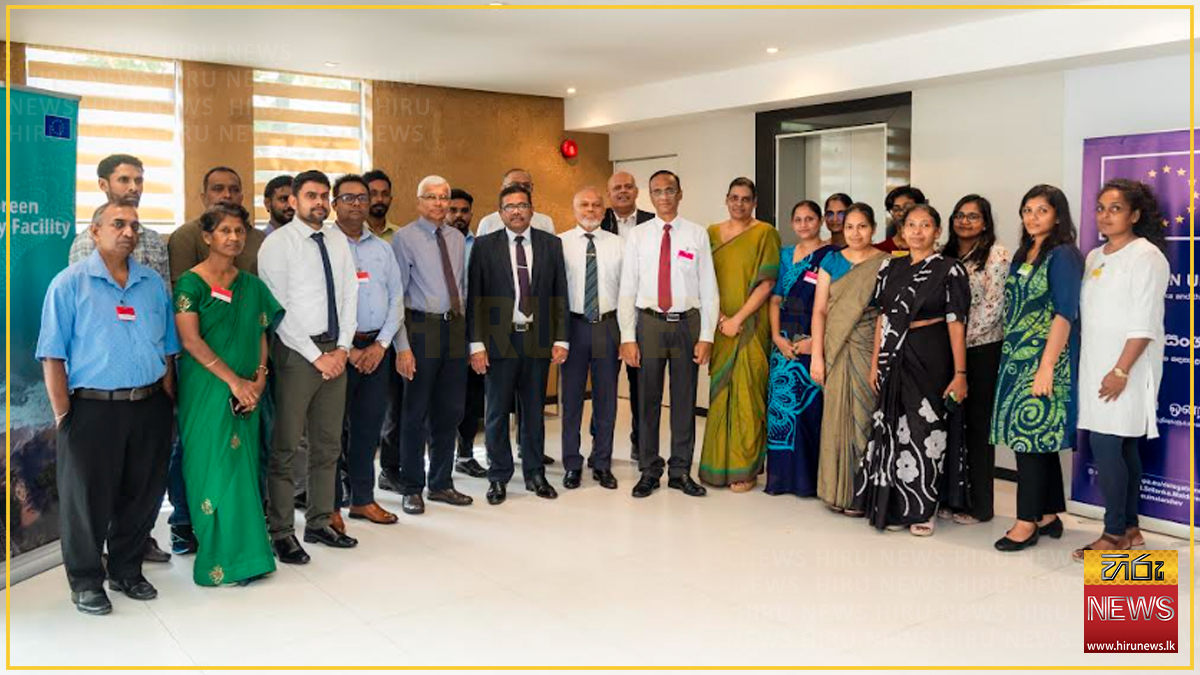
More than 80 stakeholders from across the rubber value chain recently gathered in Colombo to discuss Sri Lanka’s response to the European Union Deforestation Regulation (EUDR), a key sustainability measure that will shape future access to European markets.
The stakeholder consultation workshop brought together representatives from government institutions, plantation companies, smallholder farmer organisations, processors, exporters, manufacturers, industry associations and development partners.
The event was organised by the Rubber Development Department in collaboration with the European Union-funded Green Recovery Facility, implemented by Expertise France under the EU Global Gateway strategy.
Designed to promote deforestation-free supply chains and sustainable agricultural production, the EUDR supports global commitments on climate action, biodiversity conservation and forest protection. Sri Lanka has been classified as a “low-risk” country under the regulation, creating an opportunity to further strengthen sustainability practices, traceability systems and due diligence mechanisms across the rubber sector.
The workshop forms part of a broader EU-supported initiative aimed at helping the industry adapt to EUDR requirements. Through assessments, stakeholder consultations and targeted capacity-building programmes, the initiative seeks to improve traceability and compliance throughout the rubber value chain while ensuring continued access to important export destinations.
Opening the workshop, Secretary to the Ministry of Plantation and Community Infrastructure Gunadasa Samarasinghe stressed the importance of ensuring that Sri Lanka’s rubber sector remains competitive and well-positioned to respond to evolving global sustainability expectations.
Recommendations generated through the workshop will help shape future capacity-building activities, including a three-and-a-half-day Training of Trainers (ToT) programme and stakeholder-specific training sessions.
The initiative is expected to directly train around 280 stakeholders across the rubber value chain, further strengthening the sector’s readiness to meet EUDR requirements.
The programme reflects the European Union’s continued commitment to promoting sustainable production systems, environmental stewardship and the long-term competitiveness of Sri Lanka’s export sectors.
Latest News
Gold prices rise as Iran peace deal cheer outweighs Fed rate concerns

Kurundu Wellness marks International Yoga Day
Trump thanks China's Xi, Russia's Putin for being 'neutral' in Iran war
Sri Lanka deserves world's top holiday spot rank says Wasim Akram
Buddhist chaplain arrested in Boston undercover sex sting

Softlogic Life acquires 60% stake in Bangladesh insurer for US$ 1.9 Mn

Sri Lanka’s rubber sector gears up for EU sustainability rules
Damaged Saudi oil refinery to resume operations in 2027
India seeks rare earth samples from Siberian deposit
Nanu Oya-Badulla train services to resume on June 20