Our oceans have absorbed around a quarter of all the carbon dioxide we’ve emitted to the atmosphere. In recent times that’s around 2.4 billion tonnes a year. But could the planet’s waters be an even bigger ally in the fight against global warming, without doing more damage to its ecosystems?
Estimates suggest that new approaches could remove another 8 billion tonnes of carbon dioxide every year by 2050. Shaun Fitzgerald of the Centre for Climate Repair at Cambridge University says the ocean offers “one of the biggest opportunities to take carbon dioxide out of the atmosphere”.
But this nascent field needs to avoid some of the pitfalls of land-based projects, where climate impacts have not necessarily been additional and can also be reversed. Read more
Such challenges have made “everyone in the marine sector super-cautious,” says Sophie Chu, principal oceanographer and director of MRV (measurement, verification and reporting) at Captura, a spinout from the California Institute of Technology that is using electrochemistry to pull carbon dioxide from seawater.
Approaches to capturing carbon in the marine environment fall into two broad categories: engineered solutions, like Captura’s, and nature-based solutions, which harness the carbon-absorbing capacity of plants that grow in water, such as mangroves, seaweed and seagrass.
But all these solutions face challenges in scaling. Under the Trump administration, scientists working on marine carbon dioxide removal (mCDR) in U.S. federal research agencies have faced job cuts, and the investment climate has become tougher. But the industry has pressed on.
Last year, companies and NGOs set up the mCDR Coalition to advance knowledge-sharing across scientists, policymakers and civil society. And in January, U.S. congressional and senate representatives introduced a bill to encourage more research and funding for marine CDR.
The past year has seen an uptick in advanced market commitments (AMCs) by groups of buyers to purchase a specific volume of a low-carbon technology before it is commercially competitive.
The Symbiosis coalition, which includes Google, Meta, McKinsey & Co and Salesforce, is focused on nature-based removals, and has made its first foray into blue carbon, with a call for mangrove projects.
Mangroves store carbon at higher rates than tropical forests: some studies suggest this could be as high as 1,000 tonnes per hectare, with carbon stored in mangrove biomass and underlying soils.
They also offer valuable co-benefits in helping communities adapt to climate change, providing protection from storm surges and nurseries for fish that communities rely on.
Symbiosis founder Julia Strong says her coalition chose mangroves as a “highly impactful pathway for climate”, based on the literature and evidence base, and whether third parties can validate and verify the impact of a project.
But like any nature-based pathway, on land or in the sea, there are challenges over permanence. For example, development or storms could destroy mangroves. And scientists are still searching for more accurate means to account for carbon storage in seagrass and seaweeds.
Strong says Symbiosis will assess potential projects based on the results of pilots to understand the track record of carbon sequestration so far, as well as looking at modelling for carbon storage over time.
“We’ll look at the project design itself to understand the risk (of) reversals,” and how they’re accounted for, adds Strong.
Concerns over permanence are lower with engineered removal projects like that of Captura, which won an XPrize for its technology in 2022. Its technology is one of those receiving funding from another advanced market commitment, Frontier Climate, which is focused on permanent carbon removals, lasting more than 1,000 years, and whose buyers include Stripe, Google, Shopify, Meta and McKinsey Sustainability.
Captura’s technology uses renewable electricity to split water into an acid and alkali stream, removing and storing carbon dioxide and returning the more alkaline water to the sea. The method works because surface waters and atmosphere are constantly exchanging carbon dioxide, and any reduction in CO2 concentration means that more is drawn down from the atmosphere.
The company has run a series of pilots, culminating in a 1,000 tonnes a year project in Hawaii, in conjunction with oil and gas company Equinor. This tested the performance of Captura’s system, including its MRV, in preparation for commercial-scale operations.
Since the company can precisely measure how much CO2 its process has removed from the ocean’s existing stores, that places a firm limit on the CO2 drawdown Captura can claim. The CO2 removed from the ocean doesn’t count towards its claim because it was already stored.
In an ideal world, the seawater would take up the same amount of carbon dioxide as has been withdrawn, but in practice it doesn’t. For example, surface waters might sink before full gas exchange, or equilibration, can take place.
Captura uses models of natural CO2 fluxes across the ocean surface that have been developed over decades, and highly local measurements to establish a baseline of gas exchange at the ocean surface. It is also using maps developed by researchers that indicate which areas of ocean may be most efficient at drawing down carbon dioxide.
To make claims for carbon removal it is using protocols developed by carbon registry Isometric, which Chu describes as “pretty conservative, so it accounts for any uncertainties or losses anywhere”. Such losses could occur during the process of storing the captured CO2, or in its subsequent use, for example by the drinks industry.
Since its electrodialysis technology can be used in other processes, such as long-duration energy storage and critical minerals extraction, Captura has other potential revenue streams as it continues to develop the removal technology.
The biggest of the blue carbon removals deals that Frontier has signed is with Canada’s Planetary Technologies. Its buyers paid more than $30 million to Planetary to fulfil its commitment to remove over 115,000 tonnes of carbon dioxide by 2030.
Planetary (another XPrize winner) exploits the same principle of gaseous exchange as Captura, but it makes seawater more alkaline by the addition of alkaline minerals, a process known as ocean alkalinity enhancement (OAE), which mimics the natural weathering of rocks that get washed into the sea.
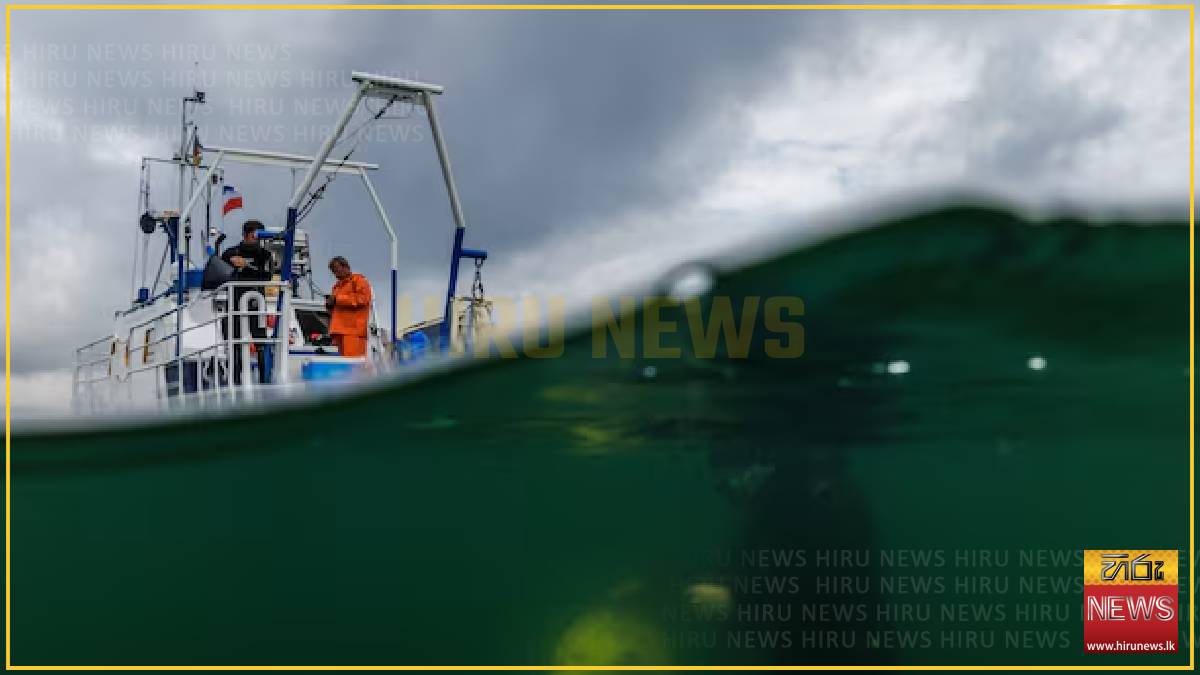
Earlier this year, scientists at the Woods Hole Oceanographic Institution reported the results of a field trial run off the Massachusetts coast, aimed at demonstrating how precisely ocean alkalinity enhancement projects could be monitored.
They dissolved 65,000 litres of sodium hydroxide over an area of one square kilometre, alongside a fluorescent dye to track how it dispersed in the open ocean.
The results demonstrate that an additional 2-10 tonnes of carbon dioxide were drawn down from the atmosphere during four days of monitoring. Their modelling suggests that could rise to 48 tonnes over the course of a year, but that doesn’t take account of the emissions from production and transport of the sodium compound.
The researchers, now in conversation with the private sector and regulators, say they hope the results will boost innovation and build trust in the technology.
Ben Rubin, executive director at the Carbon Business Council, says such rigorous research is underpinning the science and MRV of engineered marine carbon removals projects.
“I think the fact that we're seeing financial dollars flowing in on both the ‘buy’ side and the ‘invest’ side signals that the private sector (has) confidence that monitoring, reporting and verification is keeping pace – to really know that a tonne is a tonne for these different mCDR pathways.”
But there’s a trade-off to be made with knowing precisely the amount of carbon drawn down, and the cost and scalability of a particular solution, says Matt Isaacs, a partner at venture capital firm Counteract. “All the processes (like direct ocean capture) where you have high degrees of certainty are also technologically complex and very expensive right now.”
His firm has invested in another Frontier-backed technology, CarbonRun, which uses calcium carbonate to reduce the acidity of river systems. The minerals react with carbon dioxide to form carbonate and bicarbonate ions, which get washed into the sea and add to the ocean’s carbon store.
Measurements of alkalinity upstream and downstream of the dosing provide some confidence in the approach, says Isaacs. Earlier this year, Isometric issued CarbonRun with its first carbon credits from a project in southern Norway. They will go to Frontier’s buyers, who’ve paid the company $25.4 million to remove over 55,000 tonnes of carbon dioxide by 2029.
Rubin notes that private sector investments will need to be supported by policy frameworks developed by governments. There are some encouraging signs: Europe is advancing a carbon removal certification framework, and has begun discussions on direct ocean capture. Meanwhile, Japan is developing a compliance market for removals, including coastal blue carbon. The country has included mangrove carbon sequestration within its latest climate plan under the Paris Agreement, known as its nationally determined contribution (NDC).
Despite the risks and potential for reversals, we also have to consider the risk of not exploiting the ocean’s considerable potential to help combat climate change, says Fitzgerald of the Centre for Climate Repair. “I think it's beholden on us for future generations and future ecosystems to be looking at this very seriously.”
-Reuters
Estimates suggest that new approaches could remove another 8 billion tonnes of carbon dioxide every year by 2050. Shaun Fitzgerald of the Centre for Climate Repair at Cambridge University says the ocean offers “one of the biggest opportunities to take carbon dioxide out of the atmosphere”.
But this nascent field needs to avoid some of the pitfalls of land-based projects, where climate impacts have not necessarily been additional and can also be reversed. Read more
Such challenges have made “everyone in the marine sector super-cautious,” says Sophie Chu, principal oceanographer and director of MRV (measurement, verification and reporting) at Captura, a spinout from the California Institute of Technology that is using electrochemistry to pull carbon dioxide from seawater.
Approaches to capturing carbon in the marine environment fall into two broad categories: engineered solutions, like Captura’s, and nature-based solutions, which harness the carbon-absorbing capacity of plants that grow in water, such as mangroves, seaweed and seagrass.
But all these solutions face challenges in scaling. Under the Trump administration, scientists working on marine carbon dioxide removal (mCDR) in U.S. federal research agencies have faced job cuts, and the investment climate has become tougher. But the industry has pressed on.
Last year, companies and NGOs set up the mCDR Coalition to advance knowledge-sharing across scientists, policymakers and civil society. And in January, U.S. congressional and senate representatives introduced a bill to encourage more research and funding for marine CDR.
The past year has seen an uptick in advanced market commitments (AMCs) by groups of buyers to purchase a specific volume of a low-carbon technology before it is commercially competitive.
The Symbiosis coalition, which includes Google, Meta, McKinsey & Co and Salesforce, is focused on nature-based removals, and has made its first foray into blue carbon, with a call for mangrove projects.
Mangroves store carbon at higher rates than tropical forests: some studies suggest this could be as high as 1,000 tonnes per hectare, with carbon stored in mangrove biomass and underlying soils.
They also offer valuable co-benefits in helping communities adapt to climate change, providing protection from storm surges and nurseries for fish that communities rely on.
Symbiosis founder Julia Strong says her coalition chose mangroves as a “highly impactful pathway for climate”, based on the literature and evidence base, and whether third parties can validate and verify the impact of a project.
But like any nature-based pathway, on land or in the sea, there are challenges over permanence. For example, development or storms could destroy mangroves. And scientists are still searching for more accurate means to account for carbon storage in seagrass and seaweeds.
Strong says Symbiosis will assess potential projects based on the results of pilots to understand the track record of carbon sequestration so far, as well as looking at modelling for carbon storage over time.
“We’ll look at the project design itself to understand the risk (of) reversals,” and how they’re accounted for, adds Strong.
Concerns over permanence are lower with engineered removal projects like that of Captura, which won an XPrize for its technology in 2022. Its technology is one of those receiving funding from another advanced market commitment, Frontier Climate, which is focused on permanent carbon removals, lasting more than 1,000 years, and whose buyers include Stripe, Google, Shopify, Meta and McKinsey Sustainability.
Captura’s technology uses renewable electricity to split water into an acid and alkali stream, removing and storing carbon dioxide and returning the more alkaline water to the sea. The method works because surface waters and atmosphere are constantly exchanging carbon dioxide, and any reduction in CO2 concentration means that more is drawn down from the atmosphere.
The company has run a series of pilots, culminating in a 1,000 tonnes a year project in Hawaii, in conjunction with oil and gas company Equinor. This tested the performance of Captura’s system, including its MRV, in preparation for commercial-scale operations.
Since the company can precisely measure how much CO2 its process has removed from the ocean’s existing stores, that places a firm limit on the CO2 drawdown Captura can claim. The CO2 removed from the ocean doesn’t count towards its claim because it was already stored.
In an ideal world, the seawater would take up the same amount of carbon dioxide as has been withdrawn, but in practice it doesn’t. For example, surface waters might sink before full gas exchange, or equilibration, can take place.
Captura uses models of natural CO2 fluxes across the ocean surface that have been developed over decades, and highly local measurements to establish a baseline of gas exchange at the ocean surface. It is also using maps developed by researchers that indicate which areas of ocean may be most efficient at drawing down carbon dioxide.
To make claims for carbon removal it is using protocols developed by carbon registry Isometric, which Chu describes as “pretty conservative, so it accounts for any uncertainties or losses anywhere”. Such losses could occur during the process of storing the captured CO2, or in its subsequent use, for example by the drinks industry.
Since its electrodialysis technology can be used in other processes, such as long-duration energy storage and critical minerals extraction, Captura has other potential revenue streams as it continues to develop the removal technology.
The biggest of the blue carbon removals deals that Frontier has signed is with Canada’s Planetary Technologies. Its buyers paid more than $30 million to Planetary to fulfil its commitment to remove over 115,000 tonnes of carbon dioxide by 2030.
Planetary (another XPrize winner) exploits the same principle of gaseous exchange as Captura, but it makes seawater more alkaline by the addition of alkaline minerals, a process known as ocean alkalinity enhancement (OAE), which mimics the natural weathering of rocks that get washed into the sea.
Earlier this year, scientists at the Woods Hole Oceanographic Institution reported the results of a field trial run off the Massachusetts coast, aimed at demonstrating how precisely ocean alkalinity enhancement projects could be monitored.
They dissolved 65,000 litres of sodium hydroxide over an area of one square kilometre, alongside a fluorescent dye to track how it dispersed in the open ocean.
The results demonstrate that an additional 2-10 tonnes of carbon dioxide were drawn down from the atmosphere during four days of monitoring. Their modelling suggests that could rise to 48 tonnes over the course of a year, but that doesn’t take account of the emissions from production and transport of the sodium compound.
The researchers, now in conversation with the private sector and regulators, say they hope the results will boost innovation and build trust in the technology.
Ben Rubin, executive director at the Carbon Business Council, says such rigorous research is underpinning the science and MRV of engineered marine carbon removals projects.
“I think the fact that we're seeing financial dollars flowing in on both the ‘buy’ side and the ‘invest’ side signals that the private sector (has) confidence that monitoring, reporting and verification is keeping pace – to really know that a tonne is a tonne for these different mCDR pathways.”
But there’s a trade-off to be made with knowing precisely the amount of carbon drawn down, and the cost and scalability of a particular solution, says Matt Isaacs, a partner at venture capital firm Counteract. “All the processes (like direct ocean capture) where you have high degrees of certainty are also technologically complex and very expensive right now.”
His firm has invested in another Frontier-backed technology, CarbonRun, which uses calcium carbonate to reduce the acidity of river systems. The minerals react with carbon dioxide to form carbonate and bicarbonate ions, which get washed into the sea and add to the ocean’s carbon store.
Measurements of alkalinity upstream and downstream of the dosing provide some confidence in the approach, says Isaacs. Earlier this year, Isometric issued CarbonRun with its first carbon credits from a project in southern Norway. They will go to Frontier’s buyers, who’ve paid the company $25.4 million to remove over 55,000 tonnes of carbon dioxide by 2029.
Rubin notes that private sector investments will need to be supported by policy frameworks developed by governments. There are some encouraging signs: Europe is advancing a carbon removal certification framework, and has begun discussions on direct ocean capture. Meanwhile, Japan is developing a compliance market for removals, including coastal blue carbon. The country has included mangrove carbon sequestration within its latest climate plan under the Paris Agreement, known as its nationally determined contribution (NDC).
Despite the risks and potential for reversals, we also have to consider the risk of not exploiting the ocean’s considerable potential to help combat climate change, says Fitzgerald of the Centre for Climate Repair. “I think it's beholden on us for future generations and future ecosystems to be looking at this very seriously.”
-Reuters