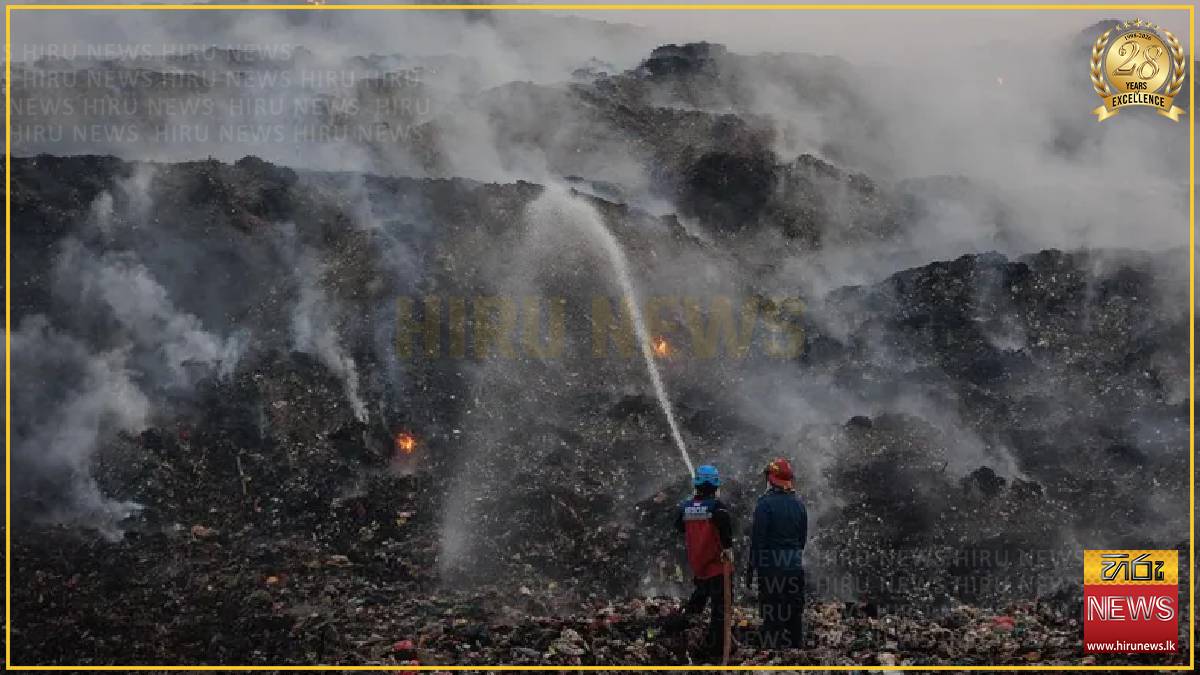
For eight days, a fire has been burning at a waste mountain in Indonesia.
The blaze at Jatiwaringin landfill, on the outskirts of the capital Jakarta, has spread across more than 15 hectares, smothering the area in thick, toxic smoke and displacing hundreds of local residents.
Health authorities have reported a surge in respiratory illnesses due to air pollution, and firefighters have dispatched helicopters, water tankers, bulldozers and drones to extinguish the inferno.
There are hopes this can be achieved by the end of the week. But environmental activists say this is just one symptom of a growing waste crisis in Indonesia, describing the landfill fire as an "ecological disaster resulting from systemic negligence".
The fire broke out on 30 June, initially triggered by a small spark which was fanned by strong gusts of wind and spread to several locations – including places where the rubbish was piled high, and spots that have proven difficult for firefighters to reach.
In the week since, heavy black clouds of smoke have inundated surrounding residential areas. Measurements from the Ministry of Environment indicate that the air quality around the landfill has reached hazardous levels, though the severity has eased in recent days.
One local resident, 45-year-old Sarmanah, told the BBC that toxic smoke flooded her house, forcing her to flee with her child.
"The smoke was so thick you couldn't see anyone," she recalled. "It stings the nose, makes you cough and have a runny nose, and makes you unable to breathe... We were forced to leave the house because we couldn't take it anymore."
Hundreds of others were driven to do the same, seeking refuge at a shelter set up by the local government. Tosiyani, 37, said she was prohibited from going home because "the smoke contains toxic gas".
Local health authorities have so far examined at least 234 residents suffering respiratory illnesses because of the blaze. Of those, 72 were found to be suffering from acute respiratory tract infections.
Meanwhile, smoke and fire spots continue to smoulder in several piles of rubbish, specifically to the west and south of the landfill.
Djohan Darmawan, Director of Emergency Operations Control Coordination at the National Disaster Management Agency (BNPB), said that efforts to extinguish the landfill fire required special handling because the blaze was not on the surface but rather smouldering inside the heaped rubbish.
Though officials have not confirmed the initial cause of the blaze, the Indonesian non-governmental organisation Forum for the Environment (Walhi) has suggested that it was triggered by the accumulation of methane gas from decomposing organic waste.
This is the result of an unregulated open dumping system that has become widespread in Indonesia.
"This is a time bomb of accumulated waste management problems that have been ignored for years without fundamental improvements," Wahyu Eka Styawan, a campaigner with Walhi, told the BBC.
According to Walhi, the amount of waste that Tangerang Regency generates is far more than what Jatiwaringin landfill was designed to handle.
"The landfill can accommodate up to 2,700 tons of waste per day, but that only covers 59% of the waste in Tangerang Regency," said Wahyu.
"Where does the rest go?"
The answer can be found at open dumping sites across Tangerang, including in the areas surrounding the actual landfill, which have precipitated the growth of noxious trash mountains within a hundred metres of people's homes.
This had caused problems long before the blaze erupted: locals living near Jatiwaringin, in the fetid shadow of its waste mountains, told the BBC they were constantly plagued by pungent odours, flies and fears of landslides.
But the accumulation of methane gas, exacerbated by heat waves and the climate crisis, can turn these dumping grounds into powder kegs.
"As soon as there is a small spark or heat, the methane gas under the mountain of rubbish immediately ignites," Wahyu explained.
Major fires occurred at a number of landfills throughout 2023. These included the Sarimukti Landfill in Bandung Regency, which torched dozens of hectares of land, and was suspected of having been caused by cigarette butts and a buildup of methane gas.
Another landfill fire in Tangerang just months later, which destroyed about 80% of the 35-hectare site, was believed to have been triggered the same way.
Rizal Irawan, the Deputy for Environmental Law Enforcement at Indonesia's Ministry of Environment and Forestry, said an investigation into the cause of the fire at the Jatiwaringin landfill would be conducted after the extinguishing process was completed.
Apart from that, the Ministry of Environment and Forestry will evaluate 390 landfills across Indonesia in early August 2026.
Rizal said that the Jatiwaringin landfill had received administrative sanctions from the Ministry of Environment and Forestry for poor management in 2025.
In addition to sanctions, the Ministry of Environment and Forestry instructed local governments to implement a controlled landfill system by which waste is levelled or compacted using heavy equipment, then periodically covered with a layer of soil.
This can minimise the risk of fires caused by methane gas buildup, reduce the risk of disease, and improve the tidiness of the disposal area so that the surrounding environment does not look dirty.
Wahyu and others, however, believe that until central and regional governments in Indonesia show a true commitment to improving waste management systems, the problem of landfill fires will persist.
"Regulation is not implemented because there is no firmness and sanctions, the budget for waste management in the regions is minimal, and there is a lack of focus on educating residents about sorting organic waste from home," he said.
The fire at Jatiwaringin landfill, Wahyu added, should serve as a stark warning to the central government that this crisis cannot be resolved with emergency responses or superficial solutions.
Without waste reduction at the source, ongoing sorting, and organic waste processing that can prevent methane gas from forming, there will always be the risk of environmental disasters occurring at landfills, he said.
"It could definitely catch fire again if the pattern isn't changed. As long as organic waste remains piled up in a jumbled mess, methane gas will continue to be produced underground."
"Once the weather gets hot again, be prepared for more fires."
-BBC
The blaze at Jatiwaringin landfill, on the outskirts of the capital Jakarta, has spread across more than 15 hectares, smothering the area in thick, toxic smoke and displacing hundreds of local residents.
Health authorities have reported a surge in respiratory illnesses due to air pollution, and firefighters have dispatched helicopters, water tankers, bulldozers and drones to extinguish the inferno.
There are hopes this can be achieved by the end of the week. But environmental activists say this is just one symptom of a growing waste crisis in Indonesia, describing the landfill fire as an "ecological disaster resulting from systemic negligence".
The fire broke out on 30 June, initially triggered by a small spark which was fanned by strong gusts of wind and spread to several locations – including places where the rubbish was piled high, and spots that have proven difficult for firefighters to reach.
In the week since, heavy black clouds of smoke have inundated surrounding residential areas. Measurements from the Ministry of Environment indicate that the air quality around the landfill has reached hazardous levels, though the severity has eased in recent days.
One local resident, 45-year-old Sarmanah, told the BBC that toxic smoke flooded her house, forcing her to flee with her child.
"The smoke was so thick you couldn't see anyone," she recalled. "It stings the nose, makes you cough and have a runny nose, and makes you unable to breathe... We were forced to leave the house because we couldn't take it anymore."
Hundreds of others were driven to do the same, seeking refuge at a shelter set up by the local government. Tosiyani, 37, said she was prohibited from going home because "the smoke contains toxic gas".
Local health authorities have so far examined at least 234 residents suffering respiratory illnesses because of the blaze. Of those, 72 were found to be suffering from acute respiratory tract infections.
Meanwhile, smoke and fire spots continue to smoulder in several piles of rubbish, specifically to the west and south of the landfill.
Djohan Darmawan, Director of Emergency Operations Control Coordination at the National Disaster Management Agency (BNPB), said that efforts to extinguish the landfill fire required special handling because the blaze was not on the surface but rather smouldering inside the heaped rubbish.
Though officials have not confirmed the initial cause of the blaze, the Indonesian non-governmental organisation Forum for the Environment (Walhi) has suggested that it was triggered by the accumulation of methane gas from decomposing organic waste.
This is the result of an unregulated open dumping system that has become widespread in Indonesia.
"This is a time bomb of accumulated waste management problems that have been ignored for years without fundamental improvements," Wahyu Eka Styawan, a campaigner with Walhi, told the BBC.
According to Walhi, the amount of waste that Tangerang Regency generates is far more than what Jatiwaringin landfill was designed to handle.
"The landfill can accommodate up to 2,700 tons of waste per day, but that only covers 59% of the waste in Tangerang Regency," said Wahyu.
"Where does the rest go?"
The answer can be found at open dumping sites across Tangerang, including in the areas surrounding the actual landfill, which have precipitated the growth of noxious trash mountains within a hundred metres of people's homes.
This had caused problems long before the blaze erupted: locals living near Jatiwaringin, in the fetid shadow of its waste mountains, told the BBC they were constantly plagued by pungent odours, flies and fears of landslides.
But the accumulation of methane gas, exacerbated by heat waves and the climate crisis, can turn these dumping grounds into powder kegs.
"As soon as there is a small spark or heat, the methane gas under the mountain of rubbish immediately ignites," Wahyu explained.
Major fires occurred at a number of landfills throughout 2023. These included the Sarimukti Landfill in Bandung Regency, which torched dozens of hectares of land, and was suspected of having been caused by cigarette butts and a buildup of methane gas.
Another landfill fire in Tangerang just months later, which destroyed about 80% of the 35-hectare site, was believed to have been triggered the same way.
Rizal Irawan, the Deputy for Environmental Law Enforcement at Indonesia's Ministry of Environment and Forestry, said an investigation into the cause of the fire at the Jatiwaringin landfill would be conducted after the extinguishing process was completed.
Apart from that, the Ministry of Environment and Forestry will evaluate 390 landfills across Indonesia in early August 2026.
Rizal said that the Jatiwaringin landfill had received administrative sanctions from the Ministry of Environment and Forestry for poor management in 2025.
In addition to sanctions, the Ministry of Environment and Forestry instructed local governments to implement a controlled landfill system by which waste is levelled or compacted using heavy equipment, then periodically covered with a layer of soil.
This can minimise the risk of fires caused by methane gas buildup, reduce the risk of disease, and improve the tidiness of the disposal area so that the surrounding environment does not look dirty.
Wahyu and others, however, believe that until central and regional governments in Indonesia show a true commitment to improving waste management systems, the problem of landfill fires will persist.
"Regulation is not implemented because there is no firmness and sanctions, the budget for waste management in the regions is minimal, and there is a lack of focus on educating residents about sorting organic waste from home," he said.
The fire at Jatiwaringin landfill, Wahyu added, should serve as a stark warning to the central government that this crisis cannot be resolved with emergency responses or superficial solutions.
Without waste reduction at the source, ongoing sorting, and organic waste processing that can prevent methane gas from forming, there will always be the risk of environmental disasters occurring at landfills, he said.
"It could definitely catch fire again if the pattern isn't changed. As long as organic waste remains piled up in a jumbled mess, methane gas will continue to be produced underground."
"Once the weather gets hot again, be prepared for more fires."
-BBC