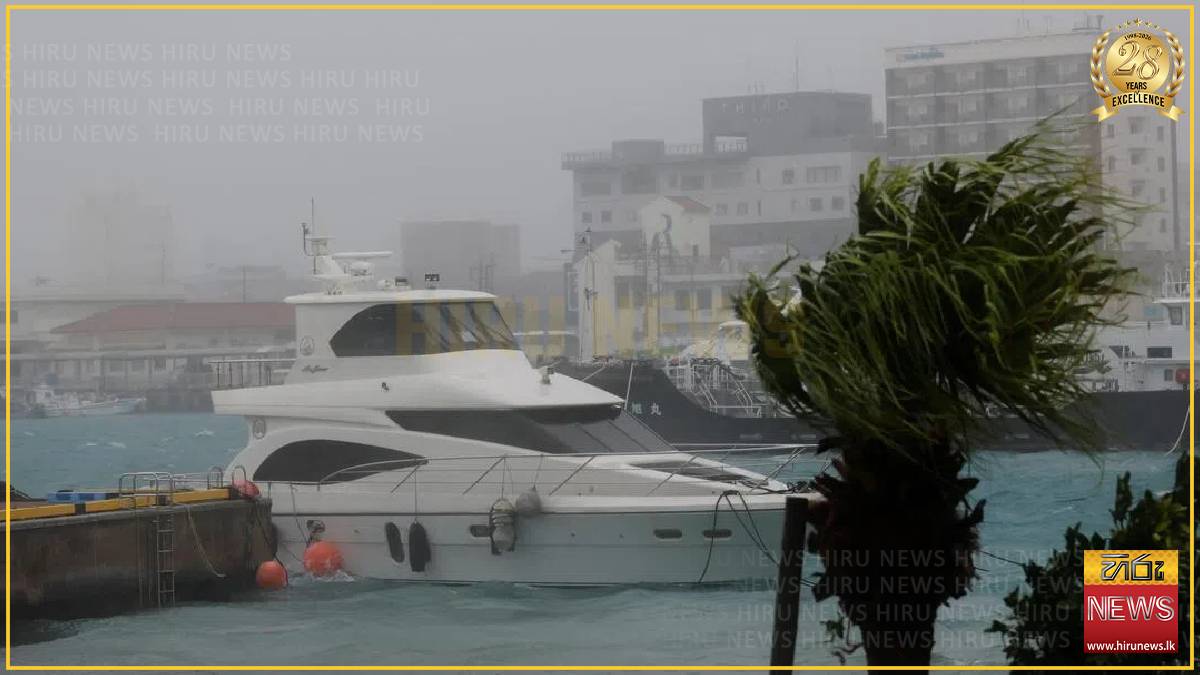
Typhoon Bavi was forecast to bring violent winds, potentially damaging homes, and high waves, with the risk of flooding in low-lying areas near the coast and rivers, according to the Japan Meteorological Agency.
It is expected to pass through the remote Sakishima Islands and move away from Japan.
As of 6 a.m. local time (5 a.m. Singapore time), the season’s ninth typhoon was moving at around 20kmh east-south-west of Miyako Island in Okinawa, packing winds of up to 216kmh.
Meanwhile, Taiwan’s government evacuated more than 14,000 people from mainly mountainous areas as the island shut down for the medium-strength Typhoon Bavi, which is expected to bring a deluge of rain and strong wind in exposed areas.
While Bavi, which is gradually weakening, will not make landfall on Taiwan, the government is taking all precautions to prevent loss of life, given forecasts for almost 1m of rain in some areas.
Most of those evacuated were in areas in the north and east, with 917 international flights cancelled as well as all 274 domestic flights.
Almost all cities and counties across Taiwan declared a typhoon holiday for July 11, closing any offices and schools that may have been open on the weekend. The main north-south high-speed rail line remained open, but with reduced service.
In the capital Taipei, there was blustery wind and rain with some people still out on the street.
Localities across northern China are bracing for heavy rains, shutting parks and lowering water levels in reservoirs, as Bavi continued to send moisture northwards.
Bavi, which is forecast to make landfall around the eastern Chinese city of Wenzhou late on July 11 or early on July 12, is shaping up to be one of the strongest typhoons to affect the country in years.
-Kyodo News/Reuters