Tea plantations not to blame for hill country soil erosion....
Successive governments have been suspicious of the private sector and have failed to work closely with it, depriving the state of much-needed expertise in planning, Biodiversity Scientist Dr Rohan Pethiyagoda said.
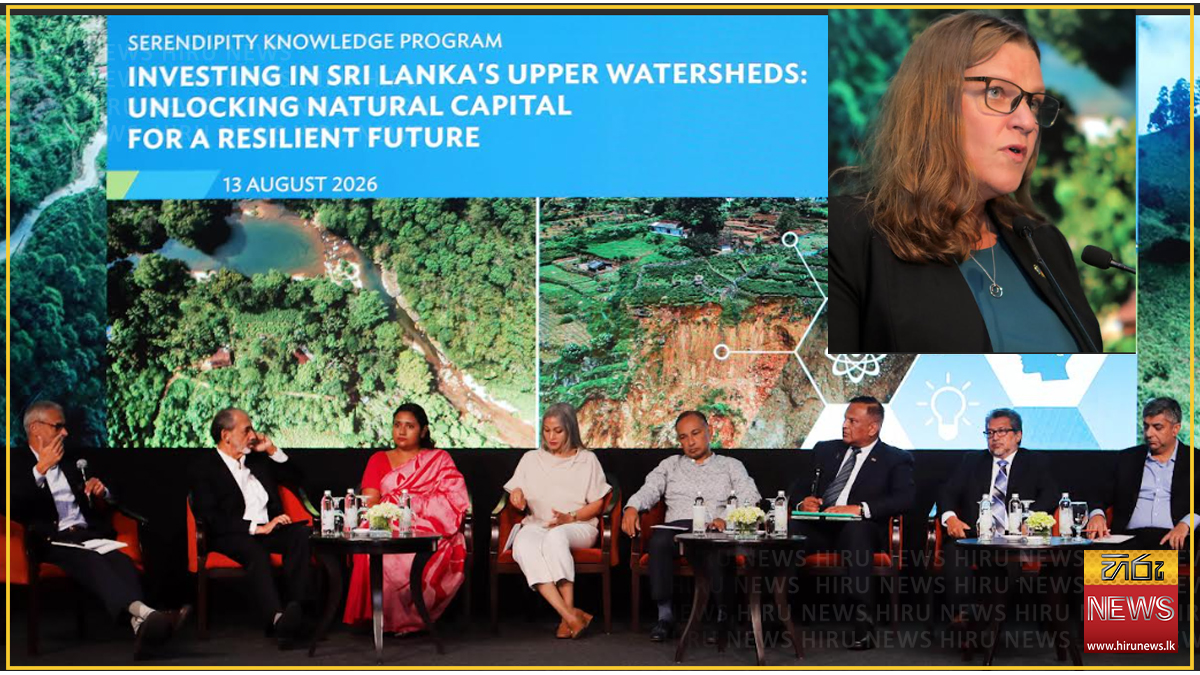
Speaking at the ‘Investing in Sri Lanka’s Upper Watersheds: Unlocking Natural Capital for a Resilient Future’ event hosted by the Asian Development Bank (ADB) at the Oak Room of Cinnamon Grand Colombo, Dr Pethiyagoda said Sri Lanka needed to move away from this mindset and make better use of private sector expertise.
He said that world-renowned wildlife and environmental experts live in proximity to both Yala and Minneriya national parks, but their expertise was rarely incorporated into the decision-making process for managing the parks.
Dr Pethiyagoda said the Government had proposed establishing a management authority to manage and fund Sri Lanka’s upper watersheds, which he described as a positive move.
He said several Regional Plantation Companies (RPCs) operating in the upper watershed areas had capital, facilities and, most importantly, human resources that could play a major role in the initiative.
“The Government must get off the suspicious private sector mindset and join the RPCs in this regard,” he said.
Dr Pethiyagoda also rejected claims that tea plantations were responsible for soil erosion and landslides in the hill country because of their high land utilisation.
“It is not the land use but the neglect of tea plantations that is the reason. Successive governments over the past 60 years have allowed this neglect and ignored it,” he said.
He noted that highland areas were naturally prone to landslides, pointing to Horton Plains as an example of an area that had never been significantly disturbed by people.
“When travelling from Ginigathhena to Nuwara Eliya, you can see that around 30 centimetres of topsoil has been lost, particularly in tea estates. That represents millions of years of topsoil,” he said.
Dr Pethiyagoda said tea cultivation in the colonial era involved planting tea from seeds, which resulted in plants developing deep tap roots. However, plantation practices have since changed, with modern tea plants having shallower root systems.
He said tea had nevertheless helped stabilise land because it provided a natural canopy and ground cover, unlike vegetables and some other crops.
The event, attended by government officials, private sector representatives and diplomats, also highlighted the damage caused to Sri Lanka’s sensitive natural forest cover during Cyclone Ditwah.
ADB Country Director for Sri Lanka Shannon Cowlin welcomed the Government’s move to establish an authority for upper watershed management and said the ADB would also support the initiative.
Held under the ADB’s Serendipity Knowledge Programme (SKOP) for Sri Lanka, the event featured two studies on the country’s upper watersheds and a policy dialogue on the importance of investing in natural capital.
The knowledge event was part of ADB’s SKOP for Sri Lanka, launched in 2021 to respond effectively to the country’s needs in line with ADB’s vision as a knowledge solutions bank. (Shirajiv S)