Share Post


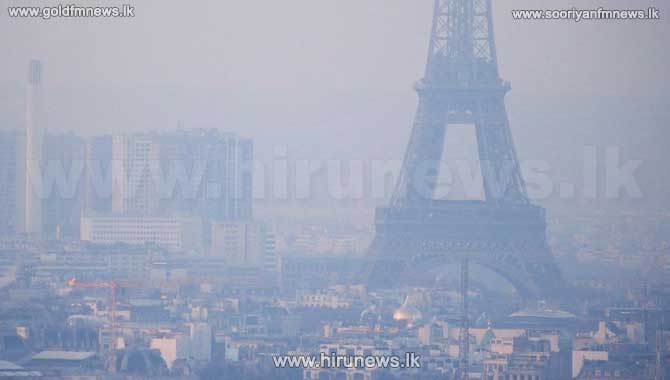
Air pollution is even more dangerous than previously thought, the World Health Organization (WHO) has warned, as it slashes maximum safe levels of key pollutants such nitrogen dioxide.
An estimated seven million people die prematurely each year from diseases linked to air pollution, the WHO says.
Low- and middle-income countries suffer the most, because of their reliance on fossil fuels for economic development.
The WHO puts air pollution on a par with smoking and unhealthy eating.
It is urging its 194 member states to cut emissions and take action on climate change, ahead of the COP26 summit in November.
The new guidelines, released on Wednesday, halve the recommended maximum for exposure to tiny particles called PM2.5s.
These are produced by burning fuels in power generation, domestic heating and vehicle engines.
"Almost 80% of deaths related to PM2.5 could be avoided in the world if the current air pollution levels were reduced to those proposed in the updated guideline," the WHO said.
It is also cutting the recommended limit for another class of microparticles, known as PM10s, by 25%.
Other pollutants singled out in the guidelines include ozone, nitrogen dioxide, sulphur dioxide and carbon monoxide.
Air pollution is linked to conditions such as heart disease and strokes. In children, it can reduce lung growth and cause aggravated asthma.
"Improving air quality can enhance climate change mitigation efforts, while reducing emissions will in turn improve air quality," the WHO says.
An estimated seven million people die prematurely each year from diseases linked to air pollution, the WHO says.
Low- and middle-income countries suffer the most, because of their reliance on fossil fuels for economic development.
The WHO puts air pollution on a par with smoking and unhealthy eating.
It is urging its 194 member states to cut emissions and take action on climate change, ahead of the COP26 summit in November.
The new guidelines, released on Wednesday, halve the recommended maximum for exposure to tiny particles called PM2.5s.
These are produced by burning fuels in power generation, domestic heating and vehicle engines.
"Almost 80% of deaths related to PM2.5 could be avoided in the world if the current air pollution levels were reduced to those proposed in the updated guideline," the WHO said.
It is also cutting the recommended limit for another class of microparticles, known as PM10s, by 25%.
Other pollutants singled out in the guidelines include ozone, nitrogen dioxide, sulphur dioxide and carbon monoxide.
Air pollution is linked to conditions such as heart disease and strokes. In children, it can reduce lung growth and cause aggravated asthma.
"Improving air quality can enhance climate change mitigation efforts, while reducing emissions will in turn improve air quality," the WHO says.
Latest News
Trial for Bundibugyo Ebola treatment starts in DRC
Local
02 July 2026
Premier League clubs interested in Japan's Nakamura
Local
02 July 2026

Firefighters battle blazes in southern France
Local
02 July 2026
Monk from 'Hiru Shasanawatharana' achieves top results
Local
02 July 2026

Canadian court publication ban raises press-freedom concerns
Local
02 July 2026

World Cup boom falters as US hospitality jobs fall
Local
02 July 2026

Russian fuel crisis prompts rush for electric cars
Local
02 July 2026
US Supreme Court upholds birthright citizenship
Local
02 July 2026
Two British teenage rapists given 4-year detention
Local
02 July 2026

Soldiers in Ukraine battle heatwave
Local
02 July 2026