



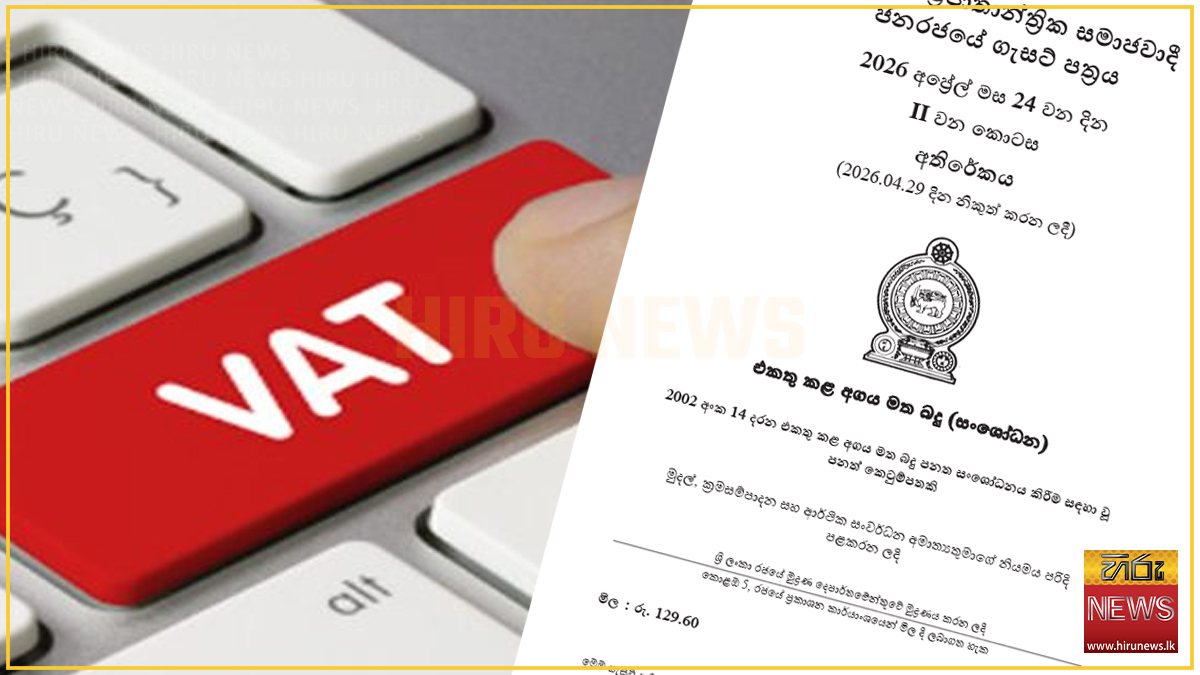


Sri Lanka has put forward a Bill to revise the Value Added Tax (VAT) Act, introducing broad changes that will affect businesses, digital services, and overall tax compliance.
A tax update from KPMG Sri Lanka notes that the Bill was issued on April 29, 2026, and will come into force once it completes the required constitutional process in Parliament.
Among the main proposals is a reduction in the VAT registration threshold from Rs. 60 million to Rs. 36 million per year, which will expand the number of businesses required to register starting July 1, 2026.
The Bill also seeks to apply VAT to digital services offered by non-resident companies to Sri Lankan consumers, representing a major shift in taxing cross-border online services. This change is also scheduled to begin on July 1, 2026.
In the financial sector, the VAT rate on financial services is set to rise from 18% to 20.5%, affecting banks and similar institutions from the same date.
The amendments further propose stricter enforcement, including raising the maximum penalty for tax offences to Rs. 1 million and introducing the possibility of up to six months’ imprisonment.
In addition, all VAT-registered businesses will be required to use Inland Revenue Department-approved secure point-of-sale (POS) systems to enhance real-time transaction monitoring and compliance.
Other proposed changes include making information about registered taxpayers publicly available, updating input tax regulations, and granting specific exemptions for strategic businesses operating within the Colombo Port City framework.
Latest News
Israel court extends detention of Gaza flotilla activists

The Devil Wears Prada 2 dazzles the box office

Tamil Nadu election results to be released today

French hard-left politician Melenchon to stand in 2027 presidential election

German chancellor downplays row with Trump

Monster truck crashes into crowd in Popayan

Hearings into Bondi Beach attack begins

GameStop offers to buy eBay

Amsterdam bans public adverts for meat and fossil fuels

Rudy Giuliani in critical condition in hospital