


Share Post


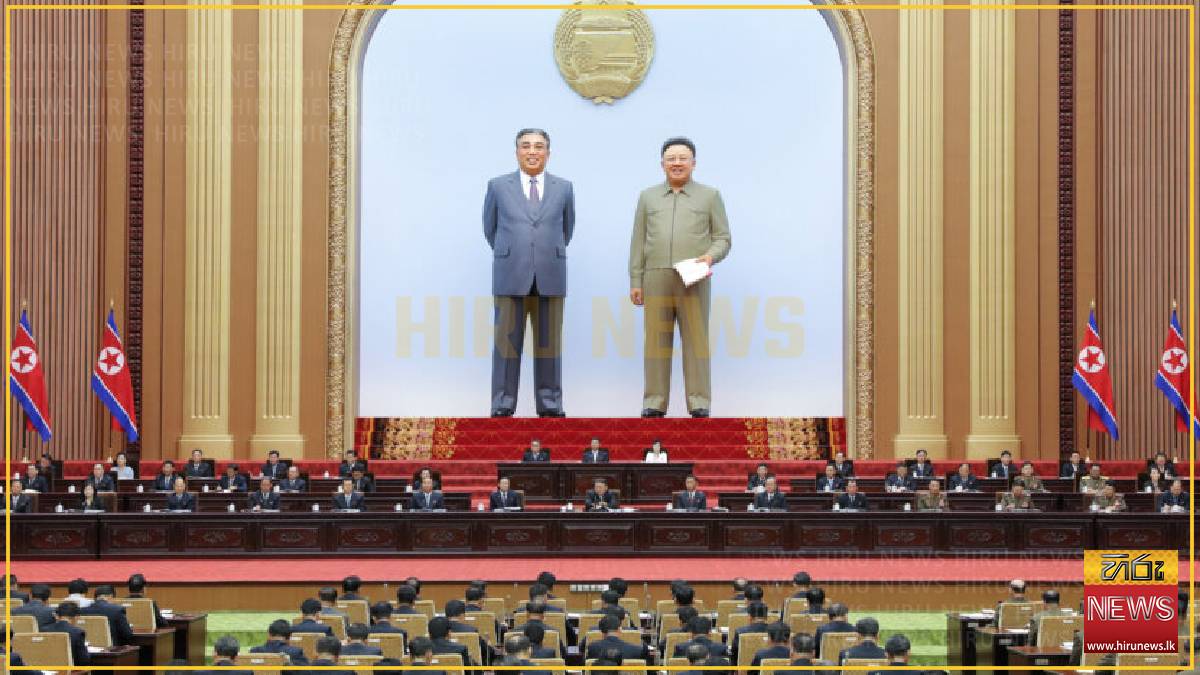
North Korea has revised its constitution to define its territory as bordering South Korea and remove references to reunification, according to a draft of the text reviewed by Reuters, codifying leader Kim Jong Un’s push to treat the two Koreas as separate states.
The revision, believed to have been adopted at a March meeting of the Supreme People's Assembly, Pyongyang's rubber-stamp legislature, marks the first time North Korea has added a territorial clause to its constitution, Lee Jung-chul, a Seoul National University professor, told a briefing at South Korea’s Unification Ministry on Wednesday.
The new Article 2 says North Korea’s territory includes land "bordering the People’s Republic of China and the Russian Federation to the north and the Republic of Korea to the south,” as well as territorial waters and airspace based on that land, according to the text.
The clause also says North Korea "will never tolerate any infringement" of its territory, but does not specify the location of its border with South Korea or explicitly mention disputed maritime boundaries such as the Northern Limit Line in the Yellow Sea.
The revised constitution also designates Kim, as chairman of the State Affairs Commission, as North Korea's head of state, replacing previous language that described the post as the country's supreme leader who represents the state.
It also explicitly states that command over North Korea’s nuclear forces rests with the State Affairs Commission chairman, according to the text, formally placing authority over the country’s nuclear arsenal in Kim’s hands.
A separate defence clause describes North Korea as a "responsible nuclear weapons state" and says it will advance nuclear weapons development to safeguard the country’s survival and development rights, deter war and protect regional and global peace and stability.
According to South Korean media, Lee said the omission of a specific inter-Korean border suggested Pyongyang may be trying to avoid immediately creating a new source of friction, even as it embeds Kim’s "two hostile states" doctrine in the country’s highest law.
Kim called in January 2024 for the constitution to be amended to define South Korea as the North’s "primary foe and invariable principal enemy" and to state that North Korean territory was separate from the South.
Pyongyang has pursued a more hostile policy toward Seoul in recent years, while rebuffing repeated overtures for dialogue from South Korean President Lee Jae Myung.
North Korea's permanent U.N. mission did not immediately respond to a request for comment.
-Reuters
The revision, believed to have been adopted at a March meeting of the Supreme People's Assembly, Pyongyang's rubber-stamp legislature, marks the first time North Korea has added a territorial clause to its constitution, Lee Jung-chul, a Seoul National University professor, told a briefing at South Korea’s Unification Ministry on Wednesday.
The new Article 2 says North Korea’s territory includes land "bordering the People’s Republic of China and the Russian Federation to the north and the Republic of Korea to the south,” as well as territorial waters and airspace based on that land, according to the text.
The clause also says North Korea "will never tolerate any infringement" of its territory, but does not specify the location of its border with South Korea or explicitly mention disputed maritime boundaries such as the Northern Limit Line in the Yellow Sea.
The revised constitution also designates Kim, as chairman of the State Affairs Commission, as North Korea's head of state, replacing previous language that described the post as the country's supreme leader who represents the state.
It also explicitly states that command over North Korea’s nuclear forces rests with the State Affairs Commission chairman, according to the text, formally placing authority over the country’s nuclear arsenal in Kim’s hands.
A separate defence clause describes North Korea as a "responsible nuclear weapons state" and says it will advance nuclear weapons development to safeguard the country’s survival and development rights, deter war and protect regional and global peace and stability.
According to South Korean media, Lee said the omission of a specific inter-Korean border suggested Pyongyang may be trying to avoid immediately creating a new source of friction, even as it embeds Kim’s "two hostile states" doctrine in the country’s highest law.
Kim called in January 2024 for the constitution to be amended to define South Korea as the North’s "primary foe and invariable principal enemy" and to state that North Korean territory was separate from the South.
Pyongyang has pursued a more hostile policy toward Seoul in recent years, while rebuffing repeated overtures for dialogue from South Korean President Lee Jae Myung.
North Korea's permanent U.N. mission did not immediately respond to a request for comment.
-Reuters
Latest News
Ugandan lawmakers pass sovereignty law
Local
06 May 2026
Canary Islands rejects hantavirus-hit cruise docking there
Local
06 May 2026
Syrian forces detain Uzbek fighters in security sweep
Local
06 May 2026
Congress extends conditional support to TVK
Local
06 May 2026

French vessel hit in Hormuz
Local
06 May 2026

Sri Lanka joins South Asian rollout of privacy-led ZKTOR platform
Local
06 May 2026

Eastern Poland forest fire kills pilot, scorches over 200 hectares
Local
06 May 2026
Spain asks European Commission to block US sanctions on ICC
Local
06 May 2026

MP Karunanayake questions regulatory oversight over NDB bank fraud
Local
06 May 2026
IIHS, Akutagawa launch pathway for SL youth to build healthcare careers in Japan
Local
06 May 2026