


Share Post


Australia’s migration system has become dramatically more expensive from 1 July, with the Department of Home Affairs updating its visa pricing table and raising several major primary applicant visa charges by 25%, while some categories have almost tripled.
The Department’s own visa fees page states that visa costs “change from time to time” and that the amount payable depends on the date Home Affairs receives the application. It also warns that if a price increase occurs between lodgement and receipt, applicants must pay the new charge.
The current visa pricing table was updated at 12.27 am on 1 July 2026, with Home Affairs directing applicants to use the Visa Pricing Estimator to work out visa costs.
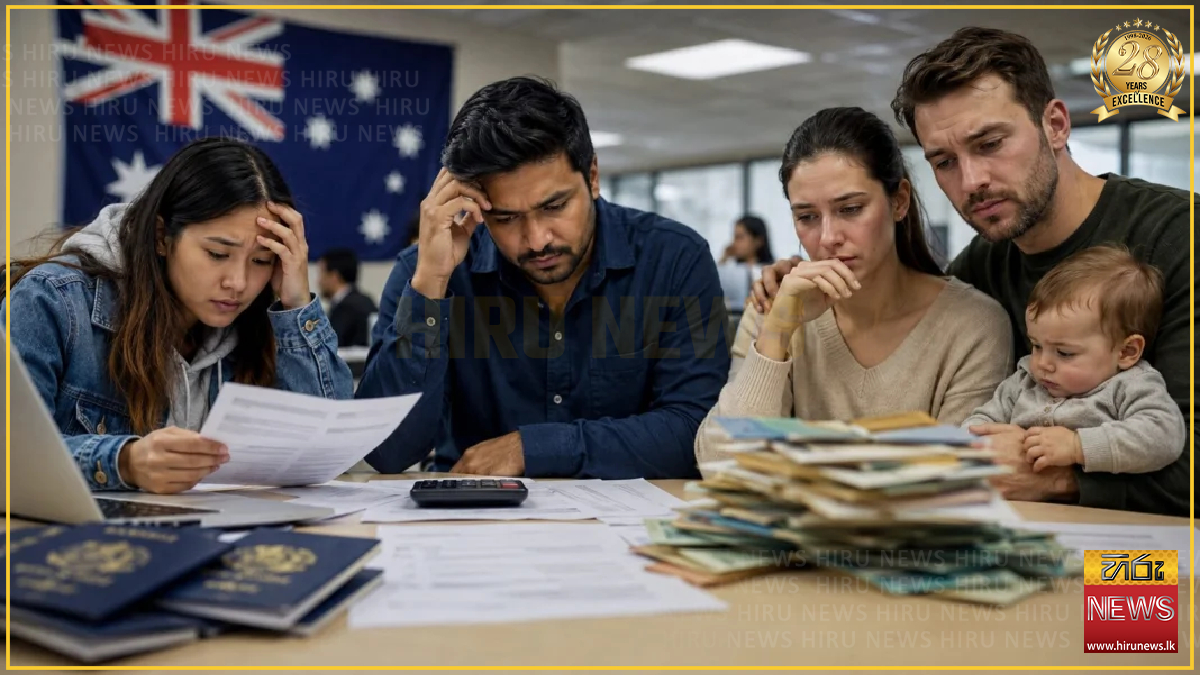
For thousands of families, students, skilled migrants and temporary visa holders, the increase is not a small administrative adjustment. It is a major new financial barrier at the front door of Australia’s immigration system.
The most politically sensitive increase is the International Student visa, which has risen from $2,000 to $2,500 for the primary applicant. That comes after the education sector had already warned that Australia’s $2,000 student visa fee was among the highest in the world and was damaging short-term and vocational education providers.
The Temporary Graduate visa has also jumped again, from $4,600 to $5,750. This is a $1,150 increase for young graduates who are already facing rent pressure, job uncertainty and high living costs. The visa had already been reported as rising to $4,600 earlier this year, making Australia’s post-study work visa one of the most expensive globally.
Partner visa applicants will now pay $11,710, up from $9,365, an increase of $2,345. For couples and families already facing long waits, this means the government is asking people to pay almost $12,000 upfront without buying any certainty on timing.
Home Affairs’ own global visa processing guide makes clear that processing times are only an indication based on recently decided applications and do not guarantee when a visa will be decided.
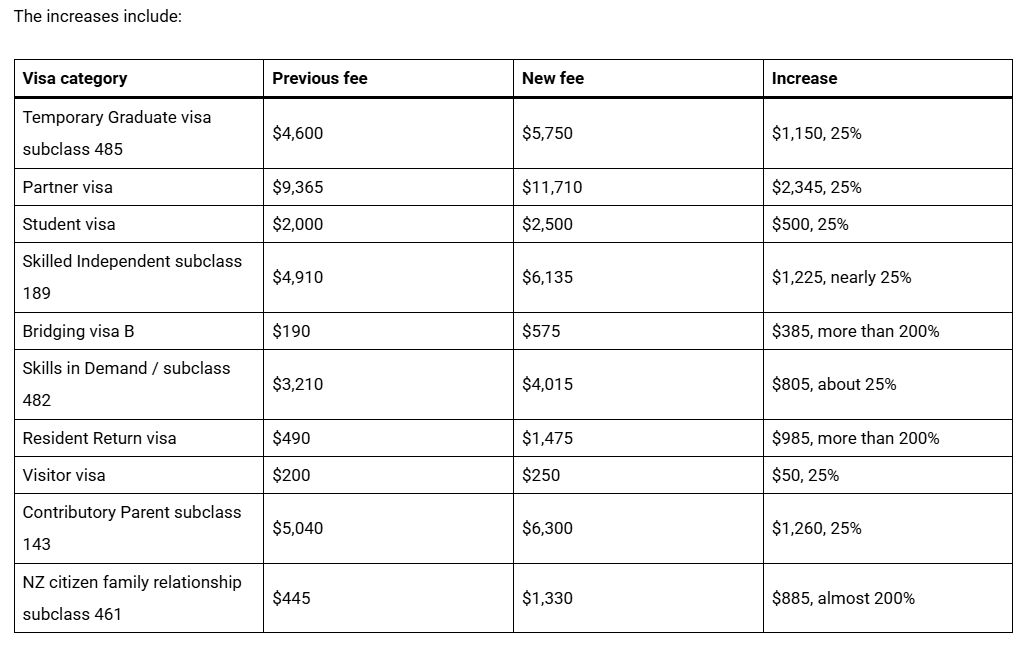
The steepest proportional increases are for Bridging visa B, Resident Return visas and the subclass 461 New Zealand citizen family relationship visa. These are not luxury applications. They affect people trying to travel while awaiting decisions, permanent residents needing to maintain travel rights, and family members of New Zealand citizens living in Australia.
The hike to the Bridging visa B is particularly severe. A primary applicant who previously paid $190 will now pay $575, more than three times the previous amount.
Gold Cost-based Registered Migration Agent Seema Chauhan is Principal of Abode Australia Migration.
Seema told The Australia Today, Visa fee changes are typically incremental and based on indexation.
“It raises important questions about accessibility and affordability for genuine applicants,” She added.
The Department’s own visa fees page states that visa costs “change from time to time” and that the amount payable depends on the date Home Affairs receives the application. It also warns that if a price increase occurs between lodgement and receipt, applicants must pay the new charge.
The current visa pricing table was updated at 12.27 am on 1 July 2026, with Home Affairs directing applicants to use the Visa Pricing Estimator to work out visa costs.
For thousands of families, students, skilled migrants and temporary visa holders, the increase is not a small administrative adjustment. It is a major new financial barrier at the front door of Australia’s immigration system.
The most politically sensitive increase is the International Student visa, which has risen from $2,000 to $2,500 for the primary applicant. That comes after the education sector had already warned that Australia’s $2,000 student visa fee was among the highest in the world and was damaging short-term and vocational education providers.
The Temporary Graduate visa has also jumped again, from $4,600 to $5,750. This is a $1,150 increase for young graduates who are already facing rent pressure, job uncertainty and high living costs. The visa had already been reported as rising to $4,600 earlier this year, making Australia’s post-study work visa one of the most expensive globally.
Partner visa applicants will now pay $11,710, up from $9,365, an increase of $2,345. For couples and families already facing long waits, this means the government is asking people to pay almost $12,000 upfront without buying any certainty on timing.
Home Affairs’ own global visa processing guide makes clear that processing times are only an indication based on recently decided applications and do not guarantee when a visa will be decided.
The steepest proportional increases are for Bridging visa B, Resident Return visas and the subclass 461 New Zealand citizen family relationship visa. These are not luxury applications. They affect people trying to travel while awaiting decisions, permanent residents needing to maintain travel rights, and family members of New Zealand citizens living in Australia.
The hike to the Bridging visa B is particularly severe. A primary applicant who previously paid $190 will now pay $575, more than three times the previous amount.
Gold Cost-based Registered Migration Agent Seema Chauhan is Principal of Abode Australia Migration.
Seema told The Australia Today, Visa fee changes are typically incremental and based on indexation.
“It raises important questions about accessibility and affordability for genuine applicants,” She added.
Latest News
Rajitha highlights Yahapalana health record as dengue spreads
Local
02 July 2026
Two remanded over fixed deposit fraud
Local
02 July 2026

Revenue inspector remanded over bribery allegations
Local
02 July 2026

‘Wele Suda’ further remanded
Local
02 July 2026
Ven. Naramapanawe Ananda Thera new Chancellor of Kelaniya University
Local
02 July 2026

'Commando Salintha' further remanded till July 16
Local
02 July 2026

Australia raises visa fees by up to 25%
Local
02 July 2026
FCID chief faces court notice in Krrish probe
Local
02 July 2026

Next indirect US-Iran talks due after late supreme leader's funeral
Local
02 July 2026

DR Congo records over 400 Ebola fatalities as new cases rise
Local
02 July 2026