Share Post


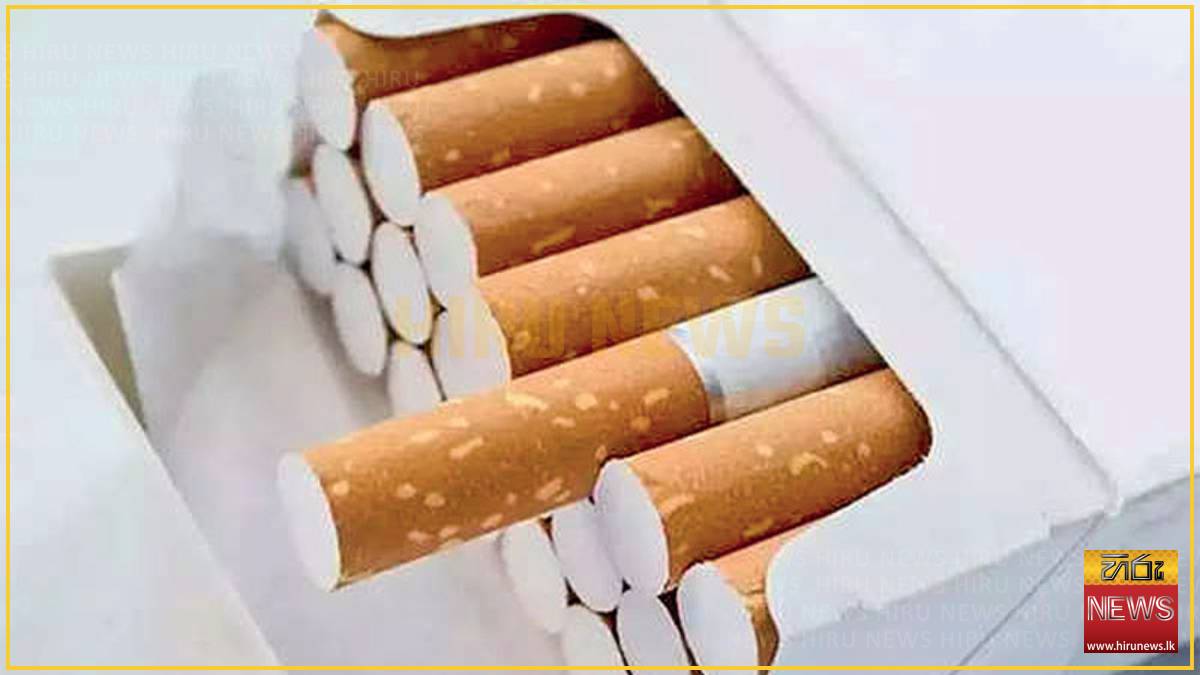
Sri Lanka loses an estimated Rs. 17.3 billion in cigarette tax revenue each year, an amount sufficient to fund the annual budget of the 1990 Suwa Seriya ambulance service almost four times over or the Mahapola scholarship scheme twice over.
Sri Lanka’s cigarette tax share remains below the World Health Organisation (WHO) recommended benchmark, with tax revisions remaining inconsistent. Verité Research estimates that bringing cigarette taxes into line with this international benchmark could generate billions of rupees in additional revenue annually.
In an interview with The Sunday Morning Business, Verité Research Lead Economist Raj Prabu Rajakulendran discussed the economic costs of delayed tax revisions, shortcomings in Sri Lanka’s cigarette tax structure, and the policy changes required to improve revenue collection and tobacco control outcomes.
Excerpts from the interview follow.
Sri Lanka has failed to revise cigarette taxes as frequently as recommended in recent years, raising questions regarding the economic cost of these delays from a government revenue perspective, and how cigarette affordability is affected over time when taxes do not adjust in line with inflation and income growth.
Rajakulendran noted two issues to consider regarding cigarette taxation, namely whether the tax is too low and whether the price is too low. The WHO recommends taxing cigarettes at 75% of the retail price, meaning any tax share below that level is too low.
Even if a cigarette is taxed at 80%, a very low price results in minimal tax collection, causing revenue to fall short when either factor is ignored.
In Sri Lanka’s current context, the country fails to meet the recommended tax share across all cigarette categories. While the longest cigarette category is relatively close to where it should be on price, shorter cigarette categories remain underpriced and undertaxed.
Fixing only the tax share at the minimum while keeping current price levels unchanged would allow the Government to collect an additional Rs. 17.3 billion annually. Addressing both the tax share and price issues would increase the estimate to around Rs. 30 billion a year. Failing to adjust taxes correctly results in price increases benefiting the tobacco company rather than contributing to government revenue.
Addressing whether Sri Lanka’s current cigarette tax structure meets international best practices or contains specific shortcomings, as well as the importance of a transparent, formula-based approach over ad hoc tax revisions.
The WHO recommended best practice involves applying a single tax rate to all cigarettes and adjusting it annually to nominal GDP growth.
Sri Lanka currently uses a tiered tax structure based on cigarette length, taxing different lengths at different rates. This structure created incentives for the market to move from longer, higher-tax cigarettes to shorter, lower-tax cigarettes, preventing the tax structure from delivering intended health or revenue outcomes.
Moving to a single indexed rate contains the larger revenue potential, as restoring the tax share alone yields around Rs. 17.3 billion a year, whereas reforming the structure takes it above Rs. 30 billion.
The issue is not simply whether taxes undergo regular revision, but whether the tax structure remains rational. Tax on a cigarette half the length of another should broadly reflect that proportion, which Sri Lanka’s tax structure fails to do as shorter cigarettes are taxed at disproportionately lower rates.
This necessitates a formula-based adjustment rather than ad hoc changes, because a fixed annual rule holds the tax share steady while discretionary revisions let it drift.
Explaining how Verité Research’s Cigarette Tax Leakage Tracker calculated the loss of Rs. 547 every second, which accumulated to Rs. 9.2 billion in lost revenue by 15 July.
The dashboard tracks the estimated Rs. 17.3 billion in annual revenue leakage if Sri Lanka fails to bring cigarette taxes up to the 75% benchmark at current price levels, with the per-second figure representing that annual amount broken down over time.
To put the figure into context, Rs. 17.3 billion is about 1.2 times the budget for disaster management, 1.3 times what the Government allocates to nutrition programmes, and 2.4 times the estimated cost of private sector maternity leave benefits.
Explaining why Sri Lanka’s tax-in-price fell to 67% by 2025 after reaching 74% in 2018, despite Value-Added Tax (VAT) increasing from 8% to 18% and the addition of a Social Security Contribution Levy.
Between 2018 and 2025, cigarette taxes increased by an average of around 11% annually, while cigarette prices increased by approximately 13% annually over the same period. Because prices increased faster than taxes, the tax share fell.
Successive governments increased taxes during this period, including two 20% excise duty increases in 2023—one effective 1 January and the other effective 1 July—and a further revision gazetted in January 2025. VAT and other taxes were also increased as part of broader fiscal reforms, but the increase in cigarette taxes did not keep pace with price increases.
Addressing whether the tax structure changed consumer buying habits.
The tax structure changed consumer buying habits substantially, with consumers moving towards shorter, lower-taxed cigarettes between 2018 and 2024. In 2018, the market share of the longest cigarette category stood at around 85%, but fell to 43% by 2024.
This shift represents the tax structure incentivising consumers to switch rather than smokers changing their taste. Had market shares remained unchanged without smokers shifting towards lower-tax cigarette categories, Sri Lanka could have collected approximately Rs. 40 billion more in taxes.
Examining how illicit trade is used to justify delays in tax revisions and whether higher taxes could lead to increased smuggling of illegal brands.
Some substitution may happen at the margin, which applies to any tax. The key considerations are the scale of substitution and whether it outweighs the revenue at stake.
Global and local evidence challenges the argument that higher taxes automatically lead to illicit trade. Studies by institutions such as the World Bank, along with statements by Sri Lanka’s National Authority on Tobacco and Alcohol, noted that concerns about illicit trade are frequently and systematically overstated. Even countries with relatively low tobacco taxes experience illicit markets.
The origin of these estimates also matters, as illicit-volume figures quoted in Sri Lanka are frequently drawn from private research cited in the tobacco company’s own annual reporting, and the company benefits directly whenever a tax revision is postponed.
Illicit trade represents a governance and enforcement problem requiring stronger Customs enforcement, better tracking mechanisms, and implementation of the Protocol to Eliminate Illicit Trade in Tobacco Products, which Sri Lanka acceded to in February 2016. Tax policy and illicit trade do not represent competing choices, meaning smuggling can be curbed while simultaneously collecting an adequate share of tax revenue.
Detailing the proposals to increase the excise tax on cigarettes up to 60 mm from Rs. 19.35 to Rs. 22.90, and on 60-67 mm cigarettes from Rs. 50.15 to Rs. 60.11, and whether these bring the tax share back to 75%.
These adjustments represent minimum changes calculated at current prices, meaning if prices increase further, the tax must increase again. Shorter cigarette categories remain significantly underpriced and undertaxed relative to their length. The method involves calculating what tax rate delivers a 75% tax share at existing prices and gazetting it.
Responding to arguments that cigarette taxes in Sri Lanka are already too high, causing a revenue shortage for the Government.
That argument depends on the benchmark used, as applying the WHO benchmark shows Sri Lanka’s cigarette taxes are not too high. The country’s tax share currently sits at its lowest level in around 16 years.
The recommendations rely on international best practices and existing commitments made by Sri Lanka. As a party to the WHO Framework Convention on Tobacco Control (FCTC), Sri Lanka undertook to maintain appropriate tax levels on tobacco, making these recommendations standard rather than an attempt to squeeze the middle class, especially since the company, not the Government, sets retail prices.
Collecting taxes already justified under international benchmarks represents a reasonable approach while the Government seeks revenue.
Explaining why successive governments failed to stick to commitments under the WHO FCTC, which Sri Lanka ratified in 2003 calling for regular tax hikes tied to inflation and income growth.
Historically, cigarette tax adjustments in Sri Lanka remained sporadic without a consistent, regular, or rational adjustment mechanism, despite available proposals.
The 2019 Budget proposed adjusting cigarette taxes annually in line with nominal GDP growth, and automatic excise tax adjustments were included in the current International Monetary Fund (IMF) programme, though neither proposal was implemented.
Establishing a legal mechanism that removes discretion from the minister of finance and introduces automatic annual tax adjustments into law is necessary, following the approach of countries such as Australia.
Outlining the implications for government revenue and tobacco control outcomes if cigarette taxes are not revised consistently over the next few years.
The Rs. 17.3 billion estimate assumes conditions do not worsen, though current trends suggest they will.
If prices remain unchanged while incomes increase, cigarettes become more affordable and consumption can increase over time, raising the revenue the Government forgoes. Alternatively, if cigarette prices increase without corresponding tax revisions, a larger share of revenue shifts to the tobacco company rather than the Government.
The Government loses under either scenario, with the loss compounding for every year the adjustment is postponed. Solving this requires a rule that adjusts the tax automatically so collection no longer depends on discretionary decisions.
The solution does not lie in another one-off tax increase announced only when revenue loss becomes impossible to ignore. Parliament should establish a transparent statutory formula that adjusts cigarette taxes annually in line with inflation and income growth and oversee its implementation.
Good tax policy should not suffer from periodic neglect, and while Sri Lanka searches for revenue, allowing an established source of revenue to erode each year represents fiscal irony rather than fiscal prudence. Cigarettes are priced, adjusted, and sold every day, meaning their taxes should not move only when the Government remembers.
Sri Lanka’s cigarette tax share remains below the World Health Organisation (WHO) recommended benchmark, with tax revisions remaining inconsistent. Verité Research estimates that bringing cigarette taxes into line with this international benchmark could generate billions of rupees in additional revenue annually.
In an interview with The Sunday Morning Business, Verité Research Lead Economist Raj Prabu Rajakulendran discussed the economic costs of delayed tax revisions, shortcomings in Sri Lanka’s cigarette tax structure, and the policy changes required to improve revenue collection and tobacco control outcomes.
Excerpts from the interview follow.
Sri Lanka has failed to revise cigarette taxes as frequently as recommended in recent years, raising questions regarding the economic cost of these delays from a government revenue perspective, and how cigarette affordability is affected over time when taxes do not adjust in line with inflation and income growth.
Rajakulendran noted two issues to consider regarding cigarette taxation, namely whether the tax is too low and whether the price is too low. The WHO recommends taxing cigarettes at 75% of the retail price, meaning any tax share below that level is too low.
Even if a cigarette is taxed at 80%, a very low price results in minimal tax collection, causing revenue to fall short when either factor is ignored.
In Sri Lanka’s current context, the country fails to meet the recommended tax share across all cigarette categories. While the longest cigarette category is relatively close to where it should be on price, shorter cigarette categories remain underpriced and undertaxed.
Fixing only the tax share at the minimum while keeping current price levels unchanged would allow the Government to collect an additional Rs. 17.3 billion annually. Addressing both the tax share and price issues would increase the estimate to around Rs. 30 billion a year. Failing to adjust taxes correctly results in price increases benefiting the tobacco company rather than contributing to government revenue.
Addressing whether Sri Lanka’s current cigarette tax structure meets international best practices or contains specific shortcomings, as well as the importance of a transparent, formula-based approach over ad hoc tax revisions.
The WHO recommended best practice involves applying a single tax rate to all cigarettes and adjusting it annually to nominal GDP growth.
Sri Lanka currently uses a tiered tax structure based on cigarette length, taxing different lengths at different rates. This structure created incentives for the market to move from longer, higher-tax cigarettes to shorter, lower-tax cigarettes, preventing the tax structure from delivering intended health or revenue outcomes.
Moving to a single indexed rate contains the larger revenue potential, as restoring the tax share alone yields around Rs. 17.3 billion a year, whereas reforming the structure takes it above Rs. 30 billion.
The issue is not simply whether taxes undergo regular revision, but whether the tax structure remains rational. Tax on a cigarette half the length of another should broadly reflect that proportion, which Sri Lanka’s tax structure fails to do as shorter cigarettes are taxed at disproportionately lower rates.
This necessitates a formula-based adjustment rather than ad hoc changes, because a fixed annual rule holds the tax share steady while discretionary revisions let it drift.
Explaining how Verité Research’s Cigarette Tax Leakage Tracker calculated the loss of Rs. 547 every second, which accumulated to Rs. 9.2 billion in lost revenue by 15 July.
The dashboard tracks the estimated Rs. 17.3 billion in annual revenue leakage if Sri Lanka fails to bring cigarette taxes up to the 75% benchmark at current price levels, with the per-second figure representing that annual amount broken down over time.
To put the figure into context, Rs. 17.3 billion is about 1.2 times the budget for disaster management, 1.3 times what the Government allocates to nutrition programmes, and 2.4 times the estimated cost of private sector maternity leave benefits.
Explaining why Sri Lanka’s tax-in-price fell to 67% by 2025 after reaching 74% in 2018, despite Value-Added Tax (VAT) increasing from 8% to 18% and the addition of a Social Security Contribution Levy.
Between 2018 and 2025, cigarette taxes increased by an average of around 11% annually, while cigarette prices increased by approximately 13% annually over the same period. Because prices increased faster than taxes, the tax share fell.
Successive governments increased taxes during this period, including two 20% excise duty increases in 2023—one effective 1 January and the other effective 1 July—and a further revision gazetted in January 2025. VAT and other taxes were also increased as part of broader fiscal reforms, but the increase in cigarette taxes did not keep pace with price increases.
Addressing whether the tax structure changed consumer buying habits.
The tax structure changed consumer buying habits substantially, with consumers moving towards shorter, lower-taxed cigarettes between 2018 and 2024. In 2018, the market share of the longest cigarette category stood at around 85%, but fell to 43% by 2024.
This shift represents the tax structure incentivising consumers to switch rather than smokers changing their taste. Had market shares remained unchanged without smokers shifting towards lower-tax cigarette categories, Sri Lanka could have collected approximately Rs. 40 billion more in taxes.
Examining how illicit trade is used to justify delays in tax revisions and whether higher taxes could lead to increased smuggling of illegal brands.
Some substitution may happen at the margin, which applies to any tax. The key considerations are the scale of substitution and whether it outweighs the revenue at stake.
Global and local evidence challenges the argument that higher taxes automatically lead to illicit trade. Studies by institutions such as the World Bank, along with statements by Sri Lanka’s National Authority on Tobacco and Alcohol, noted that concerns about illicit trade are frequently and systematically overstated. Even countries with relatively low tobacco taxes experience illicit markets.
The origin of these estimates also matters, as illicit-volume figures quoted in Sri Lanka are frequently drawn from private research cited in the tobacco company’s own annual reporting, and the company benefits directly whenever a tax revision is postponed.
Illicit trade represents a governance and enforcement problem requiring stronger Customs enforcement, better tracking mechanisms, and implementation of the Protocol to Eliminate Illicit Trade in Tobacco Products, which Sri Lanka acceded to in February 2016. Tax policy and illicit trade do not represent competing choices, meaning smuggling can be curbed while simultaneously collecting an adequate share of tax revenue.
Detailing the proposals to increase the excise tax on cigarettes up to 60 mm from Rs. 19.35 to Rs. 22.90, and on 60-67 mm cigarettes from Rs. 50.15 to Rs. 60.11, and whether these bring the tax share back to 75%.
These adjustments represent minimum changes calculated at current prices, meaning if prices increase further, the tax must increase again. Shorter cigarette categories remain significantly underpriced and undertaxed relative to their length. The method involves calculating what tax rate delivers a 75% tax share at existing prices and gazetting it.
Responding to arguments that cigarette taxes in Sri Lanka are already too high, causing a revenue shortage for the Government.
That argument depends on the benchmark used, as applying the WHO benchmark shows Sri Lanka’s cigarette taxes are not too high. The country’s tax share currently sits at its lowest level in around 16 years.
The recommendations rely on international best practices and existing commitments made by Sri Lanka. As a party to the WHO Framework Convention on Tobacco Control (FCTC), Sri Lanka undertook to maintain appropriate tax levels on tobacco, making these recommendations standard rather than an attempt to squeeze the middle class, especially since the company, not the Government, sets retail prices.
Collecting taxes already justified under international benchmarks represents a reasonable approach while the Government seeks revenue.
Explaining why successive governments failed to stick to commitments under the WHO FCTC, which Sri Lanka ratified in 2003 calling for regular tax hikes tied to inflation and income growth.
Historically, cigarette tax adjustments in Sri Lanka remained sporadic without a consistent, regular, or rational adjustment mechanism, despite available proposals.
The 2019 Budget proposed adjusting cigarette taxes annually in line with nominal GDP growth, and automatic excise tax adjustments were included in the current International Monetary Fund (IMF) programme, though neither proposal was implemented.
Establishing a legal mechanism that removes discretion from the minister of finance and introduces automatic annual tax adjustments into law is necessary, following the approach of countries such as Australia.
Outlining the implications for government revenue and tobacco control outcomes if cigarette taxes are not revised consistently over the next few years.
The Rs. 17.3 billion estimate assumes conditions do not worsen, though current trends suggest they will.
If prices remain unchanged while incomes increase, cigarettes become more affordable and consumption can increase over time, raising the revenue the Government forgoes. Alternatively, if cigarette prices increase without corresponding tax revisions, a larger share of revenue shifts to the tobacco company rather than the Government.
The Government loses under either scenario, with the loss compounding for every year the adjustment is postponed. Solving this requires a rule that adjusts the tax automatically so collection no longer depends on discretionary decisions.
The solution does not lie in another one-off tax increase announced only when revenue loss becomes impossible to ignore. Parliament should establish a transparent statutory formula that adjusts cigarette taxes annually in line with inflation and income growth and oversee its implementation.
Good tax policy should not suffer from periodic neglect, and while Sri Lanka searches for revenue, allowing an established source of revenue to erode each year represents fiscal irony rather than fiscal prudence. Cigarettes are priced, adjusted, and sold every day, meaning their taxes should not move only when the Government remembers.
Latest News
Iran's former foreign minister urges leaders to grasp 'window for diplomacy' with US
Local
04 August 2026
Rubio: "Progress made ... but not finality" on Strait of Hormuz agreement
Local
04 August 2026
Afghan boxer arrested in connection with death of Scottish woman in Greece
Local
04 August 2026

More than 150 people rescued in English Channel after boat catches fire
Local
04 August 2026
Forest fire spreads in Netherlands nature reserve for a second day
Local
04 August 2026

Bail granted to 25 suspects in illegal gem mining incident
Local
04 August 2026

Meta, Anthropic, Google, OpenAI to meet with Trump
Local
04 August 2026

Guatemala on alert as Fuego volcano shows increased activity
Local
04 August 2026

Both Iran and Oman have claims to the Strait of Hormuz
Local
04 August 2026
Drafts of potential US-Iran agreement are "being circulated," Qatar says
Local
04 August 2026