


Share Post


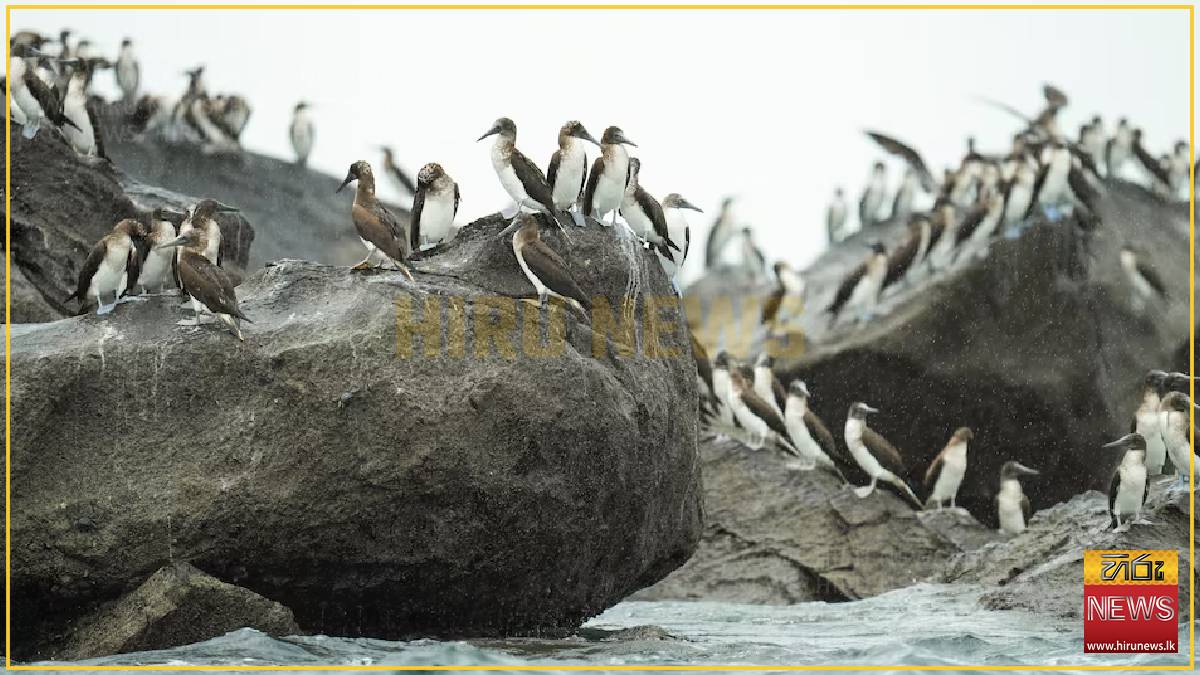
Flocks of seabirds native to the cold, nutrient-rich waters off Peru and Chile are appearing far outside their usual range in Panama Bay as a powerful El Niño warms the eastern Pacific and disrupts marine food supplies.
The birds are arriving in unusually high numbers after warming waters drove fish such as anchovies and sardines farther from their traditional feeding grounds, forcing seabirds to travel in search of food.
Researchers say their presence underscores the vulnerability of marine ecosystems to shifts in ocean temperatures and food availability, and how rapidly wildlife can be forced to adapt.
El Niño, a periodic warming of ocean surface temperatures in the Pacific, alters global weather patterns and typically contributes to higher temperatures. The United Nations weather agency warned that a strong El Niño was expected to intensify starting in August.
While the sight of South American seabirds circling above Panama City's skyline is a rare spectacle for birdwatchers, researchers take it as an early sign of how ocean warming can ripple through the food chain.
"The birds were already telling us that we were going to have a very strong El Niño," said Rosabel Miró, director of the Audubon Society of Panama, adding that birdwatchers began noticing the unusual visitors in June, just as forecasts pointed to a strong El Niño developing across the Pacific.
Sightings of blue-footed boobies in the Gulf of Panama, off the southern coast of Panama, are not unusual. But the numbers being recorded close to Panama City are.
Data from the citizen-science platform eBird show between 60 and 400 blue-footed boobies have been observed around the Peñón de San José and nearby areas since June, Miro said, compared with between 21 and 200 during the 2014-2016 El Niño, and three to 62 during the 2023-2024 El Niño.
"These are not migratory birds," Miró said. "They are birds that, because of a lack of food, are forced to migrate."
The toll, she said, can extend well beyond displacement: past El Niño events have disrupted breeding cycles and reduced reproductive success as birds struggle to find enough to eat.
EL NIÑO RESHAPES MARINE ECOSYSTEM
The disruption begins well below the surface, scientists say, at the base of the marine food chain itself.
Steven Paton, who oversees a network of weather stations and ocean-monitoring sensors for the Smithsonian Tropical Research Institute, said Panama is already experiencing extraordinary climatic conditions associated with the developing El Niño.
"Since May, every month has been either the hottest or second hottest that we have seen for that month," Paton said, adding that he expects this trend to continue through the end of the year. "We have 50 years of temperature data and 100 years of rainfall data. This is not something random. This is something very significant."
Rainfall in parts of the Panama Canal watershed is running far below average, he said, while forecasts point to hotter and drier conditions through the end of the year and possibly into the middle of next year.
Paton said strong El Niño events deepen the thermocline, the boundary separating warm surface water from colder, nutrient-rich water below. As that colder water becomes harder to reach, marine productivity declines.
Scientists are still studying how a warming climate may affect El Niño itself. Paton said there is no scientific consensus yet on whether climate change is altering the El Niño-La Niña cycle, though he noted that several of the strongest events on record have occurred in recent decades.
If ocean conditions return to normal, the rare seabirds now gathering along Panama's Pacific coast may disappear as suddenly as they arrived.
-Reuters
The birds are arriving in unusually high numbers after warming waters drove fish such as anchovies and sardines farther from their traditional feeding grounds, forcing seabirds to travel in search of food.
Researchers say their presence underscores the vulnerability of marine ecosystems to shifts in ocean temperatures and food availability, and how rapidly wildlife can be forced to adapt.
El Niño, a periodic warming of ocean surface temperatures in the Pacific, alters global weather patterns and typically contributes to higher temperatures. The United Nations weather agency warned that a strong El Niño was expected to intensify starting in August.
While the sight of South American seabirds circling above Panama City's skyline is a rare spectacle for birdwatchers, researchers take it as an early sign of how ocean warming can ripple through the food chain.
"The birds were already telling us that we were going to have a very strong El Niño," said Rosabel Miró, director of the Audubon Society of Panama, adding that birdwatchers began noticing the unusual visitors in June, just as forecasts pointed to a strong El Niño developing across the Pacific.
Sightings of blue-footed boobies in the Gulf of Panama, off the southern coast of Panama, are not unusual. But the numbers being recorded close to Panama City are.
Data from the citizen-science platform eBird show between 60 and 400 blue-footed boobies have been observed around the Peñón de San José and nearby areas since June, Miro said, compared with between 21 and 200 during the 2014-2016 El Niño, and three to 62 during the 2023-2024 El Niño.
"These are not migratory birds," Miró said. "They are birds that, because of a lack of food, are forced to migrate."
The toll, she said, can extend well beyond displacement: past El Niño events have disrupted breeding cycles and reduced reproductive success as birds struggle to find enough to eat.
EL NIÑO RESHAPES MARINE ECOSYSTEM
The disruption begins well below the surface, scientists say, at the base of the marine food chain itself.
Steven Paton, who oversees a network of weather stations and ocean-monitoring sensors for the Smithsonian Tropical Research Institute, said Panama is already experiencing extraordinary climatic conditions associated with the developing El Niño.
"Since May, every month has been either the hottest or second hottest that we have seen for that month," Paton said, adding that he expects this trend to continue through the end of the year. "We have 50 years of temperature data and 100 years of rainfall data. This is not something random. This is something very significant."
Rainfall in parts of the Panama Canal watershed is running far below average, he said, while forecasts point to hotter and drier conditions through the end of the year and possibly into the middle of next year.
Paton said strong El Niño events deepen the thermocline, the boundary separating warm surface water from colder, nutrient-rich water below. As that colder water becomes harder to reach, marine productivity declines.
Scientists are still studying how a warming climate may affect El Niño itself. Paton said there is no scientific consensus yet on whether climate change is altering the El Niño-La Niña cycle, though he noted that several of the strongest events on record have occurred in recent decades.
If ocean conditions return to normal, the rare seabirds now gathering along Panama's Pacific coast may disappear as suddenly as they arrived.
-Reuters
Latest News
Unitree shares soar over 600% in Shanghai debut
Local
19 August 2026

Ex-DOJ Attorney says Trump's University Antisemitism Probes Lacked Evidence
Local
19 August 2026

Bucharest Chamber of Commerce opens new office in Colombo
Local
19 August 2026

ZZ Top drummer Frank Beard dies at 77
Local
19 August 2026

Chinese robotics firm Unitree surges 600% on market debut
Local
19 August 2026

Ukraine's ousted defence minister calls for wartime elections
Local
19 August 2026

A man arrested over terror camp in Pallai claim
Local
19 August 2026

Esports Nations Cup postponed to 2027 amid Iran conflict
Local
19 August 2026

Seoul caught off guard as Trump orders cuts to joint military drills
Local
19 August 2026

Trump pauses 50% Canada tariffs after deal with Ottawa
Local
19 August 2026