



Share Post


As Switzerland struggles to contain the shrinking of its glaciers, researchers are conducting an unusual experiment in the Alps to see whether one of its less valued natural resources can help: sheep's wool.
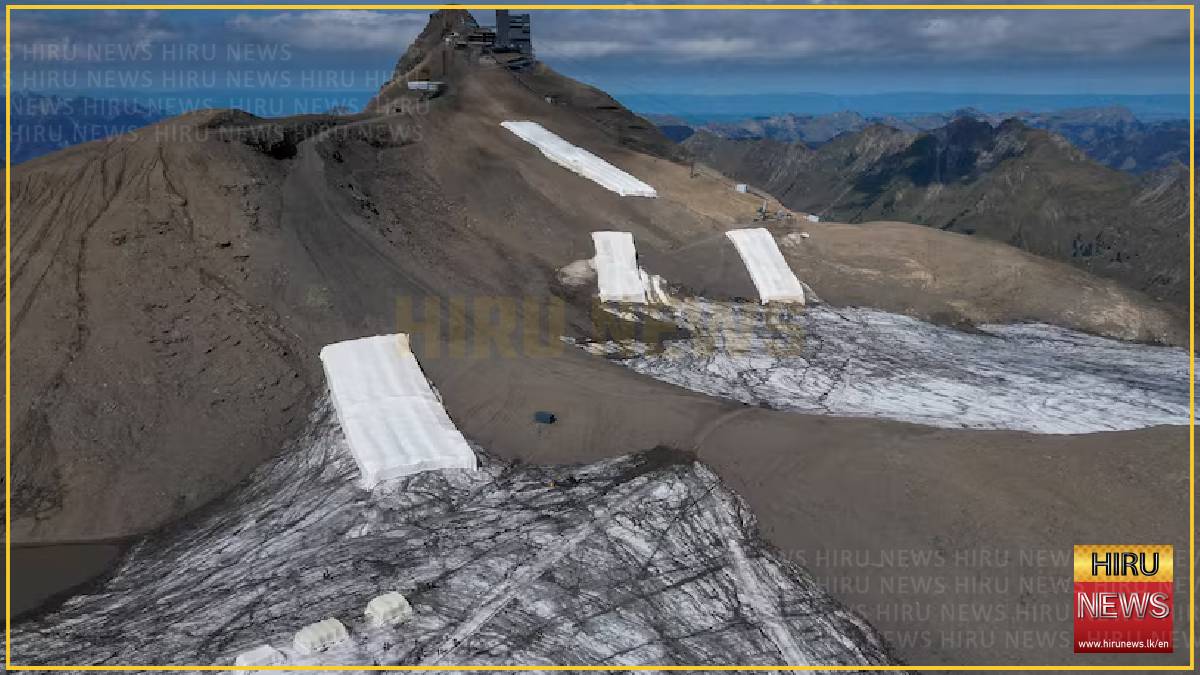
For years now, synthetic tarpaulins have been laid in summer over areas of ice and snow to reflect sunlight and reduce heat absorption as global warming melts away the ice sheets that have defined the high Alpine landscape for millennia.
But those tarpaulins are typically made from plastic and can shed polluting microfibres. The "Keep It Wool" project, led by the environmental group Summit Foundation and the University of Lausanne, is instead using wool to slow the melting of the Tsanfleuron Glacier in western Switzerland.
This summer's record heat has melted snow on the glaciers weeks earlier than usual, leading almost inevitably to more of the ice loss blamed for exacerbating rockslides like the one that devastated the village of Blatten in 2025 - and triggered last week's cataclysmic flash flood in the Himalayas.
Project manager Timothee Steiner said the team wanted to explore a biodegradable alternative while finding a use for Swiss wool, 40-70% of which is discarded each year.
Four university master's degree students had the idea and worked to put it to the test.
In June, two prototype wool blankets made by the Swiss firm Fisolan were laid on 200 sq metres (2,100 sq feet) of the Tsanfleuron Glacier. Throughout the summer, researchers compared their performance with that of a conventional geotextile cover. Early results have exceeded expectations.
Steiner said measurements taken every two weeks showed the wool covers limited melting as well as the synthetic ones.
Fisolan's Niklaus Saegesser said he was surprised by the material's durability. "I thought it wouldn't be stable enough."
Student Elliot Gaffiot said the team hadn't been sure what to expect. "Now we have a result we can see and even touch. It worked incredibly well." But the project's backers stress that wool blankets are not a solution to global warming.
Only about 0.02% of Switzerland's glacier surface is covered by protective sheets, and scientists say reducing greenhouse gas emissions - mostly produced by fossil fuels - remains the only meaningful long-term way to slow the loss of ice.
-Reuters
For years now, synthetic tarpaulins have been laid in summer over areas of ice and snow to reflect sunlight and reduce heat absorption as global warming melts away the ice sheets that have defined the high Alpine landscape for millennia.
But those tarpaulins are typically made from plastic and can shed polluting microfibres. The "Keep It Wool" project, led by the environmental group Summit Foundation and the University of Lausanne, is instead using wool to slow the melting of the Tsanfleuron Glacier in western Switzerland.
This summer's record heat has melted snow on the glaciers weeks earlier than usual, leading almost inevitably to more of the ice loss blamed for exacerbating rockslides like the one that devastated the village of Blatten in 2025 - and triggered last week's cataclysmic flash flood in the Himalayas.
Project manager Timothee Steiner said the team wanted to explore a biodegradable alternative while finding a use for Swiss wool, 40-70% of which is discarded each year.
Four university master's degree students had the idea and worked to put it to the test.
In June, two prototype wool blankets made by the Swiss firm Fisolan were laid on 200 sq metres (2,100 sq feet) of the Tsanfleuron Glacier. Throughout the summer, researchers compared their performance with that of a conventional geotextile cover. Early results have exceeded expectations.
Steiner said measurements taken every two weeks showed the wool covers limited melting as well as the synthetic ones.
Fisolan's Niklaus Saegesser said he was surprised by the material's durability. "I thought it wouldn't be stable enough."
Student Elliot Gaffiot said the team hadn't been sure what to expect. "Now we have a result we can see and even touch. It worked incredibly well." But the project's backers stress that wool blankets are not a solution to global warming.
Only about 0.02% of Switzerland's glacier surface is covered by protective sheets, and scientists say reducing greenhouse gas emissions - mostly produced by fossil fuels - remains the only meaningful long-term way to slow the loss of ice.
-Reuters
Latest News
Smriti Mandhana becomes women’s cricket’s leading run-scorer
Local
05 September 2026

Five European nations plan migrant return deals this year
Local
05 September 2026

Trump says military conflict in Iran is 'small potatoes for us'
Local
05 September 2026

HBO announces new cast for ‘Harry Potter’ Season 2
Local
05 September 2026

Niger blames France for inciting soldiers' mutiny
Local
05 September 2026

Costa Rica says US ground operations could boost security
Local
05 September 2026

Mexico ruling party lawmaker found shot dead in Veracruz
Local
05 September 2026

US embassy warns of rising illnesses in Cuba
Local
05 September 2026

One dead, 11 missing after China mudslide
Local
05 September 2026

At least 10 killed in Bolivia military barracks blast
Local
05 September 2026