



Share Post


Disruptions to bitumen imports from the Gulf region due to the conflict involving Iran could stall ongoing road development projects in Sri Lanka.
The local construction sector warned of this potential impact.
Speaking to a weekend English newspaper, Chamber of Construction Industry Sri Lanka (CCI) Secretary General and Chief Executive Officer Eng. Col. (Rtd) Nissanka N. Wijeratne pointed out that a significant portion of capital expenditure allocated by the 2026 budget was set aside for road projects.
However, due to difficulties in procuring bitumen amidst the prevailing Gulf crisis, the already troubled local construction sector could face severe impacts once again, he emphasised.
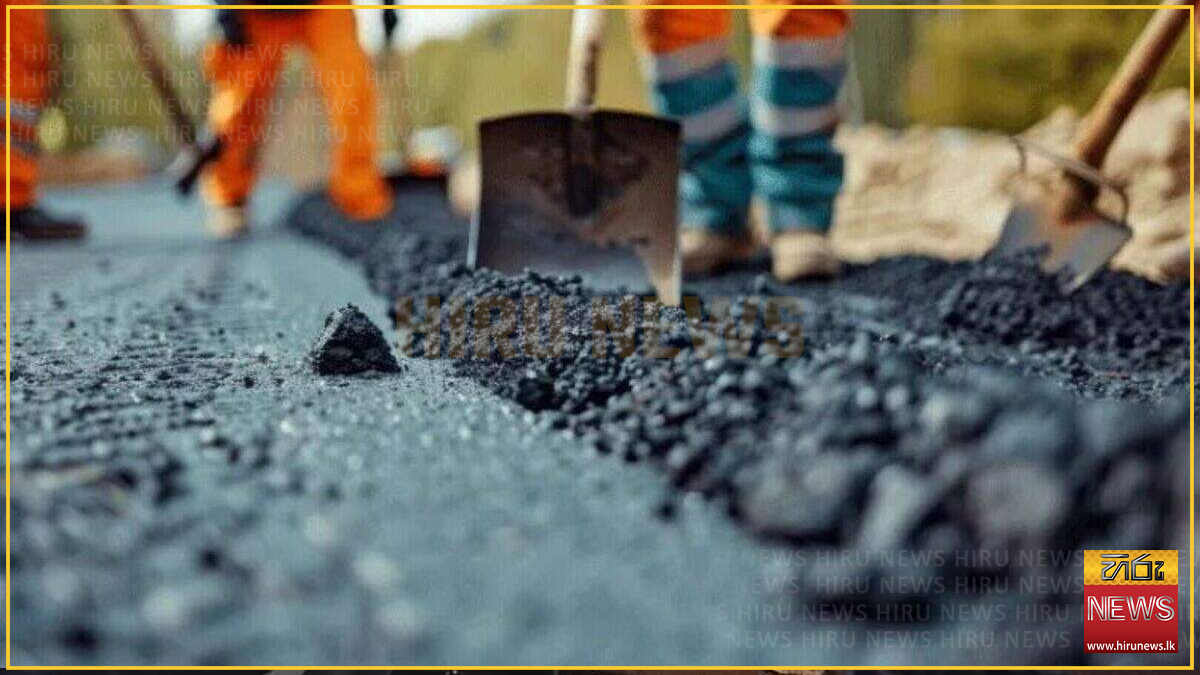
Bitumen forms the main raw material in road construction, and complaints were already being received from road contractors regarding difficulties in procuring it, Wijeratne noted.
"Most of the bitumen needed comes from the Gulf region. Due to the Iranian war situation, a major problem is now faced in importing bitumen. Even though money was allocated for road projects, where will bitumen come from?" he questioned.
Since asphalt is a petroleum derivative, Sri Lanka relies heavily on the Gulf region for bitumen imports, with most of it obtained from Iran itself, he further pointed out.
Although Sri Lanka could look to alternative markets such as Indonesia to meet this bitumen requirement, disruptions to bitumen supply from the Gulf region created a massive shortage in the market, Wijeratne stated.
As a result, importing bitumen from such alternative markets would incur high costs, he added.
The local construction sector warned of this potential impact.
Speaking to a weekend English newspaper, Chamber of Construction Industry Sri Lanka (CCI) Secretary General and Chief Executive Officer Eng. Col. (Rtd) Nissanka N. Wijeratne pointed out that a significant portion of capital expenditure allocated by the 2026 budget was set aside for road projects.
However, due to difficulties in procuring bitumen amidst the prevailing Gulf crisis, the already troubled local construction sector could face severe impacts once again, he emphasised.
Bitumen forms the main raw material in road construction, and complaints were already being received from road contractors regarding difficulties in procuring it, Wijeratne noted.
"Most of the bitumen needed comes from the Gulf region. Due to the Iranian war situation, a major problem is now faced in importing bitumen. Even though money was allocated for road projects, where will bitumen come from?" he questioned.
Since asphalt is a petroleum derivative, Sri Lanka relies heavily on the Gulf region for bitumen imports, with most of it obtained from Iran itself, he further pointed out.
Although Sri Lanka could look to alternative markets such as Indonesia to meet this bitumen requirement, disruptions to bitumen supply from the Gulf region created a massive shortage in the market, Wijeratne stated.
As a result, importing bitumen from such alternative markets would incur high costs, he added.
Latest News
Iceland protests Trump map showing island under US flag
Local
08 September 2026

Macron urges EU social media ban for under-15s
Local
08 September 2026

Suspected migrant smugglers go on trial in Paris over mass drowning in Channel
Local
08 September 2026

Unlabelled Runway 2026 champions inclusion through fashion
Local
08 September 2026

Sri Lanka Japan Business Council holds 47th AGM
Local
08 September 2026

Port City Colombo strengthens UAE investment ties
Local
08 September 2026

Taekwondo champion Disas Jithmin excels
Local
08 September 2026

Sahasdhanavi power project advances with US$ 291 Mn BOI Agreement
Local
08 September 2026

Three paintings stolen in Renoir Museum heist
Local
08 September 2026

Falklands oil row escalates as Argentina targets Navitas
Local
08 September 2026