



Share Post


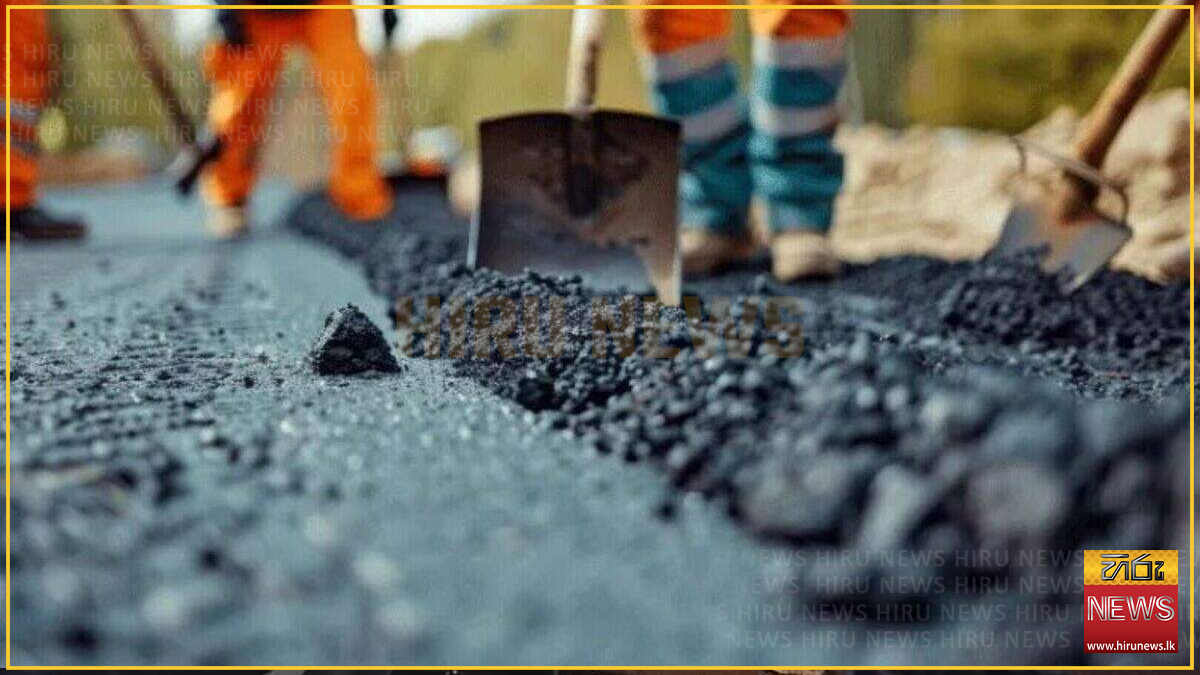
Disruptions to bitumen imports from the Gulf region due to the conflict involving Iran could stall ongoing road development projects in Sri Lanka.
The local construction sector warned of this potential impact.
Speaking to a weekend English newspaper, Chamber of Construction Industry Sri Lanka (CCI) Secretary General and Chief Executive Officer Eng. Col. (Rtd) Nissanka N. Wijeratne pointed out that a significant portion of capital expenditure allocated by the 2026 budget was set aside for road projects.
However, due to difficulties in procuring bitumen amidst the prevailing Gulf crisis, the already troubled local construction sector could face severe impacts once again, he emphasised.
Bitumen forms the main raw material in road construction, and complaints were already being received from road contractors regarding difficulties in procuring it, Wijeratne noted.
"Most of the bitumen needed comes from the Gulf region. Due to the Iranian war situation, a major problem is now faced in importing bitumen. Even though money was allocated for road projects, where will bitumen come from?" he questioned.
Since asphalt is a petroleum derivative, Sri Lanka relies heavily on the Gulf region for bitumen imports, with most of it obtained from Iran itself, he further pointed out.
Although Sri Lanka could look to alternative markets such as Indonesia to meet this bitumen requirement, disruptions to bitumen supply from the Gulf region created a massive shortage in the market, Wijeratne stated.
As a result, importing bitumen from such alternative markets would incur high costs, he added.
The local construction sector warned of this potential impact.
Speaking to a weekend English newspaper, Chamber of Construction Industry Sri Lanka (CCI) Secretary General and Chief Executive Officer Eng. Col. (Rtd) Nissanka N. Wijeratne pointed out that a significant portion of capital expenditure allocated by the 2026 budget was set aside for road projects.
However, due to difficulties in procuring bitumen amidst the prevailing Gulf crisis, the already troubled local construction sector could face severe impacts once again, he emphasised.
Bitumen forms the main raw material in road construction, and complaints were already being received from road contractors regarding difficulties in procuring it, Wijeratne noted.
"Most of the bitumen needed comes from the Gulf region. Due to the Iranian war situation, a major problem is now faced in importing bitumen. Even though money was allocated for road projects, where will bitumen come from?" he questioned.
Since asphalt is a petroleum derivative, Sri Lanka relies heavily on the Gulf region for bitumen imports, with most of it obtained from Iran itself, he further pointed out.
Although Sri Lanka could look to alternative markets such as Indonesia to meet this bitumen requirement, disruptions to bitumen supply from the Gulf region created a massive shortage in the market, Wijeratne stated.
As a result, importing bitumen from such alternative markets would incur high costs, he added.
Latest News
Nepal hit by 5.3-magnitude earthquake after deadly floods
Local
09 September 2026
Indian Defence Minister assures full support to Sri Lanka during any crisis
Local
09 September 2026

'Konda Ranji' arrested by CID at BIA
Local
09 September 2026

US to ban Canadian motorcycle, dairy, alcohol imports as trade war sizzles
Local
09 September 2026

South Korea says monitoring North Korea border incursions, maintains readiness
Local
09 September 2026

‘Konda Ranji’ to be deported to Sri Lanka today
Local
09 September 2026

Oil prices surge amid latest US-Iran attacks
Local
09 September 2026

University lecturers launch islandwide strike today
Local
09 September 2026

US forces hit five Iranian tankers as Tehran targets American base in Jordan
Local
09 September 2026

Showers expected in several areas today
Local
09 September 2026