



Share Post


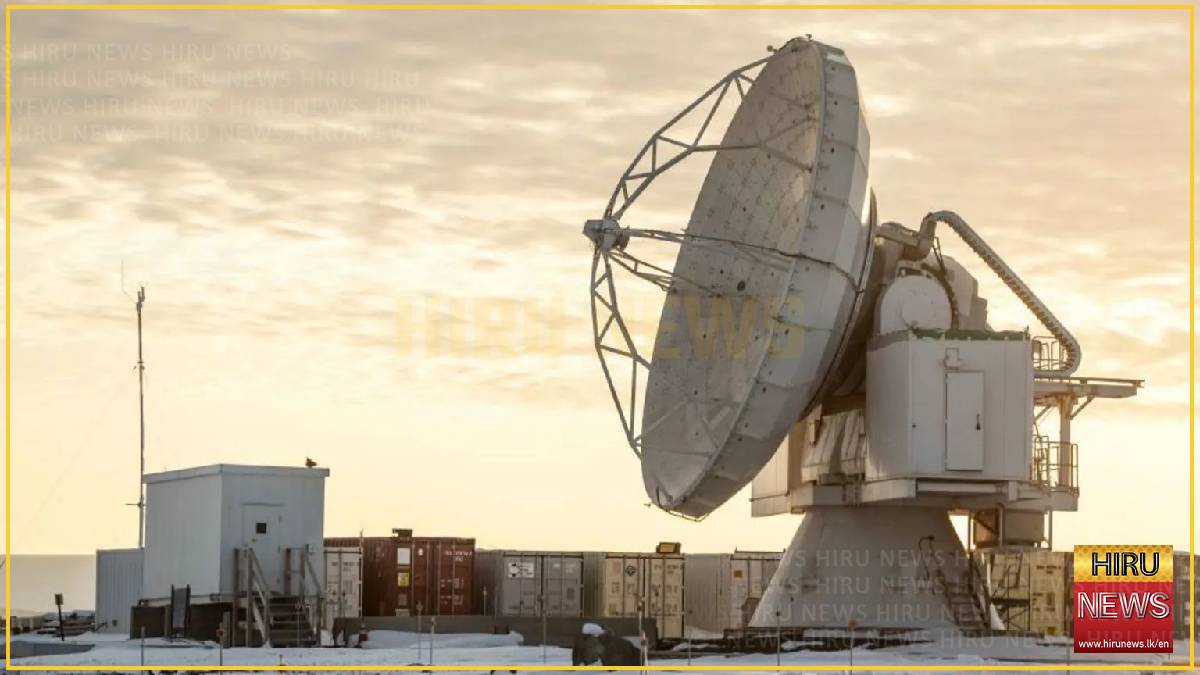
The US has confirmed it deployed a space weapon in Earth's orbit, the first time it has acknowledged such offensive capabilities.
US Secretary of the Air Force Troy Meink said the "on orbit" weapon was necessary to safeguard US forces against hostile enemy action.
Speaking at the Air, Space and Cyber Conference on Monday, Meink said the US was ready for "evolving threats", but did not elaborate on the weapon's capabilities or when it was put into orbit.
Senior military leaders have previously said they planned to boost military capabilities in space, citing Russian and Chinese programmes developing ways to attack and disrupt US satellites in a future conflict.
The Trump administration has said that space-based capabilities - and interceptor missiles - are a crucial part of its planned "Golden Dome" defence system to protect the US from missiles and other airborne threats.
A 1967 treaty banned weapons of mass destruction in orbit. Since then, key powers including the US, Russia, and China have been exploring other capabilities outside of the treaty, such as targeting rivals' satellites - which are key for military communications, surveillance and navigation.
Last year President Donald Trump issued an executive order underlining the US Space Force's role in not only defending assets, but also as an attacking force.
The US Space Force - the newest branch of the US military in more than 70 years - was launched in 2019 as a way to protect American assets in space, including hundreds of satellites used for communication and surveillance.
A US Space Force spokesperson said: "Space control encapsulates the mission areas required to contest and control the space domain – employing kinetic and non-kinetic means to affect adversary capabilities through disruption, degradation and even destruction, if necessary.
"These capabilities can be employed for offensive and defensive purposes at the direction of combatant commands."
In early February, it was revealed that two Russian satellites have likely intercepted the communications of at least a dozen European ones since Russia's invasion of Ukraine in 2022.
Such interceptions may have allowed Russian intelligence services to read the sensitive data they transmit, or hypothetically, even to take control of the satellites.
In 2024, the US said Russia had launched a satellite which it believed may be capable of attacking other such probes. Russia did not publicly comment on the issue.
The US Space Force says China "develops and operates space and counterspace capabilities as part of a military modernisation strategy," while Russia "views space as a warfighting domain and believes space supremacy will be a decisive factor in future conflicts".
-BBC
US Secretary of the Air Force Troy Meink said the "on orbit" weapon was necessary to safeguard US forces against hostile enemy action.
Speaking at the Air, Space and Cyber Conference on Monday, Meink said the US was ready for "evolving threats", but did not elaborate on the weapon's capabilities or when it was put into orbit.
Senior military leaders have previously said they planned to boost military capabilities in space, citing Russian and Chinese programmes developing ways to attack and disrupt US satellites in a future conflict.
The Trump administration has said that space-based capabilities - and interceptor missiles - are a crucial part of its planned "Golden Dome" defence system to protect the US from missiles and other airborne threats.
A 1967 treaty banned weapons of mass destruction in orbit. Since then, key powers including the US, Russia, and China have been exploring other capabilities outside of the treaty, such as targeting rivals' satellites - which are key for military communications, surveillance and navigation.
Last year President Donald Trump issued an executive order underlining the US Space Force's role in not only defending assets, but also as an attacking force.
The US Space Force - the newest branch of the US military in more than 70 years - was launched in 2019 as a way to protect American assets in space, including hundreds of satellites used for communication and surveillance.
A US Space Force spokesperson said: "Space control encapsulates the mission areas required to contest and control the space domain – employing kinetic and non-kinetic means to affect adversary capabilities through disruption, degradation and even destruction, if necessary.
"These capabilities can be employed for offensive and defensive purposes at the direction of combatant commands."
In early February, it was revealed that two Russian satellites have likely intercepted the communications of at least a dozen European ones since Russia's invasion of Ukraine in 2022.
Such interceptions may have allowed Russian intelligence services to read the sensitive data they transmit, or hypothetically, even to take control of the satellites.
In 2024, the US said Russia had launched a satellite which it believed may be capable of attacking other such probes. Russia did not publicly comment on the issue.
The US Space Force says China "develops and operates space and counterspace capabilities as part of a military modernisation strategy," while Russia "views space as a warfighting domain and believes space supremacy will be a decisive factor in future conflicts".
-BBC
Latest News
US, China security experts propose nuclear-style safeguards for AI risks
Local
17 September 2026
Peter Max, known for groovy art that came to symbolize the 60s, dies at 88
Local
17 September 2026

Fiji declares HIV a national crisis as diagnoses surge
Local
17 September 2026

Climate change likely to have helped trigger Nepal glacier collapse, scientists say
Local
17 September 2026

Mahan Air, Iran's largest airliner, cancels flights to Turkey, Oman after sanctions
Local
17 September 2026

Parliamentarian M.L.A.M. Hizbullah elected new Sri Lanka Muslim Congress chairman
Local
17 September 2026

Turkey and Pakistan say the Saudis haven't asked for help
Local
17 September 2026

Online police clearance applications temporarily suspended in Sri Lanka; new numbers issued for assistance
Local
17 September 2026

DFCC Bank debenture issue attracts Rs. 14.77 Bn.
Local
17 September 2026

Trump says Iran wants to make a deal: "Hopefully we're toward the end of the war"
Local
17 September 2026








