Share Post


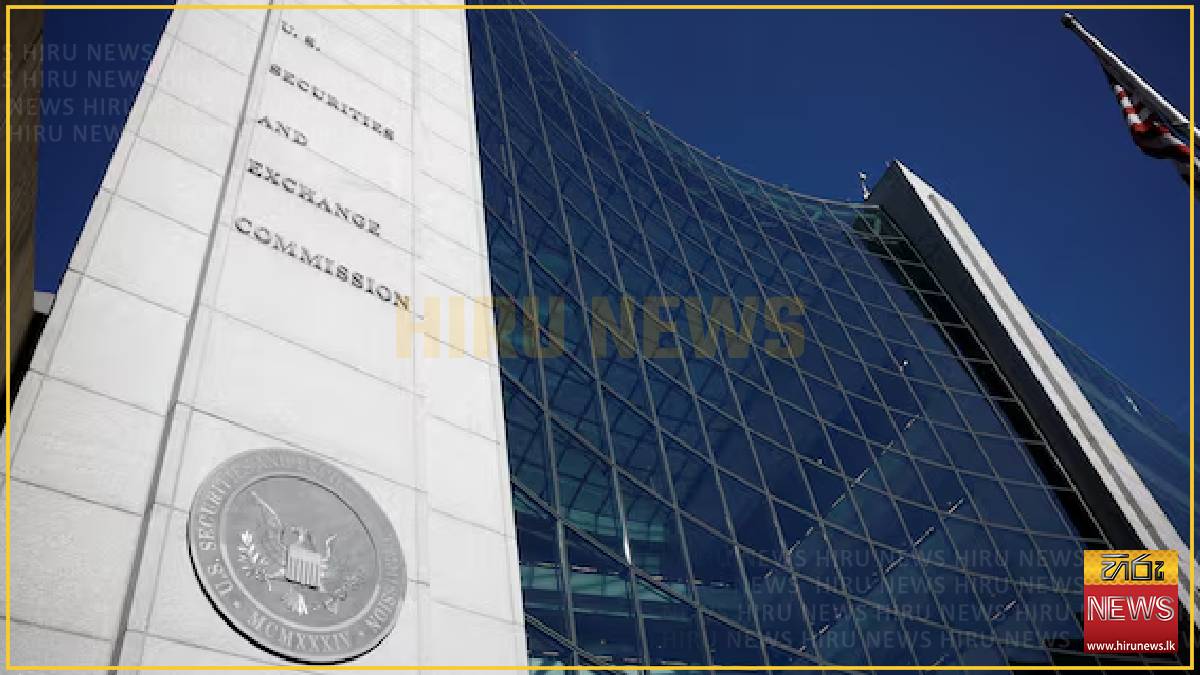
The top U.S. financial regulator on Friday made permanent its decision to cease judging whether companies may exclude shareholder resolutions from votes at annual meetings, leaving investor activists concerned about diminishing influence.
In practice, the change announced by the U.S. Securities and Exchange Commission extends a freeze put in place last November on deciding whether to approve corporate requests to skip votes on shareholder proposals.
The responses were known as "no-action" letters because they answered corporate requests for assurance the agency would take no action if executives skipped votes on proposals that often deal with hot-button issues like carbon emissions or workforce diversity.
Executives claimed such measures may micromanage operations or deal with ordinary business undeserving of investors' attention.
The latest move will help the SEC's Division of Corporation Finance focus resources on a broader review of filings, the agency said in a statement on its website, opens new tab. It said it has created an "extensive body of guidance" about whether shareholder proposals could be excluded or not.
The change has not had a big impact so far. A count by law firm Freshfields found that as of June 15, 66% of known proposals were placed on proxies, compared to 59% last year.
But few people seem happy with the status quo. SEC Chairman Paul Atkins in July called CEOs "lackadaisical" about using tools like the new policy. Investor activists complain they often had to file lawsuits to ensure votes on some items.
"Instead of having the SEC operate as an informal referee, now investors will be forced to consider other options if a company decides to unilaterally omit a resolution with inadequate arguments," said Tim Smith, senior policy advisor for the Interfaith Center on Corporate Responsibility, whose members include resolution filers.
Marc Lindsay, managing partner of corporate governance at consulting firm Jasper Street Partners, said while Friday's change was expected, it effectively increases litigation risk for companies excluding proposals. Five of six lawsuits filed over exclusions led to favorable outcomes for proponents, he said.
"While infrequent, litigation – and the resulting distractions and costs – is now a very real concern for companies considering exclusions, and it may be even worse in 2027," Lindsay said.
To keep up with Reuters coverage of environmental, social and corporate governance issues, you can click here to subscribe to the Reuters Sustainable Finance newsletter.
-Reuters
In practice, the change announced by the U.S. Securities and Exchange Commission extends a freeze put in place last November on deciding whether to approve corporate requests to skip votes on shareholder proposals.
The responses were known as "no-action" letters because they answered corporate requests for assurance the agency would take no action if executives skipped votes on proposals that often deal with hot-button issues like carbon emissions or workforce diversity.
Executives claimed such measures may micromanage operations or deal with ordinary business undeserving of investors' attention.
The latest move will help the SEC's Division of Corporation Finance focus resources on a broader review of filings, the agency said in a statement on its website, opens new tab. It said it has created an "extensive body of guidance" about whether shareholder proposals could be excluded or not.
The change has not had a big impact so far. A count by law firm Freshfields found that as of June 15, 66% of known proposals were placed on proxies, compared to 59% last year.
But few people seem happy with the status quo. SEC Chairman Paul Atkins in July called CEOs "lackadaisical" about using tools like the new policy. Investor activists complain they often had to file lawsuits to ensure votes on some items.
"Instead of having the SEC operate as an informal referee, now investors will be forced to consider other options if a company decides to unilaterally omit a resolution with inadequate arguments," said Tim Smith, senior policy advisor for the Interfaith Center on Corporate Responsibility, whose members include resolution filers.
Marc Lindsay, managing partner of corporate governance at consulting firm Jasper Street Partners, said while Friday's change was expected, it effectively increases litigation risk for companies excluding proposals. Five of six lawsuits filed over exclusions led to favorable outcomes for proponents, he said.
"While infrequent, litigation – and the resulting distractions and costs – is now a very real concern for companies considering exclusions, and it may be even worse in 2027," Lindsay said.
To keep up with Reuters coverage of environmental, social and corporate governance issues, you can click here to subscribe to the Reuters Sustainable Finance newsletter.
-Reuters
Latest News
Massachusetts anti-hunger advocate fasts to protest Trump food stamp cuts
Local
16 August 2026

El Niño is headed for record-shattering intensity, NOAA says
Local
16 August 2026

Europe's heatwaves expose insurance gap as business losses mount
Local
16 August 2026

North Korea's Kim, Russia's Putin reaffirm ties on Korean Liberation Day
Local
16 August 2026

Four Antonello da Messina works stolen in Renaissance painter's hometown
Local
16 August 2026

Hurricane Lala lashes Hawaii’s Big Island, leaving 1 dead
Local
16 August 2026

Belgium's biggest wildfire on record heads towards Germany
Local
16 August 2026

'Star Wars' revives 2 stories for next-generation fans
Local
16 August 2026

Israeli military says senior Hezbollah commander killed in strike on southern Lebanon
Local
16 August 2026

Resting, net repair halls to be built for fishermen
Local
16 August 2026