Share Post


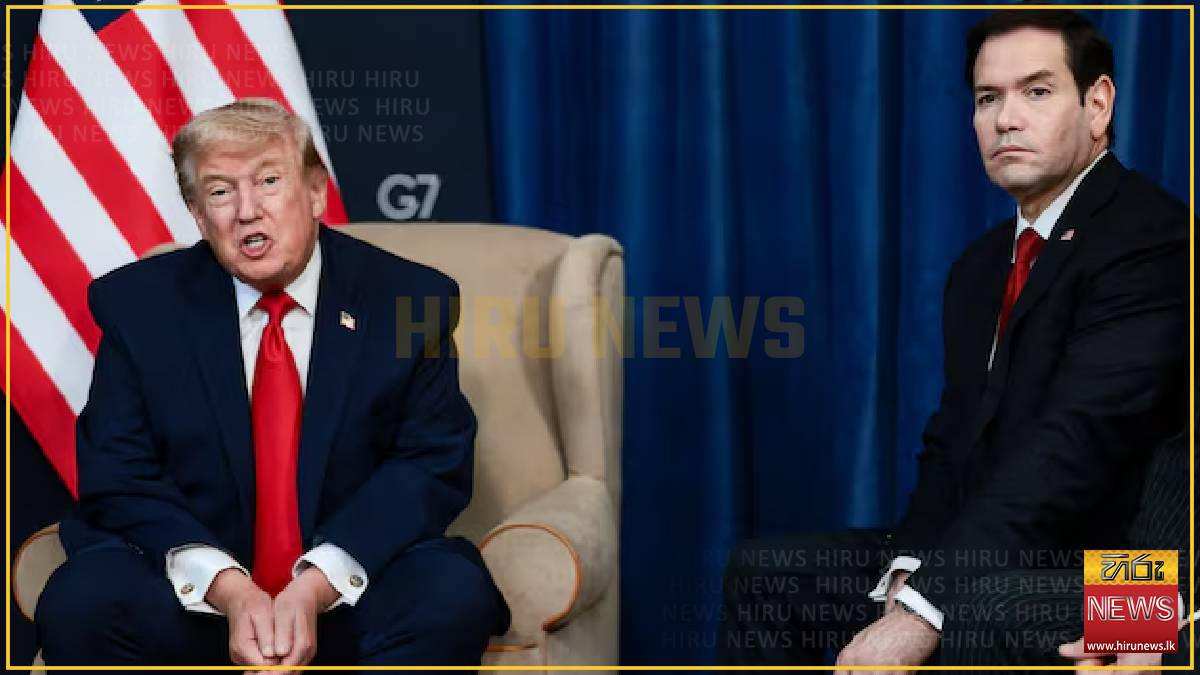
US Secretary of State Marco Rubio will travel on Tuesday through Thursday to the United Arab Emirates, Kuwait and Bahrain, on a trip that will give the Trump administration a chance to sell its preliminary Iran accord directly to Gulf Arab allies.
While in Bahrain, Rubio will also meet with the Gulf Cooperation Council, or GCC, a grouping of six Sunni monarchies that also includes Saudi Arabia, Qatar and Oman, State Department spokesperson Tommy Pigott said on Monday.
While GCC leaders have broadly supported efforts to end the U.S.-Israeli war with Iran, many are disconcerted by the specific terms of the memorandum of understanding that U.S. President Donald Trump signed last week.
One point of particular concern among regional officials is the possibility of a $300 billion reconstruction fund for Tehran, which Gulf leaders assume the Islamic Republic will use to rebuild its military capacity, while funding regional proxy groups. The MoU's failure to address Iran's ballistic missile program is also worrying Washington's Gulf allies, who have been buffeted by Iranian missile and drone attacks in recent months.
The UAE, Saudi Arabia, Kuwait, Bahrain and Qatar all host U.S. military bases that in turn make up the backbone of America's security architecture in the Middle East. Should any of those countries rethink their security relationship with the U.S., even in a subtle way, it could have a significant impact on U.S. military strategy in the region.
The Rubio trip comes amid a broader flurry of Iran-related diplomacy. On Wednesday, Trump signed the Iran MoU - which starts a 60-day clock for Washington and Tehran to reach a more comprehensive agreement - while visiting French President Emmanuel Macron in Versailles.
Over the weekend, a team of U.S. negotiators led by Vice President JD Vance attended talks mediated by Qatari and Pakistani officials in Switzerland. The first round of those talks concluded on Monday, and technical discussions are expected to continue through the week.
Details of Rubio's trip, such as the precise timing of his visits to the UAE, Kuwait and Bahrain and the list of leaders and officials he is due to meet, were not immediately available.
In the statement, Pigott, the State Department spokesperson, said Rubio, who also serves as the White House national security advisor, would "discuss a range of regional priorities including the memorandum of understanding with Iran, efforts to secure full and free safe transit through the Strait of Hormuz, and the importance of peace and stability in the region."
-Reuters
While in Bahrain, Rubio will also meet with the Gulf Cooperation Council, or GCC, a grouping of six Sunni monarchies that also includes Saudi Arabia, Qatar and Oman, State Department spokesperson Tommy Pigott said on Monday.
While GCC leaders have broadly supported efforts to end the U.S.-Israeli war with Iran, many are disconcerted by the specific terms of the memorandum of understanding that U.S. President Donald Trump signed last week.
One point of particular concern among regional officials is the possibility of a $300 billion reconstruction fund for Tehran, which Gulf leaders assume the Islamic Republic will use to rebuild its military capacity, while funding regional proxy groups. The MoU's failure to address Iran's ballistic missile program is also worrying Washington's Gulf allies, who have been buffeted by Iranian missile and drone attacks in recent months.
The UAE, Saudi Arabia, Kuwait, Bahrain and Qatar all host U.S. military bases that in turn make up the backbone of America's security architecture in the Middle East. Should any of those countries rethink their security relationship with the U.S., even in a subtle way, it could have a significant impact on U.S. military strategy in the region.
The Rubio trip comes amid a broader flurry of Iran-related diplomacy. On Wednesday, Trump signed the Iran MoU - which starts a 60-day clock for Washington and Tehran to reach a more comprehensive agreement - while visiting French President Emmanuel Macron in Versailles.
Over the weekend, a team of U.S. negotiators led by Vice President JD Vance attended talks mediated by Qatari and Pakistani officials in Switzerland. The first round of those talks concluded on Monday, and technical discussions are expected to continue through the week.
Details of Rubio's trip, such as the precise timing of his visits to the UAE, Kuwait and Bahrain and the list of leaders and officials he is due to meet, were not immediately available.
In the statement, Pigott, the State Department spokesperson, said Rubio, who also serves as the White House national security advisor, would "discuss a range of regional priorities including the memorandum of understanding with Iran, efforts to secure full and free safe transit through the Strait of Hormuz, and the importance of peace and stability in the region."
-Reuters
Latest News
Belgium issues visas to Taliban delegation for EU meeting
Local
22 June 2026
European leaders offer warm farewell to Starmer
Local
22 June 2026
Why we need to invest in adaptation at the same time as climate action
Local
22 June 2026
ABC launches on-air campaign urging views to back network in Trump fights
Local
22 June 2026

EU trade chief to host China's commerce minister on June 29
Local
22 June 2026
India's Tata Electronics hit by cyber breach
Local
22 June 2026

Czech government plans to ban mobile phones in schools from 2027
Local
22 June 2026

New curfew rule to keep cats indoors 24/7
Local
22 June 2026

Rubio heads to UAE, Kuwait, Bahrain
Local
22 June 2026
India-bound fertiliser ships cross Hormuz, government says
Local
22 June 2026