


Share Post


Financial intermediation across Sri Lanka recorded a significant milestone as the banking sector credit-to-deposit ratio climbed to 71.2% at the end of the first quarter of 2026. This recovery pushed the ratio past the 70% threshold for the first time in 3 years, reflecting a substantial expansion in lending. The rapid growth prompted the monetary authority to issue warnings regarding emerging vulnerabilities and a potential build-up of systemic risk.
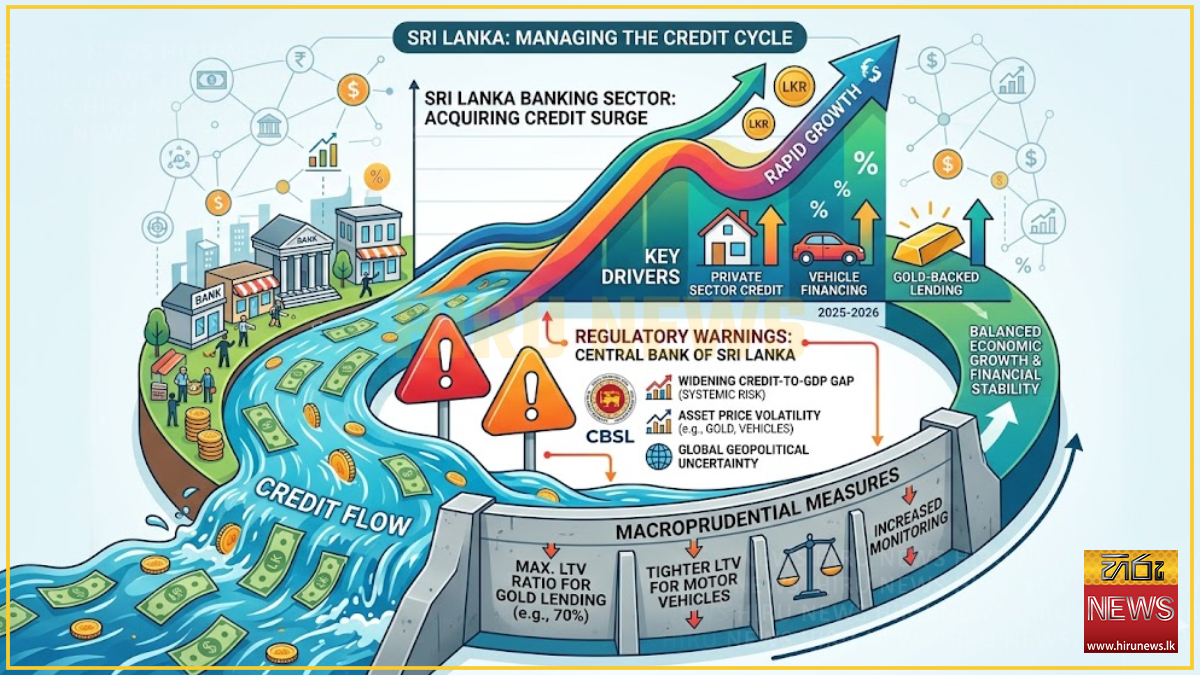
Credit granted by banks accelerated by 24.4% year-on-year, a sharp rise from the 7.9% growth observed during the same period in 2025. The Central Bank of Sri Lanka explicitly warned that the widening credit-to-GDP gap signifies heightened risks within the financial system, even as domestic credit appetite remains strong despite global headwinds and Middle East tensions. This aggressive lending trajectory caused the rupee liquidity coverage ratio to drop to 267.9% from 342.4% last year, though it remains safely above regulatory minimums.
Lending momentum appeared even more pronounced within the finance companies sector, where credit surged by 52.4% year-on-year. This inflation concentrated heavily on consumer segments, with vehicle-backed lending rising by 52.8% and gold-backed loans jumping by 69.2%.
Strict macroprudential tightening measures came into force on the 25th of May to safeguard financial stability against asset-price volatility and rupee depreciation. The Central Bank of Sri Lanka introduced a maximum loan-to-value ratio of 70% for gold-secured facilities and tightened vehicle loan limits by 10 percentage points. These interventions, coupled with a late May policy interest rate hike, impacted broader financial markets, triggering upward pressure on government securities yields and driving net foreign outflows from the Colombo Stock Exchange to 103.4 million US dollars.
Credit granted by banks accelerated by 24.4% year-on-year, a sharp rise from the 7.9% growth observed during the same period in 2025. The Central Bank of Sri Lanka explicitly warned that the widening credit-to-GDP gap signifies heightened risks within the financial system, even as domestic credit appetite remains strong despite global headwinds and Middle East tensions. This aggressive lending trajectory caused the rupee liquidity coverage ratio to drop to 267.9% from 342.4% last year, though it remains safely above regulatory minimums.
Lending momentum appeared even more pronounced within the finance companies sector, where credit surged by 52.4% year-on-year. This inflation concentrated heavily on consumer segments, with vehicle-backed lending rising by 52.8% and gold-backed loans jumping by 69.2%.
Strict macroprudential tightening measures came into force on the 25th of May to safeguard financial stability against asset-price volatility and rupee depreciation. The Central Bank of Sri Lanka introduced a maximum loan-to-value ratio of 70% for gold-secured facilities and tightened vehicle loan limits by 10 percentage points. These interventions, coupled with a late May policy interest rate hike, impacted broader financial markets, triggering upward pressure on government securities yields and driving net foreign outflows from the Colombo Stock Exchange to 103.4 million US dollars.
Latest News
Tech stocks plunge in Asia after renewed Mideast attacks
Local
08 June 2026

SL optimistic over resolving US Tariff issues
Local
08 June 2026

World Ocean Day national event underway at Diyatha Uyana
Local
08 June 2026

Sri Lankan foreign remittances surge 32% in May
Local
08 June 2026

CICT handles 2,241-tonne battery storage shipment for Lanka’s largest energy storage
Local
08 June 2026

Peterson Solutions Sri Lanka opens corporate office at Orion City
Local
08 June 2026

At least three dead from Philippine earthquake
Local
08 June 2026

Sri Lankan banking sector sees sharp credit surge
Local
08 June 2026
Hanwha Aerospace CEO banned from foreign travel
Local
08 June 2026

Sri Lanka records major budget surplus in first quarter
Local
08 June 2026