



Share Post


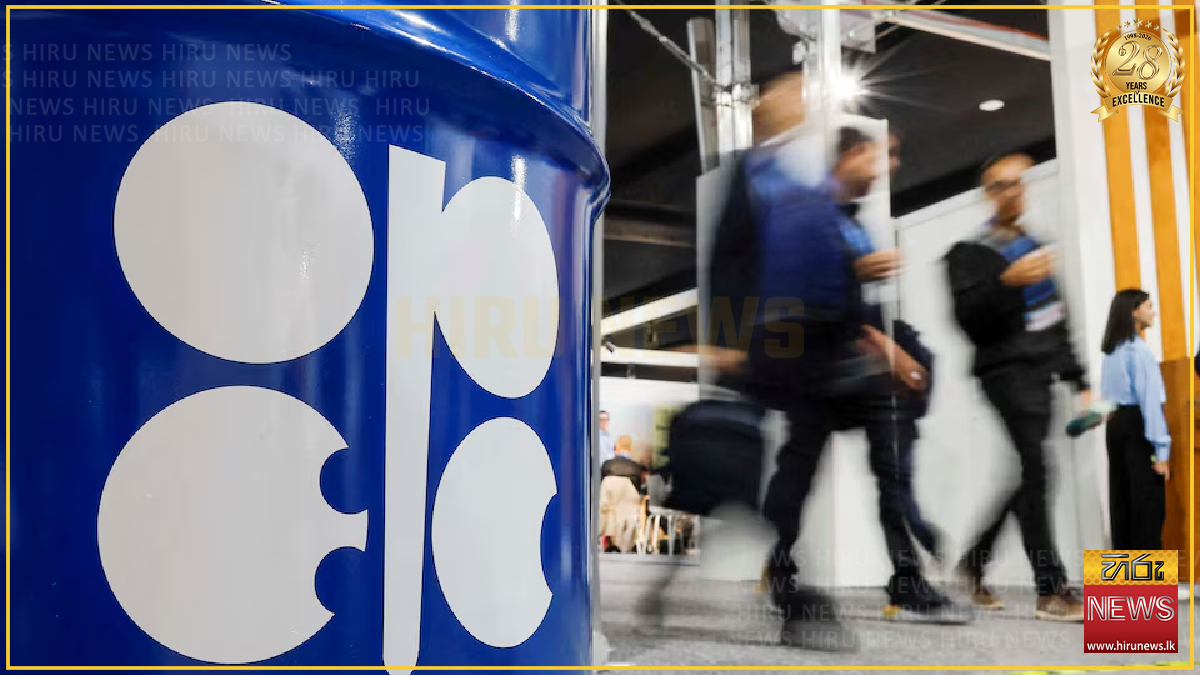
OPEC+ is set to agree on Sunday another increase in output targets from August, sources with knowledge of the matter said, adding to global supply amid falling oil prices due to a gradual reopening of the Strait of Hormuz for oil exports.
The oil-producing group has agreed in principle to increase quotas by 188,000 barrels per day from August, on top of similar increases for June and July, two sources with knowledge of OPEC+ thinking said ahead of the group's online meeting later on Sunday.
Seven core members of OPEC+, which groups OPEC and allied producers including Russia, have increased their output quotas from April through July by almost 800,000 barrels per day.
PRODUCTION BEGINS TO RECOVER
Yet the increase has remained largely on paper because of the U.S.-Israeli war on Iran, which closed the Strait of Hormuz for passage of tankers from some of the most important OPEC+ members including Saudi Arabia, Kuwait and Iraq.
OPEC+ output fell to 33.13 million bpd in May, according to OPEC data, from 42.77 million bpd in February. It began to recover in June thanks to U.S. efforts to help the UAE and other OPEC+ nations to export more oil, but is still below pre-war levels.
Despite persisting supply disruptions, oil prices have returned to pre-war levels, pressured by lower Chinese imports, higher exports from non-Middle East producers, and a record global strategic stock release coordinated by the International Energy Agency.
The memorandum of understanding to end the war has also helped convince traders that supply would ultimately return to normal levels.
IRAQ PRESSING FOR HIGHER QUOTAS
Brent crude prices traded near $72 per barrel on Friday, down from recent peaks of more than $120 per barrel, and back to levels traded just before the U.S. and Israel attacked Iran on February 28.
Besides agreeing production targets, OPEC+ is also facing other challenges after the United Arab Emirates left the group and Iraq signaled it wants higher quotas.
The seven producers — Saudi Arabia, Russia, Iraq, Kuwait, Algeria, Kazakhstan and Oman — are boosting output as part of the phased rollback of a 1.65 million bpd supply cut agreed in 2023, when the group still included the UAE.
The UAE quit the alliance in late April because it wanted to align its capacity more closely with its production, free of production restraints imposed by the group.
From August, the seven have about 379,000 bpd of the original cut to return to the market, taking into account the UAE exit from May 1, according to Reuters calculations.
That would mean that the group would unwind the remainder of the cut by the end of September if they continue increases at the same pace.
-Reuters
The oil-producing group has agreed in principle to increase quotas by 188,000 barrels per day from August, on top of similar increases for June and July, two sources with knowledge of OPEC+ thinking said ahead of the group's online meeting later on Sunday.
Seven core members of OPEC+, which groups OPEC and allied producers including Russia, have increased their output quotas from April through July by almost 800,000 barrels per day.
PRODUCTION BEGINS TO RECOVER
Yet the increase has remained largely on paper because of the U.S.-Israeli war on Iran, which closed the Strait of Hormuz for passage of tankers from some of the most important OPEC+ members including Saudi Arabia, Kuwait and Iraq.
OPEC+ output fell to 33.13 million bpd in May, according to OPEC data, from 42.77 million bpd in February. It began to recover in June thanks to U.S. efforts to help the UAE and other OPEC+ nations to export more oil, but is still below pre-war levels.
Despite persisting supply disruptions, oil prices have returned to pre-war levels, pressured by lower Chinese imports, higher exports from non-Middle East producers, and a record global strategic stock release coordinated by the International Energy Agency.
The memorandum of understanding to end the war has also helped convince traders that supply would ultimately return to normal levels.
IRAQ PRESSING FOR HIGHER QUOTAS
Brent crude prices traded near $72 per barrel on Friday, down from recent peaks of more than $120 per barrel, and back to levels traded just before the U.S. and Israel attacked Iran on February 28.
Besides agreeing production targets, OPEC+ is also facing other challenges after the United Arab Emirates left the group and Iraq signaled it wants higher quotas.
The seven producers — Saudi Arabia, Russia, Iraq, Kuwait, Algeria, Kazakhstan and Oman — are boosting output as part of the phased rollback of a 1.65 million bpd supply cut agreed in 2023, when the group still included the UAE.
The UAE quit the alliance in late April because it wanted to align its capacity more closely with its production, free of production restraints imposed by the group.
From August, the seven have about 379,000 bpd of the original cut to return to the market, taking into account the UAE exit from May 1, according to Reuters calculations.
That would mean that the group would unwind the remainder of the cut by the end of September if they continue increases at the same pace.
-Reuters
Latest News
Next four weeks remain high-risk for dengue, says Health Minister
Local
06 July 2026

NATO’s Rutte stresses democratic rights after Turkey’s pre‑summit crackdown
Local
06 July 2026
Ukraine warns of interceptor missile shortage
Local
06 July 2026

Hamas dissolves Gaza government
Local
06 July 2026
Bangladesh objections leave Assam border unfenced
Local
06 July 2026

Microsoft joins AI-driven tech layoff wave with 4,800 job cuts
Local
06 July 2026

Hayabusa 2 probe flies by Torifune asteroid
Local
06 July 2026

ITV hit shows to stay free to watch
Local
06 July 2026

Titan posts 41% growth
Local
06 July 2026

Trump says he asked FIFA chief to review red card foul
Local
06 July 2026