Share Post


Paddy prices are determined by market demand and supply although the heartbeat of the farmer is felt very well.
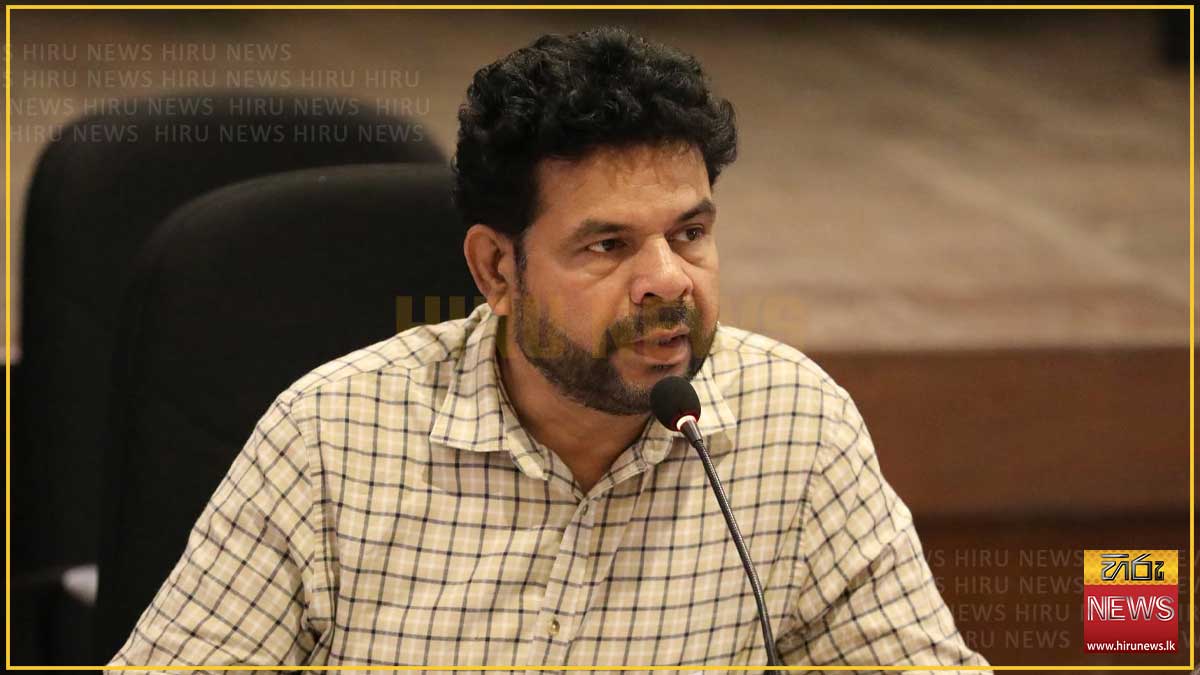
Deputy Minister of Agriculture and Livestock Namal Karunaratne stated this when journalists questioned him after the Kurunegala District Development Committee meeting regarding why the government remains silent despite farmers protesting that there is no set government price for their produce.
Speaking further, the Deputy Minister of Agriculture stated:
"When we took over the government, the production cost of paddy was 99.75. The government had fixed the price of a kilo of paddy at Rs. 110.00. The government did not buy paddy either. It was under such circumstances that we took over the government. After we took over, the production price of paddy decreased even further. Nadu was Rs. 120, Samba was Rs. 130, and Keeri Samba was Rs.140. We purchased paddy into warehouses.
Paddy was purchased during the last Maha season as well. Warehouses remained open until the 9th and 10th of April during the last Maha season.
Usually, the Yala season begins in March. Harvesting concludes around this time. It gets a bit delayed in Polonnaruwa. Warehouses remained open when the Maha season was being harvested. Although they were open during the Yala season as well, farmers stopped bringing paddy to the warehouses.
When that happens, the warehouses are closed. This is what usually happened. Before this, paddy warehouses remained closed. When the seasons are harvested, warehouses are opened to buy paddy. The message we want to give to the farming community is that the market price is determined based on demand and supply. Because of this, this situation changes.
The entire world discusses the market situation. A food shortage is being discussed. Under this situation, we will open paddy warehouses and purchase paddy once harvesting begins. At this time, the real farmer brought and gave paddy to the warehouses. If it is said that farmers keep paddy without giving it, the farmer can do that too. As a government, we interfere with paddy.
We understand and feel the heartbeat of the farmer. Not only that, we pay if additional crops are cultivated in paddy fields. This is the money of the people of this country. Do not say that it was not given after taking the tax money of the people."
Deputy Minister of Agriculture and Livestock Namal Karunaratne stated this when journalists questioned him after the Kurunegala District Development Committee meeting regarding why the government remains silent despite farmers protesting that there is no set government price for their produce.
Speaking further, the Deputy Minister of Agriculture stated:
"When we took over the government, the production cost of paddy was 99.75. The government had fixed the price of a kilo of paddy at Rs. 110.00. The government did not buy paddy either. It was under such circumstances that we took over the government. After we took over, the production price of paddy decreased even further. Nadu was Rs. 120, Samba was Rs. 130, and Keeri Samba was Rs.140. We purchased paddy into warehouses.
Paddy was purchased during the last Maha season as well. Warehouses remained open until the 9th and 10th of April during the last Maha season.
Usually, the Yala season begins in March. Harvesting concludes around this time. It gets a bit delayed in Polonnaruwa. Warehouses remained open when the Maha season was being harvested. Although they were open during the Yala season as well, farmers stopped bringing paddy to the warehouses.
When that happens, the warehouses are closed. This is what usually happened. Before this, paddy warehouses remained closed. When the seasons are harvested, warehouses are opened to buy paddy. The message we want to give to the farming community is that the market price is determined based on demand and supply. Because of this, this situation changes.
The entire world discusses the market situation. A food shortage is being discussed. Under this situation, we will open paddy warehouses and purchase paddy once harvesting begins. At this time, the real farmer brought and gave paddy to the warehouses. If it is said that farmers keep paddy without giving it, the farmer can do that too. As a government, we interfere with paddy.
We understand and feel the heartbeat of the farmer. Not only that, we pay if additional crops are cultivated in paddy fields. This is the money of the people of this country. Do not say that it was not given after taking the tax money of the people."
Latest News
Bank of Korea board member raises concerns about house prices
Local
24 June 2026
Sri Lanka apparel exports climb nearly 8% in May
Local
24 June 2026
Exporters demand policy consistency
Local
24 June 2026
Australia ramps up bird flu testing as PNG blocks poultry imports
Local
24 June 2026
SL assumes CASP AP chairmanship as CAASL hosts 21st regional aviation security meeting
Local
24 June 2026
Monaco F1 controversy goes to court
Local
24 June 2026

Suspected murderer in physiotherapist's death case nabbed with wife
Local
24 June 2026
Taiwan says warning time for any China attack is shortening
Local
24 June 2026
World Bank-led $2bn framework aims to boost Sri Lanka jobs
Local
24 June 2026

Power outages hit Russian-controlled Sevastopol and Kherson
Local
24 June 2026