



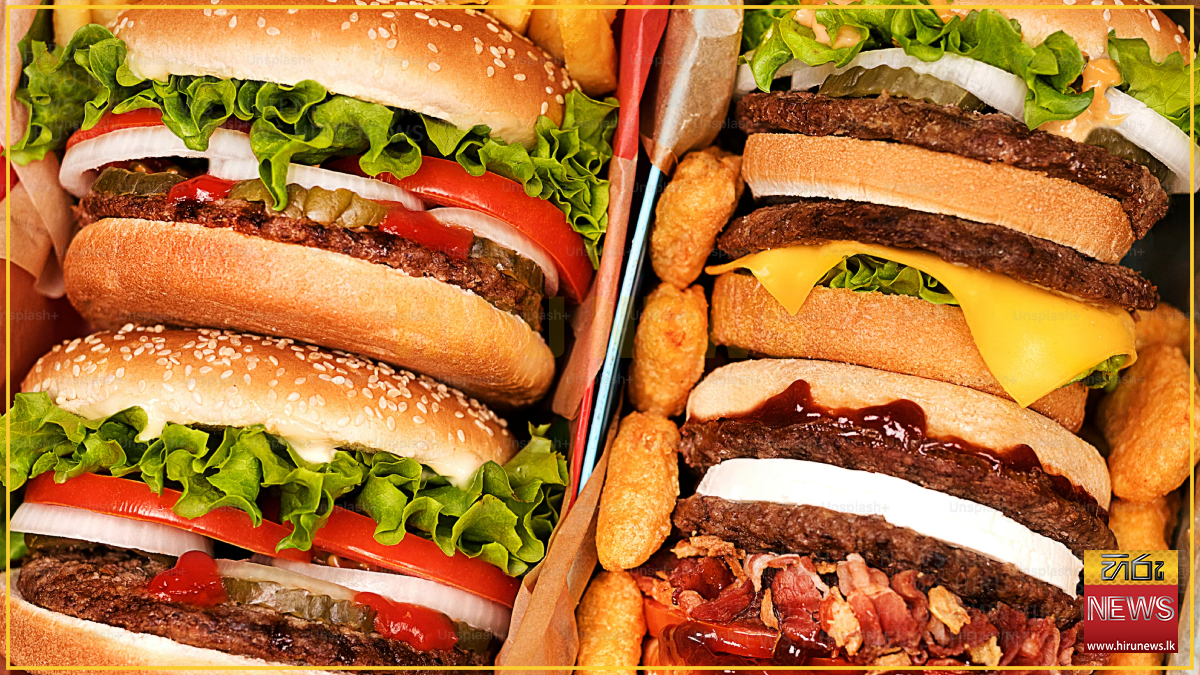


The Ministry of Trade, Commerce, Food Security, and Cooperative Development has begun discussions to evaluate whether fast foods deemed harmful to health should be either banned entirely or brought under regulation.
Deputy Minister R.M. Jayawardhana, speaking to a local media outlet, said that although Sri Lanka has access to naturally nutritious food thanks to its climate and traditional agriculture, there has been a clear rise in the consumption of unhealthy, low-nutrient meals.
He attributed this trend to poor dietary habits, noting that children are increasingly drawn to fast food, while many government and private sector employees skip proper meals or rely on quick, low-nutrition options.
He acknowledged that implementing a complete ban would be challenging.
Jayawardhana noted that introducing a ban is not straightforward, even if it may be necessary, as such decisions can easily become politicised.
However, he added that the government is considering both options—either banning or regulating these foods—while also focusing on encouraging healthier eating patterns and increasing public awareness.
His comments follow findings from a study by Senior Professor Renuka Silva of the Faculty of Nutrition at Wayamba University, which revealed that rising food costs driven by the Covid-19 pandemic, the economic crisis, and Cyclone Ditwah have pushed many people toward more affordable but less nutritious food choices—a pattern that continues today.
Latest News
HIP attracts major global shipping lines

North Korean women's soccer club to visit South Korea

New powers to ban pro-Palestinian marches in UK
IRIS Corp inks SAAS agreement with Sri Lanka’s Port City

Man breaks Marvel comic book heroes tattoo record
Ceylon Cannabis brand makes global debut at ICBC Berlin event

Spirit says most customers refunded
European leaders converge on Armenia
Taiwan president visits Eswatini

Vijay leading in 71 constituencies