


Share Post


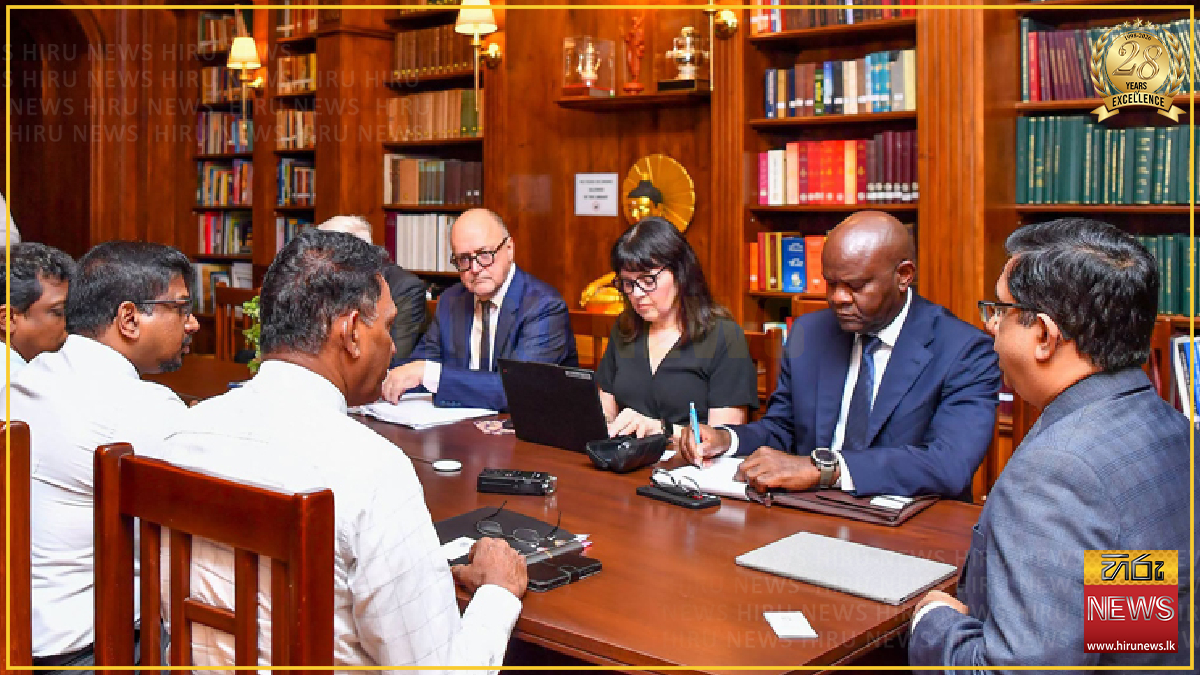
A special discussion to review Sri Lanka's public revenue system modernisation took place recently at the Presidential Secretariat. Presidential Secretariat Secretary Nandika Sanath Kumanayake chaired the meeting between the International Monetary Fund and the Revenue Administration Reform and Modernisation Bureau.
The discussion evaluated the reform process implemented over the past year under the Medium-Term Revenue Strategy, which spans the tax system, customs procedures, excise administration, and the general public revenue framework. The visiting delegation also held separate talks with senior officials from the Inland Revenue Department, the Ministry of Finance, Sri Lanka Customs, and the Department of Excise.
The global lenders focused heavily on digital transformation plans, accelerated data integration, human resource and leadership development, and sustainable strategies to expand the tax base. During these sessions, the delegation recognised the bureau as a reform hub operating within a strong governance framework. The international body is further committed to providing continuous technical assistance and advisory support for ongoing reforms across the customs, inland revenue, and excise departments.
Established in early 2025 with Cabinet approval under the leadership of President Anura Kumara Dissanayake, the bureau drives public revenue collection modernisation, tax administration efficiency, institutional reforms, and integrated management of the three primary revenue agencies.
Recent restructuring under the Inland Revenue Department reform programme reorganised branches into Medium Corporate, Metro, and Regional Offices. This structural shift pushed tax compliance up from a previous forty to 45% to a current seventy to 75%.
Furthermore, a new draft Bill to amend the Customs Ordinance reached the Legal Draftsman's Department, marking the first major legislative update for the customs sector in several decades. Future plans include simplifying the tariff structure, introducing paperless processes, and improving trade facilitation for exporters.
Concurrently, the Department of Excise began modernising its operations by introducing a new Excise Management System.
The bureau also established an integrated coordination mechanism between Sri Lanka Customs and the Inland Revenue Department. This system facilitates seamless data sharing, integrated risk management, joint audits, and verification of tax compliance for importers.
Fiscal Affairs Department representative Andrew Killer led the visiting delegation, alongside Revenue Administration Project Manager Cindy Negus, Resident Tax Adviser Greg, and Canadian Senior Adviser Bob Hamilton, who all participated in the talks with senior bureau officials.
The discussion evaluated the reform process implemented over the past year under the Medium-Term Revenue Strategy, which spans the tax system, customs procedures, excise administration, and the general public revenue framework. The visiting delegation also held separate talks with senior officials from the Inland Revenue Department, the Ministry of Finance, Sri Lanka Customs, and the Department of Excise.
The global lenders focused heavily on digital transformation plans, accelerated data integration, human resource and leadership development, and sustainable strategies to expand the tax base. During these sessions, the delegation recognised the bureau as a reform hub operating within a strong governance framework. The international body is further committed to providing continuous technical assistance and advisory support for ongoing reforms across the customs, inland revenue, and excise departments.
Established in early 2025 with Cabinet approval under the leadership of President Anura Kumara Dissanayake, the bureau drives public revenue collection modernisation, tax administration efficiency, institutional reforms, and integrated management of the three primary revenue agencies.
Recent restructuring under the Inland Revenue Department reform programme reorganised branches into Medium Corporate, Metro, and Regional Offices. This structural shift pushed tax compliance up from a previous forty to 45% to a current seventy to 75%.
Furthermore, a new draft Bill to amend the Customs Ordinance reached the Legal Draftsman's Department, marking the first major legislative update for the customs sector in several decades. Future plans include simplifying the tariff structure, introducing paperless processes, and improving trade facilitation for exporters.
Concurrently, the Department of Excise began modernising its operations by introducing a new Excise Management System.
The bureau also established an integrated coordination mechanism between Sri Lanka Customs and the Inland Revenue Department. This system facilitates seamless data sharing, integrated risk management, joint audits, and verification of tax compliance for importers.
Fiscal Affairs Department representative Andrew Killer led the visiting delegation, alongside Revenue Administration Project Manager Cindy Negus, Resident Tax Adviser Greg, and Canadian Senior Adviser Bob Hamilton, who all participated in the talks with senior bureau officials.
Latest News
Electronic revenue license services suspended from September 25
Local
23 September 2026

Fire breaks out at computer shop in Welisara
Local
23 September 2026
Heavy rain, strong winds expected across Sri Lanka
Local
23 September 2026

One Dead, Two Injured in Soysapura Housing Scheme Fire
Local
23 September 2026
Businessman remanded over alleged $24.85bn illicit outflow
Local
23 September 2026

Kurunegala Ridi Viharaya set for tourism development
Local
23 September 2026

Sri Lanka Customs goes paperless from October 1
Local
23 September 2026

Religious leaders unite for Anojan’s release
Local
23 September 2026

Premadasa Says 22nd Amendment Threatens Democracy
Local
23 September 2026

New energy rules put 20,000 solar jobs at risk
Local
23 September 2026