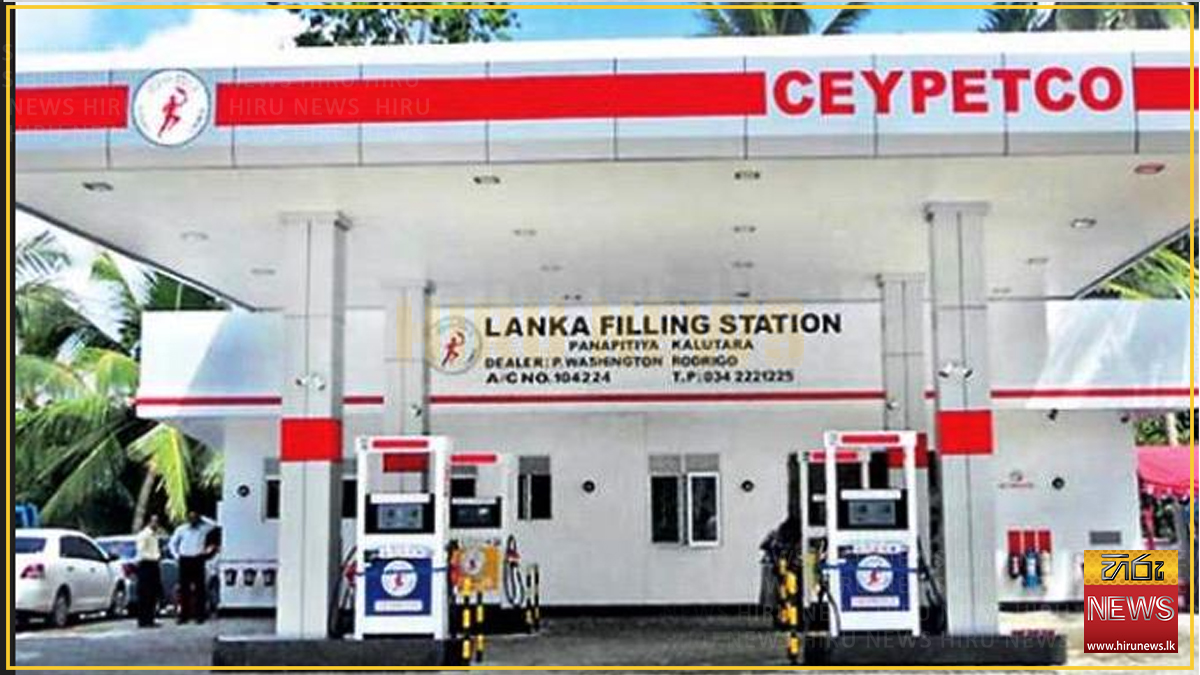


The Petroleum Dealers’ Association has written to President and Finance Minister Anura Kumara Dissanayake seeking his intervention over changes to the fuel dealers’ commission calculation method and the reduction of commission payments.
In a letter addressed to the President, the Association said it decided to bring the matter to his attention after attempts to resolve the issue with relevant institutions, including the Ceylon Petroleum Corporation (CPC), were unsuccessful.
The Association noted that around 98 per cent of fuel dealers operate as individual or partnership businesses built over generations or developed independently, with only a small number of appointments historically linked to political connections.
According to the letter, CPC issued Circular No. 1109 on February 25, 2025, introducing a new commission calculation system that came into effect from March 1, 2025. This replaced the long-standing percentage-based commission structure with a tiered system where earnings per litre are capped within a fixed range.
The Association said that under the revised structure, the income received by dealers is insufficient to meet staff salaries, loan repayments, and other operational expenses required to maintain filling stations. Many operators, particularly those with existing bank loans, are already facing difficulties in meeting financial obligations.
It warned that a significant number of cooperative-run fuel stations could be forced to close if the current system continues, affecting both employment and local supply networks.
The Association also highlighted that the new commission structure was introduced without prior consultation, noting that early engagement with industry stakeholders could have resulted in a more practical and sustainable framework.
Industry stakeholders further pointed to a broader structural imbalance within the fuel pricing system. While dealer earnings are now fixed within a narrow range, CPC operates under a cost-recovery pricing model in which its expenses are incorporated into the final retail price. This allows CPC to retain flexibility in its margins, while dealers must absorb all operational costs within a constrained income structure.
This imbalance is particularly felt by CPC dealers. Dealers of private companies operating in Sri Lanka continue to earn a percentage of the sales price, typically around 3 per cent, providing them with a more sustainable and responsive income.
The Association said it was disappointing that the state-owned CPC has failed to provide a comparable arrangement, while private companies appear more considerate of dealers’ financial realities.
The disparity is also reflected in recent financial trends. Following the fuel shortages and losses during Sri Lanka’s economic crisis, CPC returned to profitability in the subsequent period. During the same time, fuel dealers experienced only a limited and temporary increase in earnings under the previous percentage-based system, much of which was offset by rising costs and low sales volumes.
Under the current fixed commission structure, dealers say their returns are unsustainable in the long run. Fuel dealers are also required to collect and remit Value Added Tax (VAT) on a product whose price is centrally determined, placing additional administrative and cash flow pressures on businesses that have no control over pricing.
In addition, fuel must be purchased on a cash basis, meaning increases in fuel prices directly raise the amount of working capital required to operate a station. As a result, dealers are required to invest large sums simply to maintain fuel stocks, while the income they earn per litre remains unchanged.
Industry stakeholders warned that if these structural issues are not addressed, financial pressure on dealers could intensify to a point where maintaining regular fuel supplies becomes increasingly difficult. A continued lack of policy attention or reform may also lead to a gradual breakdown of the dealer network, disrupting fuel availability for consumers across the country.
In its appeal to the President, the Association requested the appointment of an expert committee with extensive knowledge of the fuel distribution sector. It also proposed that representatives from the Association be included in such a committee to help develop a sustainable solution acceptable to all parties.
Latest News
We had packed lunches every day for 10 years and retired at 40

Trading delayed after inadvertent suspension of active CDS accounts│

CSE explains the reason behind the trading delay

Wür Lanka receives Great Place to Work certification in Sri Lankath

“Lanka’s fuel import bill surges, may rise further”
Major General (Rtd) Sallay suspends hunger strike
Sugeeshwara Bandara further remanded
Thai Sumeda Enterprises wins Business of the Year 2026 Award
81-year-old woman arrested with narcotics

World Bank approves US$ 150mn to support Lanka’s reform agenda